If you’ve been injured in an accident in Tennessee but believe you may share some responsibility for what happened, you might wonder whether you can still pursue compensation for your damages. Understanding Tennessee’s comparative negligence laws is crucial for accident victims who worry that their partial fault might prevent them from recovering damages. In this blog post, Knoxville attorney Timothy G. Elrod discusses whether you can recover damages if you’re partially at fault in Tennessee and how this affects your potential compensation.
Yes, you can recover damages if you are partially at fault in Tennessee, as long as your share of fault is less than 50%. Tennessee follows a modified comparative negligence rule that allows you to receive compensation reduced by your percentage of fault, but only if you are found to be 49% or less responsible for the accident.
Key Takeaways
- Tennessee’s “49 percent rule” allows recovery of damages if you are less than 50% at fault
- Your compensation is reduced by your exact percentage of fault
- If you are 50% or more at fault, you cannot recover any damages from other parties
- This rule applies to all personal injury cases including car accidents, slip and falls, and other injury claims
Understanding Tennessee’s Modified Comparative Negligence Rule
Tennessee follows what is known as a modified comparative negligence system, specifically the “49 percent rule.” This legal principle recognizes that accidents often involve multiple parties who may each bear some responsibility for what occurred. Rather than completely barring recovery for anyone who contributed to an accident, Tennessee’s law allows partially at-fault parties to still receive compensation, provided their level of responsibility doesn’t exceed that of the other parties involved.
The fundamental principle behind this rule is fairness and proportional responsibility. It acknowledges that even if you made a mistake that contributed to your accident, you shouldn’t be completely denied compensation if another party was more responsible for the incident. This approach ensures that the most negligent party bears the primary financial responsibility while still holding all parties accountable for their actions.
This system differs significantly from contributory negligence states, where any fault on your part would completely bar recovery, and from pure comparative negligence states, where you could recover damages even if you were 90% at fault. Tennessee’s approach strikes a middle ground that protects those who are less responsible while preventing those who are primarily at fault from shifting their financial responsibility to others.
| Your Fault % | Total Damages | Amount You Recover | Can Recover? | Explanation |
|---|---|---|---|---|
| 0% | $100,000 | $100,000 | YES | Full recovery – no fault assigned |
| 20% | $100,000 | $80,000 | YES | 20% reduction for your fault |
| 30% | $100,000 | $70,000 | YES | 30% reduction for your fault |
| 49% | $100,000 | $51,000 | YES | Maximum fault for recovery |
| 50% | $100,000 | $0 | NO | At threshold – no recovery allowed |
| 60% | $100,000 | $0 | NO | Majority fault – no recovery |
| 75% | $100,000 | $0 | NO | Primarily at fault – no recovery |
The 50% Threshold: The Critical Dividing Line
The most important aspect of Tennessee’s comparative negligence law is the 50% threshold that determines whether you can recover any damages at all. If you are found to be exactly 50% at fault or more, you cannot recover any compensation from the other parties involved in the accident. However, if you are 49% or less at fault, you remain eligible for damages, though your compensation will be reduced proportionally.
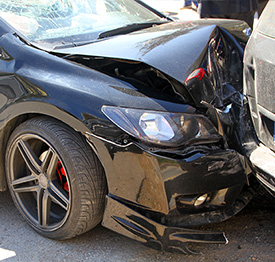
This threshold creates a critical dividing line in personal injury cases. For example, in a car accident where two drivers collide, if one driver is found to be 60% at fault and the other 40% at fault, only the driver who was 40% at fault can recover damages. The driver who was 60% at fault cannot recover anything, even though the other driver also contributed to the accident.
The determination of fault percentages often becomes the central issue in personal injury cases. Insurance companies and attorneys will thoroughly investigate accidents to establish each party’s level of responsibility. This investigation may include reviewing police reports, examining physical evidence, interviewing witnesses, and sometimes employing accident reconstruction experts to determine exactly how the incident occurred.
“The 50% threshold in Tennessee’s comparative negligence law means that fault determination becomes absolutely critical in personal injury cases. Even a few percentage points can make the difference between recovering substantial compensation and receiving nothing at all. This is why having experienced legal representation to investigate your case and advocate for an accurate fault assessment is so important.” – Knoxville personal injury attorney Timothy G. Elrod
How Damage Reduction Works in Practice
When you are found to be partially at fault but still eligible for recovery under Tennessee’s rule, your damages are reduced by your exact percentage of fault. This reduction applies to all categories of damages, including medical expenses, lost wages, property damage, and pain and suffering. The calculation is straightforward: your total damages multiplied by your percentage of fault equals the amount that will be deducted from your recovery.
For instance, if you suffer $100,000 in total damages and are found to be 30% at fault, you would recover $70,000 ($100,000 minus the 30% reduction of $30,000). If you were 20% at fault, you would recover $80,000. If you were 49% at fault, you would still recover $51,000, but if you were 50% at fault, you would recover nothing.
This proportional reduction system applies regardless of how high your damages might be. Whether your case involves thousands or millions of dollars in damages, the same percentage reduction applies. This makes the fault determination process crucial not just for eligibility but for the actual amount of compensation you can receive.
The reduction affects all economic and non-economic damages equally. Your reduced medical bills, lost wages, and pain and suffering compensation will all reflect your percentage of fault. However, you remain responsible for the full amount of your medical bills and other expenses, so understanding how much you can actually recover becomes important for financial planning and decision-making about your case.
Common Scenarios Where Partial Fault Occurs
Several common accident scenarios frequently involve questions of partial fault. In rear-end collisions, while the following driver is typically at fault, the lead driver might share responsibility if they suddenly stopped without warning or had non-functioning brake lights. Motorcycle accidents often involve questions about whether the motorcyclist was speeding or lane-splitting, which could contribute to their fault percentage.
Slip and fall cases frequently involve comparative negligence issues. While property owners have a duty to maintain safe premises, injured parties might be partially at fault if they were distracted, ignored warning signs, or were in areas where they shouldn’t have been. For example, if you slip on a wet floor in a store but were texting while walking and didn’t see clearly posted warning signs, you might be found partially at fault.
Pedestrian accidents also commonly involve shared fault. While drivers have a duty to watch for pedestrians, pedestrians who jaywalk, cross against traffic signals, or fail to use available crosswalks may be found partially responsible for their injuries. The key is determining whether each party’s actions fell below the reasonable standard of care and contributed to the accident.
In workplace injury cases outside of workers’ compensation, employees might be partially at fault if they violated safety protocols, used equipment improperly, or engaged in horseplay. However, employers might still bear primary responsibility if they failed to provide proper training, maintain safe equipment, or enforce safety rules.
“Partial fault scenarios are more common than many people realize. What’s important to understand is that even if you made a mistake that contributed to your accident, you may still be entitled to significant compensation if the other party was more responsible. Each case requires careful analysis of all the facts to determine how fault should be allocated.” – Timothy G. Elrod
Strategies for Minimizing Your Fault Percentage
When partial fault is a possibility in your case, several strategies can help minimize your assigned percentage of responsibility. Thorough documentation and evidence gathering immediately after an accident can be crucial. Photographs of the scene, witness statements, and detailed notes about what happened can all help support your version of events and potentially reduce your fault percentage.
Working with experienced attorneys who understand Tennessee’s comparative negligence law can make a significant difference in fault determination. Skilled legal representation can conduct independent investigations, hire expert witnesses, and present evidence in a way that accurately reflects each party’s level of responsibility. Sometimes, initial fault assessments by police or insurance companies don’t tell the complete story, and additional investigation can reveal facts that reduce your percentage of fault.
Expert witnesses can be particularly valuable in complex cases. Accident reconstruction experts can analyze physical evidence to determine exactly how an accident occurred. Medical experts can testify about the relationship between specific actions and resulting injuries. Human factors experts can explain how normal human behavior and reaction times affected the incident.
Early legal intervention is often important because evidence can disappear quickly. Skid marks fade, video surveillance footage gets overwritten, and witnesses’ memories become less reliable over time. Having legal representation that can immediately begin preserving and analyzing evidence can be crucial for achieving the most favorable fault determination possible.
How Insurance Companies Handle Comparative Negligence
Insurance companies must consider Tennessee’s comparative negligence law when evaluating claims, but their initial assessments aren’t always accurate or fair. Insurance adjusters may try to assign higher fault percentages to claimants to reduce their companies’ financial exposure. Understanding how insurance companies approach comparative negligence can help you better evaluate their settlement offers and determine when legal representation is necessary.
Insurance companies often use software and databases that assign fault based on common accident scenarios, but these standardized approaches don’t always account for the unique circumstances of individual cases. For example, while rear-end collisions typically result in the following driver being found 100% at fault, specific circumstances might warrant a different fault allocation that generic software wouldn’t recognize.
Multiple insurance companies may be involved when several parties share fault, and these companies may disagree about fault allocation among themselves. These disagreements can sometimes work in your favor, as insurance companies may focus more on arguing with each other than on maximizing your fault percentage. However, having experienced legal representation ensures that your interests are protected throughout these complex negotiations.
When insurance companies cannot agree on fault allocation, the case may require legal action to resolve. This is where having attorneys experienced in Tennessee’s comparative negligence law becomes particularly valuable, as they can present evidence and arguments that support the most favorable fault determination for your case in Knoxville and throughout East Tennessee.
Why Choose OEB Law for Your Comparative Negligence Case

When you’re facing a personal injury case involving questions of comparative fault, having experienced legal representation can make the difference between recovering substantial compensation and walking away with nothing. The top attorneys in Knoxville at OEB Law have extensive experience handling complex comparative negligence cases and understand how to investigate, present, and argue cases to minimize your fault percentage and maximize your recovery under Tennessee‘s 49 percent rule.
Who is OEB Law and Why Are They Good for the Community?
Led by Managing Attorney Timothy G. Elrod and Our Experienced Legal Team
Founded in 2004 in Knoxville, Tennessee, OEB Law has grown over nearly two decades to now serve clients across multiple states. Tim Elrod established the firm with a simple but powerful mission: we care and we help people. Today, together with attorneys Michael Bernard, Billy Sivyer, Gena Lewis, and Logan Wade, our team brings over 50 years of combined experience representing clients throughout Tennessee, Kentucky, the Carolinas, and Georgia in personal injury and criminal defense cases.
Our Legal Expertise
Our attorneys have built their reputation through:
- Successfully representing thousands of personal injury and criminal defense clients
- Developing specialized knowledge across all types of accident and injury cases
- Mastering the complexities of Tennessee’s legal system through decades of practice
Why Trust Us
At OEB Law, our reputation speaks for itself:
- Proven Results: We’ve recovered significant compensation for our clients through both settlements and courtroom verdicts
- Client Satisfaction: Our numerous 5-Star Google Reviews showcase our commitment to responsive, caring, and effective legal representation
- No Fee Unless We Win: You don’t pay attorney fees unless we successfully secure compensation in your case
- Local Knowledge: As East Tennessee natives, we understand our community and care deeply about the people we serve
- Personalized Approach: We personalize each case to meet our clients’ specific needs, ensuring you’re never just another file number
Community Commitment
Our dedication extends beyond the courtroom. We proudly support:
- Boys & Girls Clubs of Tennessee Valley programs and toy drives
- Local high school football programs through Rivalry Thursday sponsorships
- The Knoxville Ice Bears and community fundraising initiatives
- Numerous youth, student, and community organizations throughout East Tennessee
As Tim Elrod says, “We don’t just take—we give back because the people you’re giving back to are the people who are supporting your firm.“
Have a personal injury or criminal defense case? We’re available 24/7 to help.
Get In Touch
- Call or Text: (865) 546-1111
- Visit: https://oeblawtn.com/
- Available: Standing by 24/7
Why OEB Law? Because They’re Good For The Community.
TEXT or CALL (865) 546-1111 for HELP NOW. Standing By 24/7.
FAQ
Insurance company fault determinations are not final and can be challenged. If you disagree with a fault assessment that places you at 50% or more responsibility, you have the right to dispute this determination through legal action. An experienced Knoxville attorney Tim Elrod can investigate your case, gather additional evidence, and work with experts to present a more accurate picture of fault allocation. Sometimes insurance companies make mistakes or don’t have access to all relevant evidence when making their initial assessments.

