The athletic heritage of East Tennessee is a vibrant tapestry woven from fierce rivalries, iconic figures, and an unyielding passion that has captivated generations. Beyond the statistics and championships, the story of sports in this region is one of community, identity, and a rugged, competitive spirit that mirrors the very landscape itself.
Part I: The Rise of the Gridiron and Early Rivalries (1890s-1950s)
The genesis of organized sports in East Tennessee began at the collegiate level, with the University of Tennessee leading the way in Knoxville. Football and basketball programs emerged in the late 19th and early 20th centuries, and their popularity quickly trickled down to the high school level. Early high school teams, often called “academies” or “institutes,” played on rough fields with limited equipment, but the competition was no less intense.
The Knoxville Powerhouses: In the early 20th century, the city of Knoxville was the epicenter of high school athletics. Schools like Knoxville High and Knoxville Central established themselves as regional, and even national, juggernauts. Knoxville High’s football teams were legendary, winning multiple state and even national championships in the 1930s. Their dominance was a source of immense civic pride and set the standard for future programs.
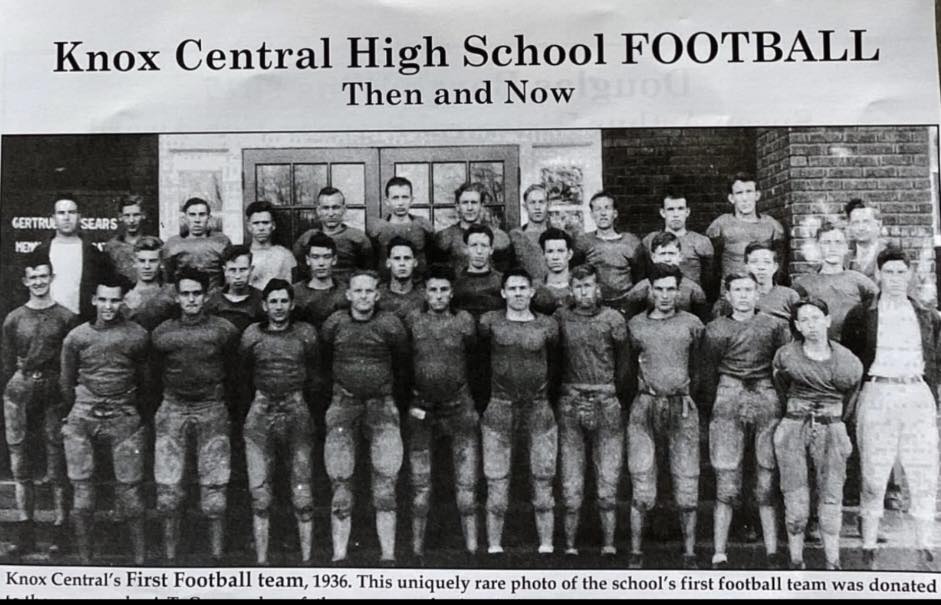
The rivalry between Knoxville High and Knoxville Central was the stuff of legend. Their annual Thanksgiving Day games were city-wide events that transcended the sport, bringing families and communities together for a tradition that defined the holiday. The game often drew crowds of over 10,000 people at Shields-Watkins Field, a remarkable number for the era. The rivalry was a microcosm of the city’s social fabric, with each team representing a different part of the community.
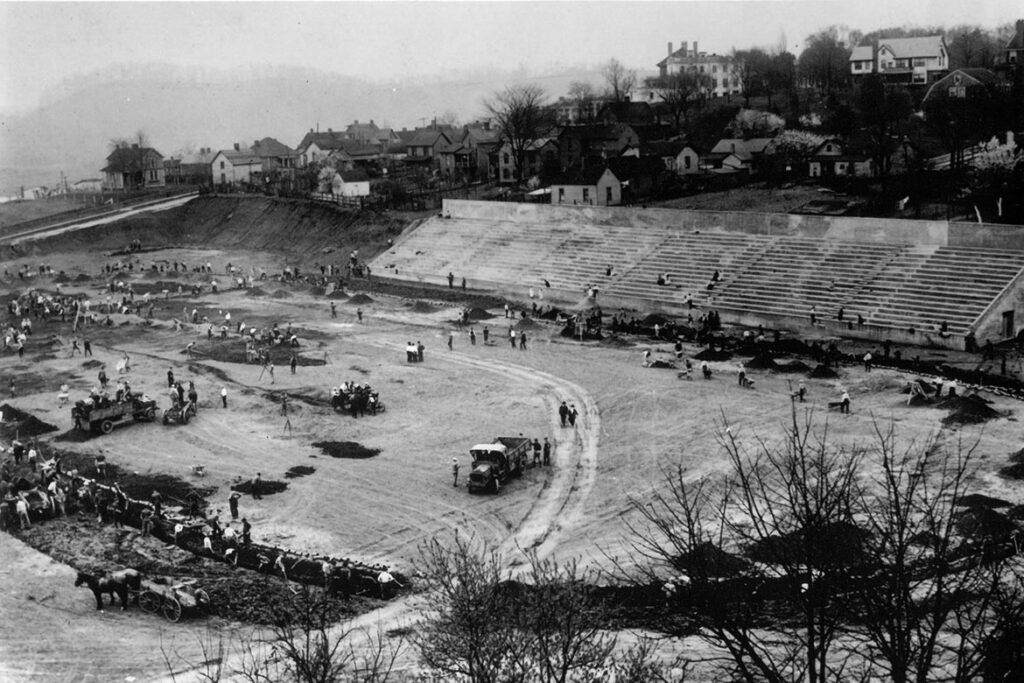
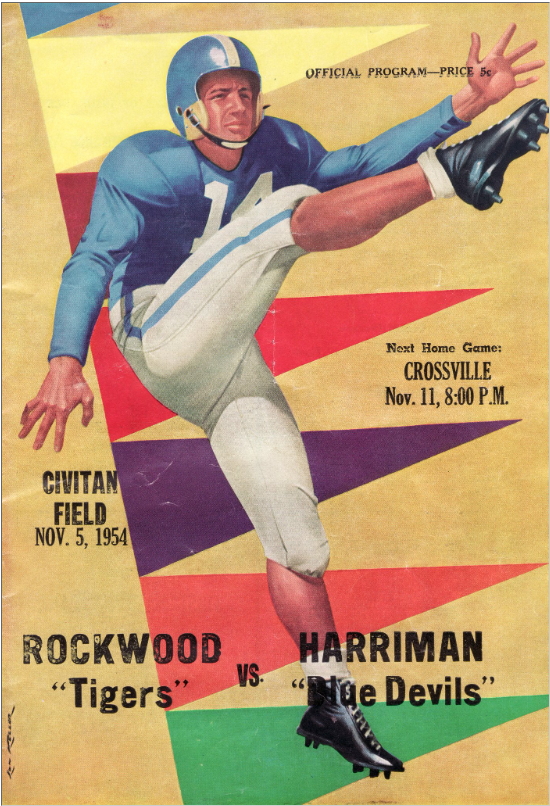
The Rockwood-Harriman Rivalry: Dating back to 1906, the Rockwood-Harriman rivalry is Tennessee’s longest-running high school football series. Known as the “Battle of the Bridge,” this matchup between the Rockwood Tigers and Harriman Blue Devils symbolizes small-town pride in Roane County. Early games were fiercely contested, with local newspapers chronicling the intense community support that turned Friday nights into celebrations of local identity.
Emerging Rural Programs: Beyond Knoxville, rural towns like Maryville, Alcoa, Kingsport, Cleveland, and Greeneville began formalizing athletic programs, driven by local pride and a desire to compete with urban centers. In Harriman, the Mooney School’s 1906 game against the University of Tennessee exemplified the era’s fluid boundaries between prep and college football, as small-town teams sought to prove their mettle. Rockwood’s early teams, playing on makeshift fields near the Emory River, built a foundation for their later success, with community-driven efforts to fund uniforms and travel. Cleveland High School, emerging in the 1910s, leveraged its industrial community’s support to establish a competitive program, while Greeneville High School’s early games against regional rivals laid the groundwork for its storied football tradition. These rural programs, often supported by local businesses and churches, fostered a sense of unity and ambition, setting the stage for the region’s athletic expansion in the decades to come.
The Storied Rivalry of Alcoa and Maryville Football
The football rivalry between Alcoa High School and Maryville High School is one of the most storied in Tennessee and among the most respected in the nation. Alcoa, a perennial powerhouse in smaller classifications, has built a dynasty with an extraordinary number of state championships, consistently producing dominant teams despite a smaller enrollment. Just a few miles away, Maryville has long been recognized as a juggernaut in the state’s largest divisions, boasting one of the highest all-time winning percentages in Tennessee high school football and multiple state titles of its own. The two schools, separated by less than five miles in Blount County, have clashed since the 1920s, creating a community event that transcends the sport itself. Their annual matchup often draws statewide attention, symbolizing not only the pride of two programs with remarkable legacies but also the unique depth of East Tennessee football tradition.
Part II: The Golden Age of Sports and the Expansion of Competition (1950s-1980s)
As the region grew, so did its sports programs. The post-World War II era saw the expansion of high school athletics across the region. New rivalries emerged, and the competition became more organized with the TSSAA governing bodies.
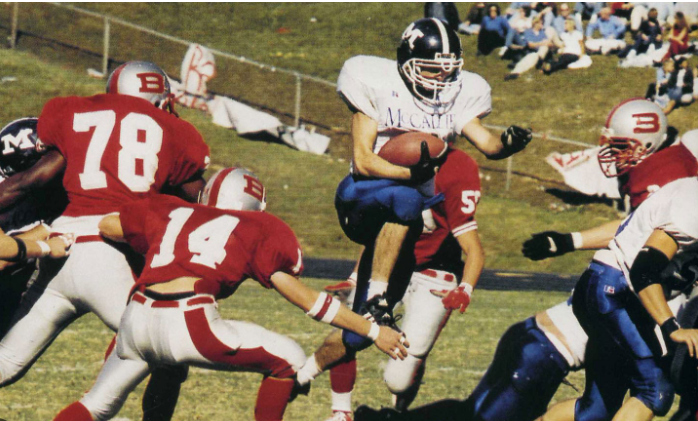
The Chattanooga Scene: While Knoxville was a football hotbed, the Chattanooga area also developed its own powerful athletic identity, anchored by the long-standing rivalry between McCallie and Baylor. These private schools, with their own unique traditions, have been competing since 1905. The games are characterized by intense passion and a high level of play that has produced numerous collegiate and professional athletes.
Tri-Cities Powerhouses: The Tri-Cities region—Bristol, Johnson City, and Kingsport—developed strong programs. Dobyns-Bennett High School in Kingsport became a football juggernaut, amassing the most all-time wins among Tennessee high schools. Their rivalry with Science Hill High School in Johnson City, dating back to 1916, remains a defining fixture, drawing thousands and shaping the region’s athletic identity. Tennessee High School in Bristol also shone, winning a national championship in 1972.
Rockwood’s Rise: Rockwood High School emerged as a force in the 1970s, with their 1974 state championship highlighting the talent in smaller communities. Their rivalry with Harriman continued to anchor Roane County’s football culture, with games often decided by narrow margins and celebrated with town-wide festivities.
Part III: The Modern Era: Evolution and Impact (1990s–Present)
The modern era of East Tennessee high school sports, spanning the 1990s to 2024, reflects a period of dynamic growth, driven by technological advancements, deepened community engagement, and a growing national reputation. Programs across urban and rural areas evolved, building on historical foundations to achieve new heights.
1990s: Foundations of Modern Success:
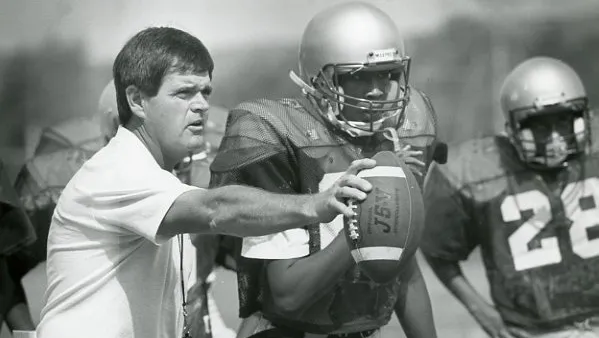
The 1990s marked a turning point as East Tennessee programs began adopting advanced training techniques, such as strength conditioning and early video analysis. Dobyns-Bennett High School in Kingsport invested in upgraded facilities, laying the groundwork for multiple state titles in the 2000s. Rockwood High School, building on its 1974 championship, strengthened its youth feeder programs, ensuring consistent playoff appearances. Harriman, despite its smaller size, maintained a competitive edge through community-funded equipment upgrades. Maryville and Alcoa also began their ascent, with Maryville securing early Class 6A titles and Alcoa starting a dynasty that would culminate in 21 state championships by 2024. These developments signaled a shift toward professionalized high school athletics across the region.
2000s: Dynasties and Community Unity:
The 2000s saw East Tennessee solidify its reputation as a football powerhouse. Alcoa’s remarkable 2004–2010 streak, with 43 consecutive wins and six straight state titles, showcased the Tornadoes’ disciplined coaching under Gary Rankin. Maryville matched this dominance with a 2014 overtime title win, overcoming a 28-point deficit. Rural programs like Greeneville and Cleveland also rose, with Greeneville’s back-to-back Class 4A titles in 2017 and 2018 highlighting small-town resilience. Community engagement deepened during this period, with games becoming economic and cultural drivers. In Roane County, Rockwood and Harriman’s “Battle of the Bridge” drew multigenerational crowds, with local businesses closing early to support the games. Kingsport’s Dobyns-Bennett vs. Science Hill matchups became civic festivals, boosting local pride and commerce.
2010s–2024: National Recognition and Talent Pipeline
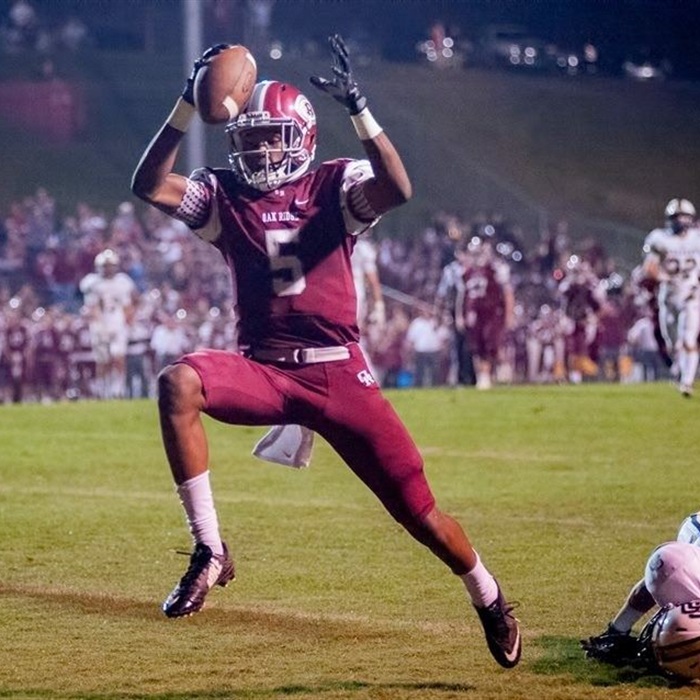
By the 2010s, East Tennessee’s programs gained national attention through media coverage and high-profile talent. Advanced technologies, like HUDL for game analysis and modern training facilities, became standard, elevating performance. Alcoa and Maryville continued their dominance, but other programs shone: Science Hill produced players like Steve Spurrier Jr., while Elizabethton’s Jason Witten became an NFL Hall of Famer. Alcoa’s Randall Cobb (NFL Pro Bowler) and Oak Ridge’s Tee Higgins (NFL wide receiver) furthered the region’s reputation. Chattanooga’s Malachi Smith excelled in college basketball, showing the region’s versatility. Coaches like John McKissick (Rockwood) and George Quarles (Maryville) became national figures, their strategies influencing programs beyond Tennessee. By 2024, teams like Sevier County added to the region’s championship tally, with packed stadiums from Knoxville to Kingsport reflecting an enduring cultural legacy.
A Legacy That Lives On
By 2024, East Tennessee high school football was more than competitive. It was nationally respected. Stadiums across the region, from Blankenship Field in Oak Ridge, constructed during the Manhattan Project, to J. Fred Johnson Stadium in Kingsport, continue to fill with passionate fans. These are not just sports venues; they are living monuments to tradition, community resilience, and regional pride.
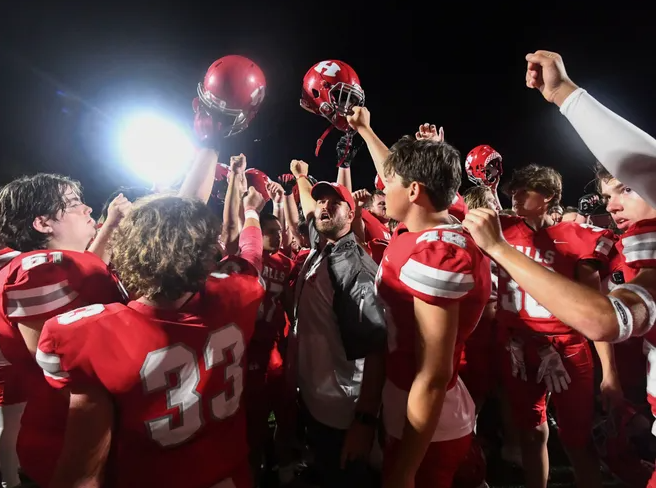
Each fall Friday night is a reunion of neighbors, classmates, and generations of alumni. Pep rallies still echo with school chants. Marching bands still rehearse long hours to perfect their halftime shows. Cheerleaders still soar in the crisp autumn air. The traditions may have evolved, but the heart of East Tennessee football has remained remarkably intact.
And yet, the sport continues to adapt. Live streamed games now reach alumni stationed around the world. Coaches and teams rely on digital analytics to refine play calling. Conversations about name, image, and likeness have even begun to shape the high school landscape. Coaches now mentor not just athletes, but student competitors navigating complex digital era futures. The field may be the same, but the game has never been more connected to the broader world.
Schools like South Doyle, West High in Knoxville, Bradley Central, and Farragut have joined the elite ranks in recent years, showing that East Tennessee’s strength is not limited to its historic programs. It continues to grow with each new class. Meanwhile, rivalries like Rockwood versus Harriman, Maryville versus Alcoa, and Dobyns Bennett against Science Hill continue to bind communities together, year after year, like sacred rites of passage.
communities together, year after year, like sacred rites of passage.
Conclusion: More Than a Game
High school football in East Tennessee is not just a sport. It is a cultural institution, a source of civic identity, and a bridge between generations. Its legacy is found not only in championship banners and highlight reels but in the way entire towns pause to cheer for their team, in the hand painted signs lining Main Street, and in the enduring friendships formed under stadium lights.
From the dusty fields of the early nineteen hundreds to the digital playbooks of today, East Tennessee’s gridiron tradition has remained a steady heartbeat in an ever changing world. Whether you are watching a future professional athlete or a first time starter, you are witnessing more than athleticism. You are witnessing a story that has been told, game after game, for more than a century.
At OEB Law, we understand that legacy. We support East Tennessee football not just because of what happens on the field, but because of what the sport represents. Community. Discipline. Unity. That is why we continue to invest in the programs, rivalries, and Friday night traditions that define our region. From sponsoring Rivalry Thursday and Friday broadcasts to standing behind the schools in Roane County and beyond, our commitment is grounded in the same values that make high school football matter.
As long as there are goalposts under the autumn sky, and as long as communities gather in the stands, OEB Law will be there. Cheering. Supporting. Helping write the next chapter in the story of East Tennessee football.

