Crossing busy roads in East Tennessee, like Kingston Pike in Knoxville or Chapman Highway, can be dangerous even when you’re careful. If you were hit by a car while crossing outside a designated crosswalk, you might wonder whether you even have a valid injury claim. The situation becomes more complicated when jaywalking is involved, but the answer may surprise you. Many pedestrians don’t realize they still have legal options even after crossing illegally. In this blog post, Knoxville attorney Tim Elrod discusses how jaywalking affects a pedestrian’s injury claim in Tennessee.
Jaywalking can significantly reduce your injury claim, but it does not automatically prevent you from recovering compensation. Tennessee uses a modified comparative fault system with a 50% bar rule, which means you can still recover damages as long as you are found to be less than 50% at fault for the accident. Your compensation is reduced proportionally by your percentage of fault.
Key Takeaways
- Jaywalking is considered negligence but does not automatically eliminate your right to compensation
- Tennessee’s 50% bar rule allows you to recover damages only if you are 49% or less at fault
- Drivers have a legal “duty of due care” to avoid hitting pedestrians even when they are jaywalking
- Both state law and Knoxville city ordinances govern pedestrian crossing violations
- Evidence of driver negligence (speeding, distraction, DUI) can shift fault away from the jaywalking pedestrian
To Discuss Your Case, Call or Text Our Team Standing By 24/7: (865) 546-1111
About OEB Law, Your Knoxville Legal Team

This guide is provided by the experienced attorneys at OEB Law, led by Managing Attorney Timothy G. Elrod. Founded in Knoxville in 2004, our firm has over 50 years of combined experience navigating East Tennessee’s legal system.
We have successfully represented thousands of personal injury clients, developing deep expertise in Tennessee’s complex wrongful death and accident laws. As East Tennessee natives, we have a direct understanding of the local court systems, law enforcement agencies, and community needs. Our commitment is to provide trusted, authoritative information to our neighbors in Knoxville and the surrounding Tennessee communities. However, this information does not constitute legal advice. If you or a loved one has been injured in an accident or needs legal help, call us today for a free, no obligation, initial consultation.
What Is Jaywalking Under Tennessee State Law?
Jaywalking refers to crossing a roadway illegally, typically outside of a marked or unmarked crosswalk at an intersection. Under Tennessee law, pedestrians have specific duties when crossing streets. These legal requirements determine whether a pedestrian’s actions contributed to an accident. Understanding these laws is essential for anyone involved in a pedestrian accident case.
Tennessee Code Annotated (TCA) Section 55-8-136 establishes the basic rule: pedestrians crossing at any point other than a marked crosswalk or an unmarked crosswalk at an intersection must yield the right-of-way to all vehicles. This means stepping into traffic mid-block or crossing against a signal constitutes jaywalking. Violating this statute creates a presumption of negligence on the pedestrian’s part.
The Driver’s Duty of Due Care Under TCA 55-8-136(b)
Even when a pedestrian is jaywalking, drivers are not absolved of all responsibility. Tennessee law imposes a critical limitation on driver rights through TCA Section 55-8-136(b). This provision requires every driver to exercise due care to avoid colliding with any pedestrian on a roadway. The law also requires drivers to give warning by sounding the horn when necessary and to exercise proper precaution when observing a child or incapacitated person.
This dual responsibility creates a balanced legal framework. A pedestrian who jaywalks is negligent, but a driver who fails to take reasonable steps to avoid the collision shares fault. Courts evaluate both parties’ actions when determining liability. This distinction becomes crucial in comparative fault analysis.
“Many people assume that if a pedestrian was jaywalking, the driver bears no responsibility. That’s simply not true under Tennessee law. Drivers have a continuing duty to watch for pedestrians and avoid collisions whenever reasonably possible, regardless of where the pedestrian is crossing.” – Knoxville personal injury attorney Timothy G. Elrod
Knoxville’s Local Jaywalking Ordinances
While state law provides the overarching framework, cities like Knoxville have their own specific ordinances that reinforce pedestrian crossing requirements. Knoxville City Code Section 17-339 specifically addresses “Crossing at other than crosswalks.” This local ordinance mirrors the state statute, requiring pedestrians to yield the right-of-way to vehicles when crossing outside designated crosswalks.
The existence of this local ordinance demonstrates that Knoxville takes pedestrian safety seriously on busy roads like Cumberland Avenue near the University of Tennessee campus (“The Strip”), Kingston Pike, and Chapman Highway. These high-traffic areas see frequent pedestrian accidents. Local law enforcement uses these ordinances when investigating accidents and determining fault. Knoxville attorneys familiar with both state and local laws can better represent clients in these cases.
Understanding Tennessee’s Modified Comparative Fault System
Tennessee follows a modified comparative fault system, which directly determines whether an injured pedestrian can recover compensation and how much. This system differs significantly from some other states’ approaches. Under this framework, a court or jury assigns a percentage of fault to each party involved in an accident. The pedestrian’s total damage award is then reduced by their percentage of fault.
The critical component is Tennessee’s 50% bar rule. If a pedestrian is found to be 50% or more at fault for the accident, they are completely barred from recovering any compensation. However, if the pedestrian’s fault is 49% or less, they can still recover damages, though reduced proportionally. For example, a pedestrian found 30% at fault for a $100,000 injury would recover $70,000.
This system creates a battleground in jaywalking cases. Insurance companies typically argue that jaywalking pedestrians bear the majority of fault. Defense attorneys work to push the pedestrian’s fault percentage above 50% to eliminate liability entirely. Understanding how fault is allocated becomes essential for protecting your rights.
| Pedestrian’s Estimated Fault | How Compensation is Calculated | Final Recovery Amount | |
|---|---|---|---|
| ✅ | 30% (Less than 50%) | $100,000 (Total) – $30,000 (30% Fault) | $70,000 |
| ✅ | 49% (Less than 50%) | $100,000 (Total) – $49,000 (49% Fault) | $51,000 |
| ❌ | 50% (The 50% Bar) | Recovery is completely barred. | $0 |
| ❌ | 70% (More than 50%) | Recovery is completely barred. | $0 |
How Fault Is Assigned in Jaywalking Pedestrian Accidents
Courts and insurance adjusters evaluate multiple factors when assigning fault percentages in pedestrian accidents involving jaywalking. The analysis goes far beyond simply determining whether the pedestrian was in a crosswalk. Each case involves a detailed examination of both parties’ actions leading up to the collision.
Key factors that influence fault allocation:
- Visibility conditions: Time of day, weather, street lighting, and whether the pedestrian was wearing reflective clothing
- Driver behavior: Speed, attention to the road, phone use, impairment, and reaction time
- Pedestrian behavior: Whether they looked before crossing, ran into traffic, or crossed gradually
- Traffic patterns: Volume of traffic, whether other vehicles saw and avoided the pedestrian
- Roadway design: Availability of nearby crosswalks, road width, and traffic control devices
Evidence plays a crucial role in these determinations. Police reports, traffic camera footage, dash cam video, witness statements, and accident reconstruction analysis all contribute to the final fault allocation. The Knoxville Police Department’s investigation and report significantly influence how fault is assigned in local cases.
| The Scenario (Pedestrian Jaywalks) | Impact on Fault Allocation | Likely Compensation Outcome | |
|---|---|---|---|
| 🍻 | …but the driver was intoxicated (DUI). | “Almost always results in majority fault being assigned to the driver.” | ✅ Recovery Likely |
| 📱 | …but the driver was texting or seriously distracted. | “Shifts significant fault away from the pedestrian.” | ✅ Recovery Likely |
| 💨 | …but the driver was speeding excessively. | “Shifts significant fault away from the pedestrian.” | ✅ Recovery Likely |
| 🛑 | …but the driver ran a red light or stop sign. | “The driver’s traffic violation often outweighs the pedestrian’s jaywalking.” | ✅ Recovery Likely |
| 🏃♂️ | …and darts into traffic at night. The driver was attentive and at the speed limit. | Pedestrian is likely to be found 50% or more at fault. | ❌ Recovery Barred |
“We’ve handled numerous pedestrian accident cases on Cumberland Avenue and other busy Knoxville roads where the pedestrian was technically jaywalking. The outcome depends heavily on what the driver was doing at the time. If the driver was speeding, texting, or simply not paying attention, that shifts significant fault away from the pedestrian, even one who crossed illegally.” – Knoxville attorney Tim Elrod
Factors That Can Reduce a Pedestrian’s Fault Percentage
Even when jaywalking is clearly established, several factors can shift more responsibility to the driver. These factors demonstrate that the driver failed in their duty of due care under TCA 55-8-136(b). Identifying and proving these factors becomes essential for maximizing a jaywalking pedestrian’s recovery.
Driver Negligence That Increases Liability
Speeding creates liability even when a pedestrian jaywalks. A driver traveling above the posted limit has less time to react and greater stopping distance. Tennessee courts recognize that excessive speed contributes significantly to both the occurrence and severity of pedestrian accidents. Roads like Kingston Pike with 40-45 mph speed limits become particularly dangerous when drivers exceed these limits.
Distracted driving represents one of the most common forms of driver negligence. Cell phone use, eating, adjusting controls, or conversing with passengers diverts attention from the roadway. When a distracted driver hits a pedestrian, evidence of that distraction substantially increases the driver’s fault percentage. Phone records often prove critical in these cases.
Driving under the influence of alcohol or drugs almost always results in majority fault being assigned to the driver. Tennessee law recognizes that impaired drivers cannot exercise proper due care. Even if a pedestrian darts into traffic, an impaired driver bears substantial responsibility for failing to maintain the capability to drive safely.
Failure to maintain proper lookout means the driver wasn’t actively scanning for pedestrians. This becomes especially relevant in areas near the University of Tennessee campus where pedestrian traffic is heavy and predictable. Drivers have heightened duties in areas where pedestrians are commonly present.
What Compensation Can Jaywalking Pedestrians Recover?
Pedestrians found less than 50% at fault can recover several categories of damages, though each is reduced by their fault percentage. Understanding what compensation is available helps injured pedestrians evaluate settlement offers and make informed decisions about their cases. The top attorneys in Knoxville can help maximize recovery even in challenging jaywalking cases.
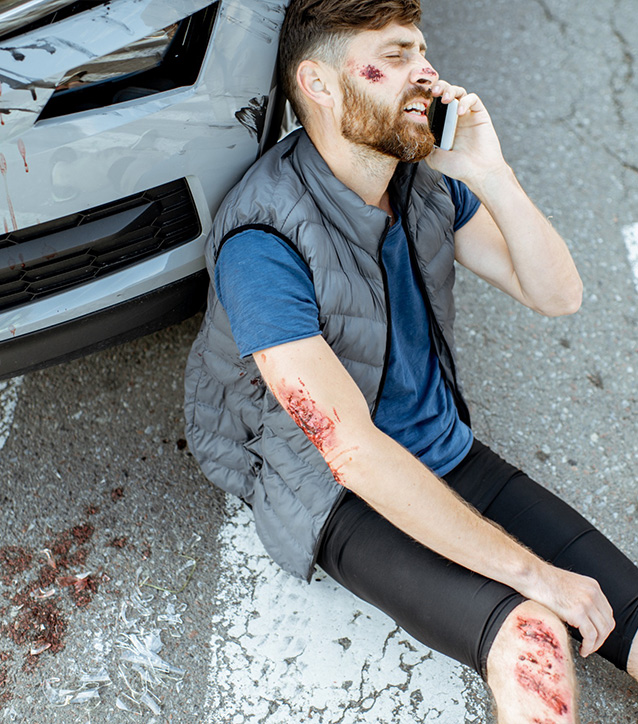
Economic damages include all financial losses directly resulting from the accident. Medical expenses (emergency room, hospital stays, surgeries, physical therapy, medications, and future medical care) form the largest category. Lost wages compensate for time missed from work during recovery. If the injuries cause permanent disability affecting earning capacity, future lost income is also recoverable. Property damage, typically to personal belongings like phones or bags, is included as well.
Non-economic damages compensate for subjective harms that don’t have specific price tags. Pain and suffering addresses physical discomfort and limitations during recovery. Emotional distress accounts for psychological trauma, anxiety, or depression resulting from the accident. Loss of enjoyment of life compensates for inability to participate in previously enjoyed activities. Scarring and disfigurement damages apply when injuries cause permanent visible marks.
Tennessee’s personal injury settlement calculator can help you estimate the potential value of your claim. However, every case is unique, and the specific facts surrounding your accident will significantly impact the final compensation amount.
The Investigation Process After a Jaywalking Accident
The investigation immediately following a pedestrian accident shapes the entire case. Evidence collected in the first hours and days becomes crucial for establishing fault percentages. Insurance companies begin investigating immediately, often contacting injured pedestrians before they understand their rights.
Police reports from the Knoxville Police Department or Tennessee Highway Patrol document the initial findings. Officers note the pedestrian’s location, visible injuries, road conditions, lighting, and statements from both parties. They may issue citations for jaywalking or traffic violations. These reports heavily influence insurance company evaluations, though they are not conclusive determinations of fault.
Witness statements provide crucial third-party perspectives. Witnesses can verify whether the pedestrian looked before crossing, how fast the driver was traveling, whether the driver was distracted, and how visible the pedestrian was. Contact information for witnesses should be obtained at the scene whenever possible.
Physical evidence includes photographs of the accident scene, damage to the vehicle (particularly impact location), skid marks, road conditions, and visibility factors. Many accidents occur in areas with traffic cameras or nearby business surveillance. Obtaining this footage quickly is essential before it is overwritten or deleted.
| Evidence to Gather | Why It’s Crucial for Your Claim | |
|---|---|---|
| 📝 | Police Reports | Get the KPD or THP report. It documents initial findings, road conditions, statements, and any citations. Insurance companies rely heavily on this. |
| 🗣️ | Witness Statements | Get names and contact info. Witnesses provide third-party proof of driver speed, distraction (like phone use), or your visibility. |
| 📸 | Physical Evidence (Photos) | Photograph the scene, vehicle damage (impact location), skid marks, and road conditions. This evidence disappears quickly. |
| 📹 | Video Footage | Look for traffic cameras or nearby business surveillance. This footage is the strongest evidence but is often deleted or overwritten within days. Act fast. |
How Insurance Companies Handle Jaywalking Claims
Insurance companies approach jaywalking pedestrian claims with skepticism and aggressive liability arguments. Their goal is to minimize payouts by maximizing the pedestrian’s fault percentage. Understanding their tactics helps injured pedestrians protect their rights and avoid damaging their claims.
Initial settlement offers in jaywalking cases are typically extremely low or even zero. Insurance adjusters argue that the pedestrian’s illegal crossing makes them solely responsible. They point to the jaywalking violation as conclusive evidence of fault. These early offers are almost always far below fair value and should not be accepted without legal consultation.
Common insurance company tactics include:
- Recorded statements designed to elicit admissions of fault
- Requests to sign broad medical releases giving access to unrelated medical history
- Quick settlement offers before the full extent of injuries is known
- Arguments that the pedestrian “should have known better”
- Emphasis on the pedestrian’s violation while downplaying driver negligence
The adjuster’s primary tool is the police report. If it indicates the pedestrian was jaywalking, insurance companies use this as justification for denying claims. They often ignore or minimize evidence of driver negligence documented in the same report. Having experienced legal representation counters these tactics with thorough investigation and presentation of all relevant facts.
Tennessee’s Right-of-Way Laws and Pedestrian Accidents
Understanding who has the right of way in pedestrian-vehicle accidents in Tennessee provides essential context for jaywalking cases. Right-of-way laws create a hierarchy of priorities that determine which party should yield in different situations. These laws directly affect fault allocation.
When pedestrians cross at marked crosswalks or unmarked crosswalks at intersections, they generally have the right of way. Drivers must yield and allow them to cross safely. However, when pedestrians cross mid-block or outside crosswalks, they must yield the right of way to vehicles. This creates the legal basis for finding jaywalking pedestrians partially at fault.
The distinction between marked and unmarked crosswalks confuses many people. Tennessee law recognizes that crosswalks exist at intersections even without painted lines. These “unmarked crosswalks” extend the sidewalk across the roadway. Pedestrians using these unmarked crosswalks have the same rights as those in marked crosswalks. This becomes particularly relevant in older Knoxville neighborhoods where crosswalks may not be clearly marked.
Special rules apply in school zones, residential areas, and near hospitals. Drivers have heightened duties in these locations. A pedestrian jaywalking near Fort Sanders Regional Medical Center or in a neighborhood with visible children playing faces different fault analysis than one crossing a highway at night.
The Role of Contributory Negligence vs. Comparative Fault
Tennessee abandoned the harsh contributory negligence system in 1992, adopting the fairer modified comparative fault approach instead. Understanding this distinction helps explain why jaywalking pedestrians can still recover compensation, unlike in contributory negligence states.
Under the old contributory negligence rule, any fault by the pedestrian – even 1% – completely barred all recovery. If a pedestrian was technically jaywalking, they received nothing, regardless of how negligent the driver was. This produced unjust results where seriously injured pedestrians with minor violations received no compensation despite predominantly negligent drivers.
The shift to comparative fault in the case McIntyre v. Balentine revolutionized Tennessee personal injury law. The Tennessee Supreme Court recognized that fault should be allocated proportionally. A pedestrian who was 10% at fault should not lose 100% of their recovery. This principle of fairness underlies all modern pedestrian accident cases.
The 50% bar rule represents a compromise between pure comparative fault (which allows recovery even at 99% fault) and contributory negligence (which bars all recovery at any fault). Tennessee’s approach recognizes that when a plaintiff bears majority responsibility for their own injuries, they should not recover from others. However, when others are more at fault, the injured party deserves proportional compensation.
When Jaywalking Doesn’t Bar Your Claim
Several scenarios exist where jaywalking pedestrians retain strong claims despite their illegal crossing. Understanding these situations helps injured pedestrians recognize that they may have viable cases worth pursuing. The key is examining the driver’s conduct independent of the pedestrian’s jaywalking.
Scenarios where jaywalking has minimal impact:
- Driver was intoxicated or impaired: DUI drivers almost always bear majority fault regardless of pedestrian behavior
- Driver was texting or seriously distracted: Evidence of phone use at impact time shifts substantial fault to the driver
- Excessive speeding in pedestrian-heavy areas: Drivers traveling significantly above the limit near downtown Knoxville or campus areas bear heightened responsibility
- Driver ran a red light or stop sign: The driver’s traffic violation often outweighs the pedestrian’s jaywalking
- Pedestrian was clearly visible for extended time: If the driver had ample opportunity to see and avoid the pedestrian, their failure to do so demonstrates negligence
- Driver fled the scene: Hit-and-run behavior indicates consciousness of fault and typically results in majority driver liability
These factors don’t eliminate the pedestrian’s fault, but they prevent it from reaching the 50% threshold that bars recovery. An experienced personal injury attorney investigates these factors thoroughly to build the strongest possible case for a jaywalking pedestrian.
Building a Strong Case Despite Jaywalking
Successfully pursuing compensation after a jaywalking accident requires strategic case development. The focus must shift from defending the jaywalking to proving the driver’s independent negligence. This approach acknowledges the pedestrian’s fault while demonstrating the driver bore greater responsibility.
Essential case-building steps include:
Obtaining the complete police report and crash reconstruction analysis: These documents provide the foundation for understanding how the accident occurred and what both parties were doing.
Securing traffic camera and surveillance footage: Video evidence is often the most powerful tool for demonstrating driver negligence or pedestrian visibility.
Collecting witness statements: Independent third-party accounts carry significant weight with insurance adjusters and juries.
Analyzing phone records: Subpoenaing the driver’s cell phone records can prove distraction at the time of impact.
Documenting injuries thoroughly: Extensive medical documentation justifies the damages being claimed and demonstrates the severity of harm.
Consulting accident reconstruction experts: Professional analysis can establish vehicle speed, sight lines, reaction times, and whether the collision was avoidable.
The goal is creating a comprehensive picture where the driver’s negligence overshadows the pedestrian’s jaywalking. This requires the resources and expertise that the OEB Law attorneys bring to every case. Our firm’s 5 star Google reviews reflect our commitment to thorough case preparation.
Special Considerations for Specific Knoxville Locations
Certain East Tennessee locations present unique challenges and opportunities in jaywalking cases. Understanding the characteristics of these areas helps evaluate fault and build stronger cases. Local knowledge of traffic patterns, pedestrian volumes, and historical accident data provides significant advantages.
Cumberland Avenue (“The Strip”) near the University of Tennessee campus presents special circumstances. This area has extremely high pedestrian traffic, especially during class changes and evenings. Drivers in this area should anticipate pedestrians crossing at various points. Courts recognize that drivers on The Strip have heightened duties because pedestrian presence is predictable and constant. Jaywalking in this area may result in lower pedestrian fault percentages than on highways.
Kingston Pike runs through West Knoxville with varying speed limits and traffic volumes. The multi-lane configuration and moderate to high speeds make jaywalking particularly dangerous. However, many sections have inadequate crosswalks for the distance between intersections. Pedestrians sometimes face quarter-mile or longer walks to reach designated crossings. This fact can reduce pedestrian fault percentages when reasonable crosswalk access doesn’t exist.
Chapman Highway and Alcoa Highway are high-speed corridors where jaywalking is especially dangerous. Pedestrian fault percentages tend to be higher on these roads due to the speed and configuration. However, driver negligence like speeding or distraction becomes even more critical at these speeds. The difference between a driver traveling the 55 mph speed limit versus 65-70 mph dramatically affects fault allocation.
The Impact of Pre-Existing Conditions on Your Claim
Insurance companies frequently argue that injuries resulted from pre-existing conditions rather than the accident. This becomes an additional challenge in jaywalking cases where insurers already seek to minimize liability. Understanding how Tennessee law treats pre-existing conditions protects your right to full compensation.
Tennessee follows the “eggshell plaintiff” doctrine, which holds defendants liable for all injuries caused, even if the victim was more susceptible to injury than an average person. If you had prior back problems and the accident aggravated them, the driver remains responsible for all aggravation and new injuries. Your pre-existing condition doesn’t reduce their liability.
The key distinction is between pre-existing conditions and new or worsened injuries. Comprehensive medical documentation separating prior conditions from accident-related harm becomes essential. Pre-accident medical records establish baseline health, while post-accident treatment notes document new complaints and limitations. This documentation prevents insurance companies from incorrectly attributing all problems to pre-existing conditions.
Medical experts often need to provide opinions distinguishing old injuries from new ones. These expert opinions carry significant weight in settlement negotiations and trials. The investment in proper medical documentation pays dividends in claim value, especially in jaywalking cases where every advantage matters.
Time Limits for Filing Jaywalking Pedestrian Claims
Tennessee law imposes strict deadlines for filing personal injury lawsuits. Missing these deadlines permanently bars your claim, regardless of its merit. Understanding these time limits is critical for protecting your rights after a jaywalking accident.
The statute of limitations for personal injury claims in Tennessee is generally one year from the date of the accident. This gives injured pedestrians one year to either settle their claim or file a lawsuit in court. Once this year passes, the defendant can move to dismiss the case, and courts will grant that motion except in rare circumstances.
Important exceptions and considerations:
- Discovery rule: In rare cases where injuries aren’t immediately apparent, the one-year period may begin when the injury is discovered
- Minor plaintiffs: If the injured pedestrian is under 18, the statute of limitations is tolled (paused) until they reach age 18
- Government defendants: Claims against city or county governments have much shorter notice requirements (often 6 months or less)
- Wrongful death: The one-year period begins at the date of death, not the date of the accident
The one-year deadline creates urgency for jaywalking accident cases. Insurance companies know this deadline and often delay negotiations hoping injured pedestrians will miss it. Consulting with a Knoxville personal injury attorney early in the process protects your rights and maintains maximum leverage in negotiations.
Why Choose OEB Law for Your Jaywalking Pedestrian Accident Claim

Jaywalking pedestrian accident cases require attorneys who understand both Tennessee’s comparative fault system and the specific characteristics of East Tennessee roads and communities. The challenges these cases present demand experience, resources, and commitment to thorough case development.
At OEB Law, we recognize that being hit by a vehicle is traumatic regardless of where you were crossing. Our approach focuses on the complete picture: what you were doing, but more importantly, what the driver was doing and whether the accident was preventable. We’ve successfully represented clients in jaywalking cases throughout Knoxville and East Tennessee, securing compensation even when initial fault assessments were unfavorable.
Our local knowledge provides significant advantages. We know Cumberland Avenue’s traffic patterns, Kingston Pike’s crosswalk gaps, and the specific challenges pedestrians face on East Tennessee roads. This familiarity helps us build compelling cases showing how local conditions affected the accident. We understand how Knoxville Police Department investigations work and how local juries view these cases.
Who is OEB Law and Why Are They Good for the Community?
Led by Managing Attorney Timothy G. Elrod and Our Experienced Legal Team
Founded in 2004 in Knoxville, Tennessee, OEB Law has grown over nearly two decades to now serve clients across multiple states. Tim Elrod established the firm with a simple but powerful mission: we care and we help people. Today, together with attorneys Michael Bernard, Billy Sivyer, Gena Lewis, and Logan Wade, our team brings over 50 years of combined experience representing clients throughout Tennessee and Kentucky in personal injury and criminal defense cases.
Our Legal Expertise
Our attorneys have built their reputation through:
- Successfully representing thousands of personal injury and criminal defense clients
- Developing specialized knowledge across all types of accident and injury cases
- Mastering the complexities of Tennessee’s legal system through decades of practice
Why Trust Us
At OEB Law, our reputation speaks for itself:
- Proven Results: We’ve recovered significant compensation for our clients through both settlements and courtroom verdicts
- Client Satisfaction: Our numerous 5-Star Google Reviews showcase our commitment to responsive, caring, and effective legal representation
- No Fee Unless We Win: You don’t pay attorney fees unless we successfully secure compensation in your case
- Local Knowledge: As East Tennessee natives, we understand our community and care deeply about the people we serve
- Personalized Approach: We personalize each case to meet our clients’ specific needs, ensuring you’re never just another file number
Community Commitment
Our dedication extends beyond the courtroom. We proudly support:
- Boys & Girls Clubs of Tennessee Valley programs and toy drives
- Local high school football programs through Rivalry Thursday sponsorships
- The Knoxville Ice Bears and community fundraising initiatives
- Numerous youth, student, and community organizations throughout East Tennessee
As Tim Elrod says, “We don’t just take—we give back because the people you’re giving back to are the people who are supporting your firm.“
Have a personal injury or criminal defense case? We’re available 24/7 to help.
Get In Touch
- Call or Text: (865) 546-1111
- Visit: https://oeblawtn.com/
- Available: Standing by 24/7
Why OEB Law? Because They’re Good For The Community.
TEXT or CALL (865) 546-1111 for HELP NOW. Standing By 24/7.
Follow Us on Social Media
Stay connected with OEB Law for legal updates, community news, and helpful information:
FAQ:
Yes, you can still recover compensation in Tennessee as long as you are found to be less than 50% at fault for the accident. Tennessee’s modified comparative fault system reduces your compensation by your percentage of fault, but does not eliminate it entirely unless you bear majority responsibility. For example, if you were jaywalking but the driver was speeding and texting, you might be assigned 30% fault while the driver receives 70% fault. In this scenario, you would recover 70% of your total damages. The key is proving that the driver’s negligence contributed significantly to the accident despite your jaywalking. Working with an experienced Knoxville pedestrian accident attorney ensures thorough investigation of all factors that affected the collision and maximizes your potential recovery.

