After being involved in an accident while riding in an Uber or Lyft in Knoxville, many victims discover their claim is far more complex than a typical car accident case. Tennessee’s rideshare regulations create multiple layers of insurance coverage that depend on the driver’s app status at the exact moment of the collision. These complexities mean that determining which insurance company pays your medical bills and property damage requires specialized legal knowledge. Additionally, rideshare companies employ sophisticated legal teams designed to minimize payouts, making it crucial for accident victims to understand their rights under Tennessee law. In this blog post, Knoxville attorney Tim Elrod discusses the critical differences between rideshare accident claims and regular car accidents in Tennessee, including insurance complexities, liability issues, and what victims need to know.
Rideshare accident claims in Tennessee differ from regular car accidents primarily due to complex insurance coverage that depends on the driver’s status at the time of the crash. While regular car accidents involve straightforward personal auto insurance, rideshare accidents may involve the driver’s personal policy, Uber or Lyft’s contingent coverage, or their $1 million commercial policy—determined by whether the driver was offline, waiting for a ride request, en route to a passenger, or actively transporting someone.
Key Takeaways
- Rideshare insurance coverage depends on the driver’s app status at the time of the accident, creating three distinct insurance phases in Tennessee
- Tennessee’s one-year statute of limitations applies to rideshare accidents under TN Code Annotated § 28-3-104, requiring swift legal action
- Multiple insurance policies may be involved, including the driver’s personal coverage, Uber/Lyft’s contingent policy, and their $1 million commercial liability policy
- Knoxville rideshare victims face unique challenges navigating Knox County court procedures and negotiating with corporate insurance adjusters
To Discuss Your Case, Call or Text Our Team Standing By 24/7: (865) 546-1111
About OEB Law, Your Knoxville Legal Team

This guide is provided by the experienced attorneys at OEB Law, led by Managing Attorney Timothy G. Elrod. Founded in Knoxville in 2004, our firm has over 50 years of combined experience navigating East Tennessee’s legal system.
We have successfully represented thousands of personal injury clients, developing deep expertise in Tennessee’s complex rideshare and accident laws. As East Tennessee natives, we have a direct understanding of the local court systems, insurance companies, and community needs. Our commitment is to provide trusted, authoritative information to our neighbors in Knoxville and the surrounding Tennessee communities. However, this information does not constitute legal advice. If you or a loved one has been injured in an accident or needs legal help, call us today for a free, no obligation, initial consultation.
Understanding Tennessee’s Rideshare Insurance Framework
Tennessee law requires rideshare companies like Uber and Lyft to maintain different insurance coverage levels based on the driver’s activity at the time of an accident. This creates a fundamentally different insurance landscape compared to regular car accidents. Under TN Code Annotated § 56-7-1201, rideshare companies must provide specific insurance coverage that activates based on whether the driver is actively using the app and transporting passengers.
Understanding these phases becomes critical when an accident occurs because the coverage available can range from Tennessee’s minimum liability requirements of $25,000 per person and $50,000 per accident to Uber and Lyft’s full $1 million commercial policy. This complexity makes rideshare accident claims significantly more challenging than traditional car accident cases where only one driver’s personal auto insurance typically applies.
“Many rideshare accident victims don’t realize that the coverage available for their injuries depends entirely on what the driver was doing at the exact moment of the collision. This distinction can mean the difference between $25,000 in available coverage and $1 million.” – Knoxville attorney Tim Elrod
Phase 1: Driver Offline or App Closed
When a rideshare driver has their app closed or isn’t logged into the Uber or Lyft platform, they’re considered a regular driver. In this phase, only the driver’s personal auto insurance applies. Tennessee requires minimum liability coverage of $25,000 per person for bodily injury, $50,000 per accident, and $25,000 for property damage. However, many personal auto insurance policies specifically exclude coverage when the vehicle is used for commercial purposes, creating potential coverage gaps.
If you’re injured by a rideshare driver during Phase 1, you may face significant challenges recovering compensation. The driver’s personal insurance company may deny the claim entirely if they discover the driver works for a rideshare company, even if the app wasn’t active during the accident. This situation requires immediate legal intervention to protect your rights.
Phase 2: Driver Available, Waiting for Ride Request
Once a rideshare driver logs into the Uber or Lyft app and becomes available to accept ride requests, contingent coverage activates. Tennessee law requires rideshare companies to provide at least $50,000 per person for bodily injury, $100,000 per accident, and $25,000 for property damage during this waiting period. This coverage only applies if the driver’s personal insurance denies the claim.
Phase 2 accidents present unique complications because multiple insurance companies may dispute which policy is primary. The driver’s personal insurer typically argues the commercial activity excludes coverage, while Uber or Lyft’s contingent policy claims it’s only secondary coverage. These disputes can delay your compensation significantly, making experienced legal representation essential.
Phase 3: Driver En Route or Actively Transporting Passengers
The most comprehensive coverage applies when the driver has accepted a ride request and is either traveling to pick up the passenger or actively transporting them. During Phase 3, Uber and Lyft’s full $1 million commercial liability policy becomes primary. This coverage also includes uninsured/underinsured motorist protection if another driver causes the accident.
For passengers injured during Phase 3, this million-dollar policy provides substantial protection. However, getting Uber or Lyft to pay the full value of your claim still requires negotiation with their corporate legal teams, who aggressively defend against claims to protect their bottom line.
Key Differences Between Rideshare and Regular Car Accident Claims in TN
The fundamental structure of rideshare accident claims differs dramatically from traditional car accident cases in Tennessee. While a regular car accident typically involves two drivers with personal auto insurance policies negotiating fault and damages, rideshare accidents introduce corporate entities, commercial insurance policies, and complex liability questions. These differences affect every aspect of the claims process, from the initial investigation to final settlement negotiations.
Determining Fault and Liability
In a regular car accident, fault determination usually focuses on two individual drivers and their actions leading up to the collision. Tennessee follows a modified comparative fault rule under TN Code Annotated § 29-11-103, meaning if you’re 50% or more at fault, you cannot recover any compensation. However, rideshare accidents introduce additional liability considerations beyond just the drivers involved.
Potential defendants in rideshare accident claims include:
- The rideshare driver for negligent operation
- Uber or Lyft for negligent hiring or inadequate background checks
- The rideshare company for app malfunctions that contributed to the accident
- Other drivers who may have caused or contributed to the collision
- Vehicle manufacturers if a defect played a role
- Government entities if road conditions were a factor
This multi-party liability landscape means that investigating a rideshare accident requires more extensive legal work compared to regular car accident cases. Our experienced attorneys must examine the rideshare driver’s employment history, the company’s vetting procedures, and whether app distractions contributed to the collision.
Insurance Claim Complexity
When you’re injured in a regular car accident in Knoxville, you typically file a claim with the at-fault driver’s insurance company and negotiate with a single adjuster. The process follows established Tennessee insurance practices, and most adjusters have authority to settle claims within certain ranges. Although still challenging, this straightforward structure is far simpler than rideshare accident claims.
Rideshare accident claims require navigating multiple insurance companies simultaneously. First, you must determine which insurance phase applies based on the driver’s app status. Next, you may need to file claims with both the driver’s personal insurer and the rideshare company’s commercial policy. Each insurance company will investigate independently, often pointing fingers at the other to avoid paying your claim.
Furthermore, Uber and Lyft employ sophisticated claim management systems designed to minimize payouts. Their adjusters receive specialized training in defending rideshare claims and typically offer low initial settlements. Unlike local insurance adjusters who handle diverse claims, these corporate representatives focus exclusively on protecting the rideshare company’s interests.
Tennessee’s Modified Comparative Fault Rule in Rideshare Cases
Tennessee Code Annotated § 29-11-103 establishes that accident victims can only recover damages if they are less than 50% at fault for the collision. If the victim bears 50% or more responsibility, they’re completely barred from recovery. This comparative fault analysis becomes more complex in rideshare accidents due to the multiple parties involved.
Consider a scenario where a rideshare driver is transporting a passenger through downtown Knoxville on Market Square when another driver runs a red light. However, evidence shows the rideshare driver was also speeding and distracted by the navigation app. Tennessee courts would assign fault percentages to both drivers. If the rideshare driver is found 40% at fault and the other driver 60% at fault, the passenger can recover from both parties, but each recovery is reduced by the respective driver’s fault percentage.
This complexity requires experienced legal analysis to ensure fault is properly allocated. Insurance companies representing rideshare drivers often try to shift blame to maximize their client’s fault percentage and reduce their payout obligations.
Tennessee’s Strict One-Year Deadline for Rideshare Accident Claims
Tennessee imposes one of the shortest statutes of limitations in the nation for personal injury claims. Under TN Code Annotated § 28-3-104, victims have only one year from the date of the accident to file a lawsuit, or they permanently lose their right to compensation. This aggressive deadline applies equally to rideshare accidents, making swift action essential for protecting your legal rights.
Why Rideshare Accidents Require Earlier Action
The one-year deadline is particularly challenging for rideshare accident victims because of the additional investigation time these cases require. Regular car accidents involve obtaining a police report and medical records, which typically takes a few weeks. However, rideshare accidents also require securing evidence from Uber or Lyft, including driver records, app data, and trip information.
These corporations don’t voluntarily provide this information quickly. Attorneys must submit formal record requests and often wait months for responses. Additionally, determining which insurance phase applies requires careful analysis of timestamped data from the rideshare app. If you wait too long to consult with a Knoxville personal injury attorney, you may run out of time to gather the evidence needed to prove your claim before the one-year deadline expires.
Medical treatment timelines also affect rideshare accident cases. Many victims don’t realize the full extent of their injuries for weeks or months after the accident. However, if you wait until reaching maximum medical improvement before contacting an attorney, you may have only a few months left to investigate, negotiate, and potentially file a lawsuit.
Tolling Exceptions Under Tennessee Law
Tennessee law provides limited exceptions that pause or “toll” the statute of limitations. If the injured victim is a minor (under age 18), the one-year clock doesn’t start until they turn 18, giving them until age 19 to file suit. Similarly, if the victim is mentally incapacitated at the time of the accident, the deadline may be extended until they regain capacity.
Another important exception involves fraudulent concealment. If Uber, Lyft, or the rideshare driver deliberately hides evidence or misrepresents facts that prevent you from discovering your claim, Tennessee courts may extend the filing deadline. However, proving fraudulent concealment requires substantial evidence and shouldn’t be relied upon as a backup plan.
Knox County Court Filing Procedures
When rideshare accident damages exceed $25,000, victims must file their lawsuit in Knox County Circuit Court, located at 400 Main Street in downtown Knoxville. The filing process requires preparing a formal complaint that identifies all defendants, explains the legal basis for liability, and specifies the damages sought. Tennessee’s civil procedure rules mandate specific formatting and content requirements that, if not followed precisely, can result in dismissal.
The Knox County Circuit Court clerk’s office charges filing fees based on the number of defendants named in the lawsuit. For rideshare accidents involving multiple parties—such as the driver, the rideshare company, and another motorist—these fees can add up quickly. Additionally, each defendant must be properly served with the lawsuit within specific timeframes to avoid dismissal.
Working with attorneys who regularly practice in Knox County Circuit Court provides significant advantages. Local attorneys understand the preferences of different judges, know the court clerks personally, and can navigate the filing process efficiently. This local knowledge becomes particularly valuable when the one-year deadline approaches and mistakes could be catastrophic.
Who Can Be Held Liable in a Tennessee Rideshare Accident?
Identifying all potentially liable parties is one of the most significant differences between rideshare and regular car accident claims. In a typical two-car accident, liability analysis focuses on which driver violated traffic laws or operated negligently. However, rideshare accidents involve corporate entities that may share responsibility for the collision, dramatically expanding the potential defendants and available insurance coverage.
The Rideshare Driver’s Liability
The rideshare driver bears primary liability if their negligent operation caused the accident. Common examples include distracted driving while checking the app, speeding to reach passengers quickly, running red lights, or failing to yield right-of-way. Under Tennessee law, drivers owe a duty of reasonable care to all other road users, including their passengers.
Proving driver negligence requires gathering evidence such as police reports, witness statements, traffic camera footage, and data from the rideshare app showing the driver’s route and speed. In cases involving serious injuries, accident reconstruction experts may analyze the collision to determine how it occurred and which driver’s actions were the primary cause.
Tennessee’s modified comparative fault rule means the rideshare driver’s liability is evaluated alongside any fault attributable to other parties. Even if the driver was partially at fault, they may still share liability proportionally with other negligent parties.
When Uber or Lyft Can Be Held Directly Liable
Rideshare companies classify their drivers as independent contractors rather than employees, attempting to shield themselves from direct liability. However, Tennessee law recognizes several exceptions where Uber or Lyft may be held directly responsible for accidents their drivers cause. These exceptions include negligent hiring practices, inadequate background checks, app malfunctions that distract drivers, and failure to maintain adequate insurance coverage.
Negligent hiring claims arise when rideshare companies fail to properly screen drivers before allowing them on the platform. If a driver had a history of DUI convictions, reckless driving, or suspended licenses that Uber or Lyft should have discovered through reasonable background checks, the company may share liability for subsequent accidents.
“One of the most challenging aspects of rideshare accident cases is piercing the independent contractor shield that Uber and Lyft hide behind. When we can prove negligent hiring or app-related distractions, these corporations can be held directly accountable for the harm their systems caused.” – Tim Elrod
App-related liability occurs when the rideshare platform’s technology contributes to the accident. For example, if the navigation system provides incorrect directions that cause the driver to make a dangerous maneuver, or if app notifications distract the driver at a critical moment, the rideshare company may bear partial responsibility. These cases require detailed forensic analysis of the app’s operation at the time of the collision.
Additionally, rideshare companies can face liability for inadequate insurance coverage or failing to properly advise drivers about coverage gaps. If Uber or Lyft knew or should have known that a driver lacked adequate personal insurance during Phase 1, they may be liable for accidents occurring during that period.
Third-Party Liability
Many rideshare accidents involve third parties whose negligence contributed to the collision. Other motorists who run red lights, drive drunk, or operate recklessly may bear primary or shared liability. Tennessee’s joint and several liability rules allow victims to pursue compensation from any party who contributed to their injuries, making it crucial to identify all negligent parties.
Road defects and dangerous conditions can also create liability for government entities. If poor road maintenance, missing traffic signals, or hazardous conditions on state or county roads contributed to the accident, the Tennessee Department of Transportation or Knox County may share responsibility. However, claims against government entities involve special notice requirements and shorter deadlines than standard personal injury claims.
Vehicle defects present another potential liability source. If brake failures, tire blowouts, or other mechanical defects caused or contributed to the rideshare accident, the vehicle manufacturer or maintenance provider may be liable under Tennessee product liability law.
What to Do Immediately After a Rideshare Accident in Knoxville
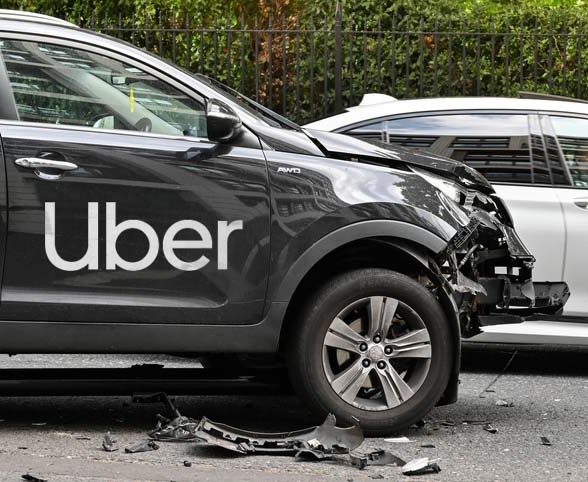
The actions you take immediately following a rideshare accident significantly impact your ability to recover full compensation. Unlike regular car accidents where evidence preservation is relatively straightforward, rideshare accidents require additional steps to secure digital evidence from the app before it disappears. Understanding these immediate priorities can protect your legal rights while ensuring your safety.
Ensure Safety and Call 911
Your first priority after any accident is ensuring everyone’s safety and getting medical help for injured parties. Call 911 immediately to report the accident and request emergency medical services if anyone is hurt. Knox County emergency dispatchers will send appropriate first responders, including Knoxville Police Department officers or Tennessee Highway Patrol troopers depending on the accident location.
Even if injuries seem minor, always accept medical evaluation at the scene. Adrenaline masks pain immediately after accidents, and some serious injuries like internal bleeding or concussions don’t show obvious symptoms initially. Emergency medical technicians can identify warning signs and transport you to University of Tennessee Medical Center or another Knoxville hospital if necessary.
Document the Scene With Your Phone
Before vehicles are moved or evidence is disturbed, use your phone to thoroughly document the accident scene. Take photographs from multiple angles showing vehicle damage, skid marks, traffic signals, road conditions, and weather. Capture the rideshare vehicle’s license plate and any identifying markings indicating it’s used for Uber or Lyft.
Photograph all visible injuries you or your passengers sustained, including bruises, cuts, or bleeding. These initial injury photos become valuable evidence later when insurance companies dispute the accident’s severity. Also photograph any property damage to phones, laptops, or personal belongings damaged in the collision.
If witnesses stopped to help, ask for their contact information and record brief statements about what they observed. Independent witness testimony becomes crucial if the rideshare driver or other parties later dispute fault.
Preserve Rideshare App Evidence
This step is unique to rideshare accidents and absolutely critical. While still at the scene, open your Uber or Lyft app and take screenshots of the entire trip record, including the driver’s name, photo, vehicle information, pickup time, route, and drop-off details. This information can disappear quickly once the trip is marked complete.
Screenshot any messages exchanged with the driver through the app. Also check your email for the trip receipt Uber or Lyft sends automatically and forward this to yourself at a second email address for backup. This digital evidence proves which insurance phase was active during the accident and helps establish the driver’s identity if disputes arise later.
If you were a passenger, your app will show the trip details. However, if you were hit by a rideshare vehicle while driving or walking, ask the responding police officer to document the rideshare vehicle’s information in the accident report. Tennessee Highway Patrol and Knoxville Police reports typically include vehicle registration details that confirm rideshare status.
Seek Medical Treatment at Knoxville Hospitals
Even if you declined ambulance transport at the scene, seek medical evaluation within 24 hours. Knox County offers several options including University of Tennessee Medical Center’s emergency room, Parkwest Medical Center, Fort Sanders Regional Medical Center, and Tennova Turkey Creek Medical Center. These facilities can diagnose injuries that weren’t immediately apparent and create medical records linking your injuries to the accident.
Tell doctors that your injuries resulted from a rideshare accident. This detail should appear in your medical records because insurance companies will scrutinize the connection between the accident and your treatment. If medical records don’t mention the accident as the cause, insurers may argue your injuries stemmed from a different incident.
Follow all treatment recommendations your doctors provide, including follow-up appointments, physical therapy, and specialist referrals. Insurance companies look for gaps in treatment as evidence that injuries weren’t serious. Consistent medical care demonstrates that your injuries genuinely require ongoing treatment.
Report to Tennessee Highway Patrol or Knoxville Police
Tennessee law requires reporting accidents that cause injury, death, or property damage exceeding $400. If police didn’t respond to the scene, visit the appropriate law enforcement agency to file an official accident report within the timeframe required by Tennessee law. For accidents on interstate highways like I-40 or I-75 in Knox County, contact the Tennessee Highway Patrol. For accidents on city streets, file with the Knoxville Police Department.
The official police report documents critical details including the officer’s assessment of fault, any citations issued, witness information, and vehicle damage descriptions. Insurance companies rely heavily on police reports when investigating claims. While reports aren’t conclusive proof of liability, they carry significant weight during settlement negotiations.
Why Choose OEB Law for Your Rideshare Accident Claim
Navigating a rideshare accident claim in Tennessee requires specialized knowledge of both state rideshare insurance regulations and local Knox County court procedures. The top attorneys in Knoxville at OEB Law understand the unique challenges Tennessee rideshare victims face, from determining which insurance phase applies to negotiating with Uber and Lyft’s corporate legal teams. Our attorneys have developed proven strategies for maximizing rideshare accident settlements and protecting clients’ rights under Tennessee’s strict one-year statute of limitations. Additionally, you can use our settlement calculator to estimate your claim’s potential value before negotiating with insurance companies.
Who is OEB Law and Why Are They Good for the Community?
Led by Managing Attorney Timothy G. Elrod and Our Experienced Legal Team

Founded in 2004 in Knoxville, Tennessee, OEB Law has grown over nearly two decades to now serve clients across multiple states. Tim Elrod established the firm with a simple but powerful mission: we care and we help people. Today, together with attorneys Michael Bernard, Billy Sivyer, Gena Lewis, and Logan Wade, our team brings over 50 years of combined experience representing clients throughout Tennessee and Kentucky in personal injury and criminal defense cases.
Our Legal Expertise
Our attorneys have built their reputation through:
- Successfully representing thousands of personal injury and criminal defense clients
- Developing specialized knowledge across all types of accident and injury cases
- Mastering the complexities of Tennessee’s legal system through decades of practice
Why Trust Us
At OEB Law, our reputation speaks for itself:
- **Proven Results**: We’ve recovered significant compensation for our clients through both settlements and courtroom verdicts
- **Client Satisfaction**: Our numerous 5 Star Google Reviews showcase our commitment to responsive, caring, and effective legal representation
- **No Fee Unless We Win**: You don’t pay attorney fees unless we successfully secure compensation in your case
- **Local Knowledge**: As East Tennessee natives, we understand our community and care deeply about the people we serve
- **Personalized Approach**: We personalize each case to meet our clients’ specific needs, ensuring you’re never just another file number
Community Commitment
Our dedication extends beyond the courtroom. We proudly support:
- Local high school football programs through Rivalry Thursday sponsorships
- The Knoxville Ice Bears and community fundraising initiatives
- Numerous youth, student, and community organizations throughout East Tennessee
As Tim Elrod says, “We don’t just take—we give back because the people you’re giving back to are the people who are supporting your firm.”
Have a personal injury or criminal defense case? We’re available 24/7 to help.
Get In Touch
- Call or Text: (865) 546-1111
- Visit: https://oeblawtn.com/
- Available: Standing by 24/7
Why OEB Law? Because They’re Good For The Community.
TEXT or CALL (865) 546-1111 for HELP NOW. Standing By 24/7.
Follow Us on Social Media
Stay connected with OEB Law for the latest Knoxville and East Tennessee legal insights, community updates, and important legal information. Follow us on X, YouTube, Facebook, Instagram, LinkedIn, and TikTok for exclusive content, client stories, and expert legal guidance from our team.
FAQ: What is the average settlement for a rideshare accident in Tennessee?
Tennessee rideshare accident settlement amounts vary widely based on injury severity, insurance phase at the time of the accident, and the extent of economic and non-economic damages. While minor injury claims with clear Phase 3 coverage (Uber/Lyft’s $1 million policy active) may settle for $15,000-$50,000, serious injury cases involving permanent disability or wrongful death can reach six or seven figures. Tennessee’s modified comparative fault rule (TN Code Annotated § 29-11-103) also impacts settlements—if the victim is found partially at fault, their compensation is reduced by their percentage of fault. Knoxville attorneys can evaluate the specific facts of a case and provide a more accurate settlement range based on similar Knox County rideshare accident outcomes.

