When you are hurt in an accident, understanding the difference between a liability waiver and a settlement release can determine whether you receive fair compensation or walk away with nothing. These two legal documents often cause confusion, but they serve entirely different purposes in Tennessee personal injury cases. The experienced team at OEB Law, a Knoxville-based personal injury firm, helps injured clients understand exactly what they signed and what it means for their future. Tim Elrod and his team have seen how one signature on the wrong document can close the door on a legitimate injury claim. In this blog post, Knoxville attorney Tim Elrod discusses the key differences between a liability waiver and a settlement release in Tennessee personal injury cases.
Key Takeaways
- Liability waivers are signed BEFORE an injury and attempt to prevent you from suing if you are later hurt during a specific activity.
- Settlement releases are signed AFTER an injury and permanently end your right to seek additional compensation once you accept a settlement payment.
- Tennessee courts scrutinize both documents carefully, and factors like gross negligence, fraud, or duress can render either document unenforceable.
- Never sign either document without legal advice because once you sign a valid settlement release, your personal injury claim is typically closed forever.
A liability waiver is a document signed before an injury that tries to protect a business or individual from future lawsuits. In contrast, a settlement release is signed after an injury occurs, exchanging your right to sue for monetary compensation. The key difference in Tennessee personal injury cases is timing and purpose; waivers aim to prevent claims from arising, while settlement releases end claims that already exist.
To Discuss Your Case, Call or Text Our Team Standing By 24/7: (865) 546-1111
About OEB Law, Your Knoxville Legal Team

This guide is provided by the experienced attorneys at OEB Law, led by Managing Attorney Timothy G. Elrod. Founded in Knoxville in 2004, our firm has over 50 years of combined experience navigating East Tennessee’s legal system.
We have successfully represented thousands of personal injury clients, developing deep expertise in Tennessee’s complex wrongful death and accident laws. As East Tennessee natives, we have a direct understanding of the local court systems, law enforcement agencies, and community needs. Our commitment is to provide trusted, authoritative information to our neighbors in Knoxville and the surrounding Tennessee communities. However, this information does not constitute legal advice. If you or a loved one has been injured in an accident or needs legal help, call us today for a free, no obligation, initial consultation.
What Is a Liability Waiver in Tennessee Personal Injury Cases?
A liability waiver is a legal contract you sign before participating in an activity. The primary purpose of this document is for a business or organization to protect itself from lawsuits if you get hurt. You often encounter these when joining a gym, signing up for recreational activities at places like Ijams Nature Center, or enrolling children in youth sports leagues in Knox County. However, signing a waiver does not give a business a free pass to be negligent.
Tennessee courts do not automatically enforce all liability waivers. They carefully examine the circumstances and the specific language of the document. The Tennessee Supreme Court established a standard in the case of Copeland v. HealthSouth that looks at several factors to determine if a waiver is valid and enforceable.
When Can a Tennessee Liability Waiver Be Challenged?
Even if you signed a waiver, it might not be enforceable under certain conditions. Tennessee law provides protections against businesses that act irresponsibly. A waiver can often be challenged if:
- The language is unclear. If the waiver is filled with confusing legal jargon or does not clearly state that you are giving up your right to sue for negligence, a court may not enforce it.
- It violates public policy. Waivers for essential services, like medical care, are typically not enforceable.
- The injury was caused by gross negligence. This is a critical exception. A liability waiver cannot protect a business from responsibility for gross negligence, which is a severe departure from reasonable care. This includes willful or reckless conduct that shows a conscious disregard for safety.
- A minor was involved. In Tennessee, parents generally cannot sign away a minor child’s right to sue for injuries caused by someone else’s negligence.
“A liability waiver is not a blank check for a business to be careless. Tennessee courts look at whether the language was clear, whether the activity was genuinely risky, and whether enforcing the waiver would violate public policy. Gross negligence can void a waiver entirely.” – Knoxville attorney Tim Elrod
Liability Waiver vs. Settlement Release: A Side-by-Side Comparison
| Feature | Liability Waiver | Settlement Release |
|---|---|---|
| When It Appears | Before an injury occurs | After an injury occurs |
| Purpose | Prevents future lawsuits | Ends an existing injury claim |
| Who Signs It | Activity participant or customer | Injured party (claimant) |
| What You Give Up | Right to sue if injured later | Right to seek more compensation |
| Tennessee Enforceability | Limited by Copeland factors; void for gross negligence | Binding if voluntary, informed, and supported by consideration |
| Common Scenarios | Gyms, outdoor recreation, sports events in Knoxville | Car accident settlements, slip and fall claims, insurance payouts |
| Can It Be Challenged? | Yes — gross negligence, public policy, minors | Yes — duress, fraud, misrepresentation, inadequate consideration |
Frequently Asked Questions
A liability waiver is signed before an injury to prevent future lawsuits, while a settlement release is signed after an injury to close an existing claim in exchange for compensation. Tennessee courts evaluate both documents differently, and either can be challenged under the right circumstances.
No. Under Tennessee law, a liability waiver cannot protect a business or individual from liability for gross negligence or willful misconduct. The Tennessee Supreme Court addressed this principle in Copeland v. HealthSouth, which established a three-factor test courts use to evaluate waiver enforceability.
Generally yes. Once you sign a valid settlement release in Tennessee, you give up your right to pursue additional compensation from the at-fault party. However, a release obtained through fraud, duress, or misrepresentation may be challenged in Knox County Circuit Court.
Before signing any settlement release, you should have a Knoxville personal injury attorney review the document. You should also ensure all injuries are fully diagnosed, understand what claims you are releasing, and confirm the compensation offered is fair based on your total damages, including future medical needs.
Tennessee’s statute of limitations for personal injury claims is generally one year from the date of the injury under T.C.A. § 28-3-104. This deadline makes it critical to consult with an attorney quickly, especially before signing any document that could close your claim permanently.
What Is a Settlement Release in Tennessee Personal Injury Cases?
A settlement release, sometimes called a "release of all claims," is a document you sign after an injury has occurred and you have agreed to a settlement amount. This document is the final step in resolving a personal injury claim. In exchange for a specific amount of money (known as "consideration"), you agree to give up your right to pursue any further legal action against the at-fault party for that specific incident.
For example, after a car accident on I-40 in Knoxville, the other driver's insurance company will offer you a settlement. If you accept, they will require you to sign a settlement release. This document legally and permanently closes your claim. Once it is signed, you cannot go back and ask for more money, even if your injuries turn out to be more severe than you initially thought.
Because of its finality, it is crucial to never sign a settlement release without fully understanding the long-term consequences. Insurance adjusters often pressure injured individuals to sign quickly, sometimes before the full extent of their injuries is known. This is a tactic used to minimize their payout. A settlement release is a binding contract, and Tennessee courts will enforce it if it was signed voluntarily and without fraud or duress.

Key Differences That Matter for Your Tennessee Personal Injury Case
While both documents affect your legal rights, their function and timing are completely different. Misunderstanding these differences can jeopardize your ability to recover fair compensation. Here are the most critical distinctions for your Tennessee injury case.
- Timing: This is the clearest difference. A liability waiver is proactive and signed before any injury happens. A settlement release is reactive and signed after an injury to resolve an existing claim.
- Purpose: A waiver's goal is to prevent a lawsuit from ever being filed. In contrast, a release's purpose is to end a lawsuit or claim that has already been made.
- Consideration: To be a valid contract, a settlement release must involve consideration, which is the settlement money you receive. A liability waiver, on the other hand, often involves no direct payment; the "consideration" is being allowed to participate in the activity.
- Enforceability: Both documents can be challenged, but on different legal grounds. Waivers are scrutinized based on public policy and clarity, as outlined by the Tennessee Supreme Court. Releases are challenged based on contract principles like fraud, duress, or misrepresentation.
- Scope of Rights: A waiver affects your future right to sue for an injury that has not yet happened. A release extinguishes your existing rights related to an injury that has already occurred.
"Insurance companies want you to sign a release quickly, before you fully understand the extent of your injuries. At OEB Law, we tell every client the same thing — do not sign anything until we have reviewed it and you know exactly what you are giving up." - Knoxville attorney Tim Elrod
Understanding these differences is the first step, but applying them to your specific situation requires experience. An evaluation from a skilled attorney like Timothy G. Elrod can clarify your rights and options.
What to Do If You've Been Asked to Sign Either Document in Knoxville
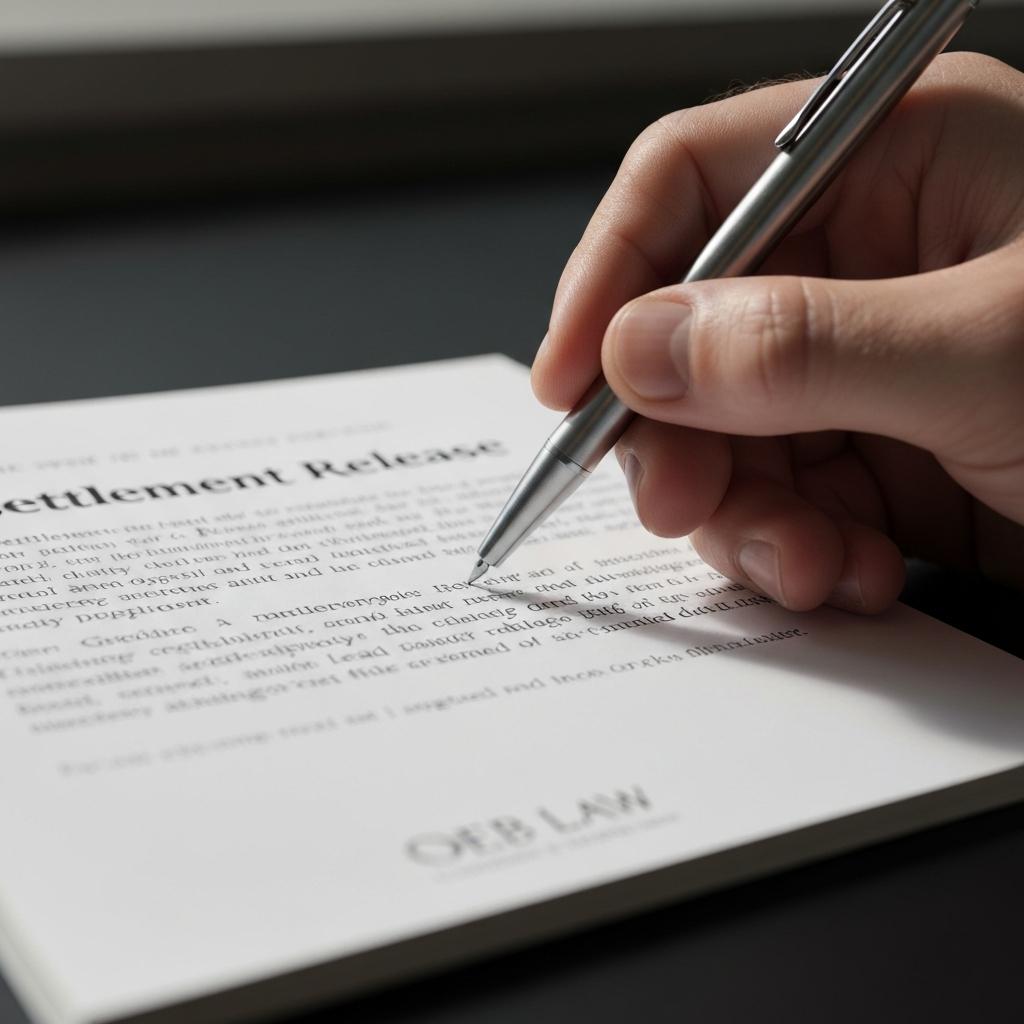
If you are presented with either a liability waiver or a settlement release, it is essential to proceed with caution. Your signature has significant legal weight. Before you sign anything, take these critical steps to protect your rights.
First, do not sign immediately. It is perfectly reasonable to ask for time to review the document thoroughly. Insurance companies often use deadlines as a pressure tactic, but you should not feel rushed into a decision that affects your future.
Second, if you have already been injured, ensure you have a complete medical diagnosis before considering any settlement offer. Some injuries have delayed symptoms, and signing a release too early could leave you with unpaid medical bills for treatment you did not anticipate needing.
Finally, and most importantly, contact an experienced attorney. The OEB Law attorneys can review the document, explain its implications in plain language, and advise you on whether it is in your best interest to sign. This is especially critical for a settlement release, as a signature is almost always final. Remember, Tennessee has a strict one-year statute of limitations for filing most personal injury claims under T.C.A. § 28-3-104, so it is vital to act quickly.
Should You Sign? A Decision Checklist for Tennessee Injury Victims
Before signing a settlement release in Tennessee, ask yourself:
- Have all my injuries been fully diagnosed and documented by a doctor?
- Do I understand exactly which claims and which parties this release covers?
- Has an attorney reviewed the specific language of this release?
- Am I signing voluntarily, without pressure or artificial deadlines?
- Does the compensation offered reflect the full value of my medical bills, lost wages, and pain and suffering?
- Could my injuries worsen or require future treatment not yet accounted for?
- Am I aware of the one-year statute of limitations under T.C.A. § 28-3-104?
Why Choose OEB Law for Liability Waivers and Settlement Releases in Tennessee
Navigating the complexities of legal documents after an injury can be overwhelming. The team at OEB Law has reviewed hundreds of liability waivers and settlement releases for clients across East Tennessee. We understand the specific tactics Tennessee insurance companies use to pressure claimants into signing quickly for less than their claim is worth. Our deep familiarity with Knox County courts gives our clients a distinct advantage when challenging an unfair waiver or negotiating a fair settlement.
As a leading Knoxville personal injury attorney, Tim Elrod and his team operate on a "No Fee Unless We Win" basis for personal injury cases. This means you can get expert legal review of your documents without any upfront cost or financial risk. Our commitment to client success is reflected in our numerous 5 Star Google Reviews from people we have helped right here in our community.
Who is OEB Law and Why Are They Good for the Community?
Led by Managing Attorney Timothy G. Elrod and Our Experienced Legal Team
Founded in 2004 in Knoxville, Tennessee, OEB Law has grown over nearly two decades to now serve clients across multiple states. Tim Elrod established the firm with a simple but powerful mission: we care and we help people. Today, together with attorneys Michael Bernard, Billy Sivyer, Gena Lewis, and Logan Wade, our team brings over 50 years of combined experience representing clients throughout Tennessee and Kentucky in personal injury and criminal defense cases.
Our Legal Expertise
Our attorneys have built their reputation through:
- Successfully representing thousands of personal injury and criminal defense clients
- Developing specialized knowledge across all types of accident and injury cases
- Mastering the complexities of Tennessee's legal system through decades of practice
Why Trust Us
At OEB Law, our reputation speaks for itself:
- Proven Results: We've recovered significant compensation for our clients through both settlements and courtroom verdicts
- Client Satisfaction: Our numerous 5 Star Google Reviews showcase our commitment to responsive, caring, and effective legal representation
- No Fee Unless We Win: You don't pay attorney fees unless we successfully secure compensation in your case
- Local Knowledge: As East Tennessee natives, we understand our community and care deeply about the people we serve
- Personalized Approach: We personalize each case to meet our clients' specific needs, ensuring you're never just another file number
Community Commitment
Our dedication extends beyond the courtroom. We proudly support:
- Local high school football programs through Rivalry Thursday sponsorships
- The Knoxville Ice Bears and community fundraising initiatives
- Numerous youth, student, and community organizations throughout East Tennessee
"We don't just take—we give back because the people you're giving back to are the people who are supporting your firm." - Tim Elrod
Have a personal injury or criminal defense case? We're available 24/7 to help.
Get In Touch
- Call or Text: (865) 546-1111
- Visit: https://oeblawtn.com/
- Available: Standing by 24/7
Why OEB Law? Because They're Good For The Community.
TEXT or CALL (865) 546-1111 for HELP NOW. Standing By 24/7.
Follow Us on Social Media
Stay connected with OEB Law for the latest Knoxville and East Tennessee legal insights, community updates, and important legal information. Follow us on X, YouTube, Facebook, Instagram, LinkedIn, and TikTok for exclusive content, client stories, and expert legal guidance from our team.

