The best evidence to prove a grocery store knew about a spill before a fall is crucial. It often determines whether a Tennessee injury victim wins or loses their case. Grocery stores like Kroger on Kingston Pike and Food City on Chapman Highway handle hundreds of customer slip-and-fall claims every year. Local Walmart Supercenters deal with similar numbers. Their corporate legal teams know exactly which records to protect and which footage to delay releasing. Understanding what evidence matters and how to preserve it quickly is vital for injured Knoxville residents. It can be the difference between a strong claim and no claim at all. At OEB Law, our team represents East Tennessee injury victims in premises liability cases throughout Knox County. In this blog post, Knoxville attorney Tim Elrod discusses the best evidence to prove a grocery store knew about a spill before a fall.
Key Takeaways
- Surveillance footage is the gold standard in Tennessee grocery store slip-and-fall cases, but most chains overwrite it within 14-30 days
- Proving “notice” is the legal core of your claim, meaning you must show the store either created the hazard, knew about it, or should have discovered it
- Tennessee’s one-year statute of limitations under T.C.A. § 28-3-104 means you have far less time to act than most people realize
- A spoliation letter sent immediately after your fall legally prevents the store from destroying critical video evidence
The best evidence to prove a grocery store knew about a spill before a fall includes store surveillance video. You also need internal sweep and maintenance logs, employee incident reports, and witness statements from shoppers. Time-stamped photographs showing the spill’s size and contamination pattern are equally important. In Tennessee, you must establish either actual notice or constructive notice. Actual notice means the store knew about the spill. Constructive notice means the spill existed long enough that a reasonably careful inspection would have found it. Acting immediately after your fall to preserve this evidence is critical. Tennessee’s one-year filing deadline and the store’s video overwrite schedules can eliminate your strongest proof within days.
To Discuss Your Case, Call or Text Our Team Standing By 24/7: (865) 546-1111
About OEB Law, Your Knoxville Legal Team

This guide is provided by the experienced attorneys at OEB Law, led by Managing Attorney Timothy G. Elrod. Founded in Knoxville in 2004, our firm has over 50 years of combined experience navigating East Tennessee’s legal system.
We have successfully represented thousands of personal injury clients, developing deep expertise in Tennessee’s complex wrongful death and accident laws. As East Tennessee natives, we have a direct understanding of the local court systems, law enforcement agencies, and community needs. Our commitment is to provide trusted, authoritative information to our neighbors in Knoxville and the surrounding Tennessee communities. However, this information does not constitute legal advice. If you or a loved one has been injured in an accident or needs legal help, call us today for a free, no obligation, initial consultation.
The 5 Strongest Pieces of Evidence in a Tennessee Grocery Store Slip and Fall
| Evidence Type | What It Proves | Time Sensitivity | How to Obtain |
|---|---|---|---|
| Store Surveillance Video | Duration of spill before fall; employee awareness | CRITICAL: 14-30 day overwrite window | Spoliation letter sent immediately |
| Sweep and Maintenance Logs | When area was last inspected; failure to follow safety protocols | High: Request within days | Attorney records demand / discovery |
| Employee Incident Report | Store’s own acknowledgment of the hazard | Medium: File before leaving store | Request from store manager on scene |
| Witness Statements | Prior knowledge; other shoppers who saw or reported spill | High: Memories fade quickly | Collect names and phones at scene |
| Spill Photographs | Size, tracking marks, dried perimeter proving age of spill | CRITICAL: Scene changes within hours | Take immediately with phone |
Understanding “Notice” Under Tennessee Premises Liability Law
Tennessee property owners owe a duty of reasonable care to customers, who are classified as business invitees under state law. That duty requires the store to inspect its premises regularly, identify hazards, and either fix them or warn customers. When a grocery store fails to meet that standard, it may be liable for resulting injuries.
There are two types of notice that matter in Tennessee slip-and-fall cases. Actual notice means the store created the hazard itself, or an employee saw the spill and did nothing about it. Constructive notice means the spill existed long enough that a reasonable inspection would have found and corrected it. Most Knoxville grocery store cases turn on constructive notice. This happens because actual admissions from store employees are rare.
Actual Notice vs. Constructive Notice
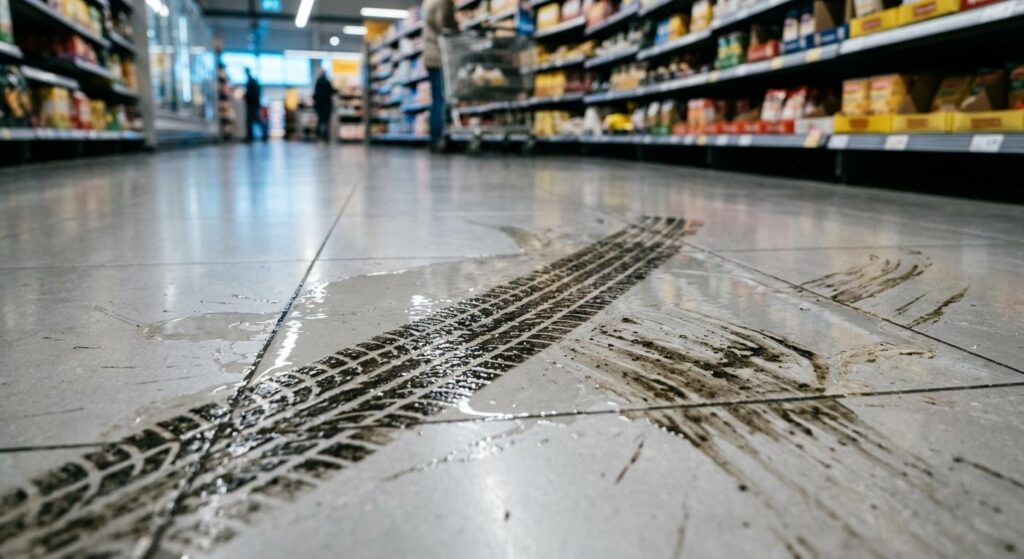
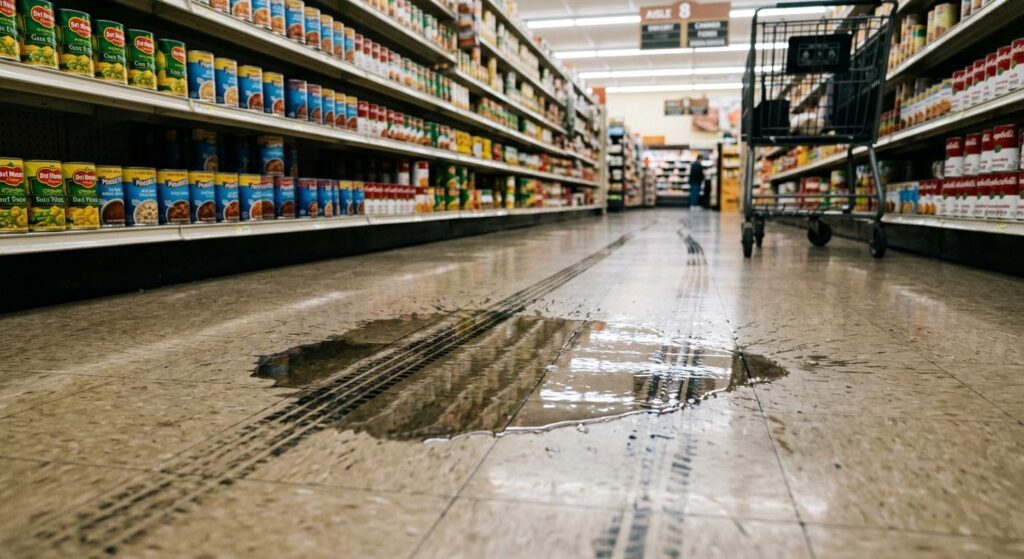
To prove constructive notice, your attorney must show the hazard existed for a specific duration. You must prove a diligent employee would have discovered it during that time. Tennessee courts look at several specific factors. They examine whether the liquid had dried edges or if shopping cart tracks ran through the spill. They also check whether sweep logs show a gap in routine inspections.
Tennessee also follows a modified comparative fault rule under T.C.A. § 29-11-103. This rule means you cannot recover any compensation if you are 50% or more at fault for your own fall. Building strong evidence of the store’s notice from the start is therefore essential to protecting your recovery.
“In Tennessee, the most important question in any grocery store fall case is whether the store knew or should have known about that spill. That question is answered almost entirely by evidence gathered in the hours and days after the accident.” – Knoxville attorney Tim Elrod
If you suffered a fall in a Knoxville or Knox County grocery store, speaking with a slip and fall attorney as soon as possible gives your case the best chance. We can help you preserve this critical evidence before it disappears.
The 5 Best Pieces of Evidence in a Tennessee Grocery Store Fall Case
Winning a premises liability claim requires concrete proof. You must show the hazard existed before you fell and the store had reason to know about it. Here are the five most valuable categories of evidence in a Tennessee grocery store fall case.
1. Store Surveillance Video Footage
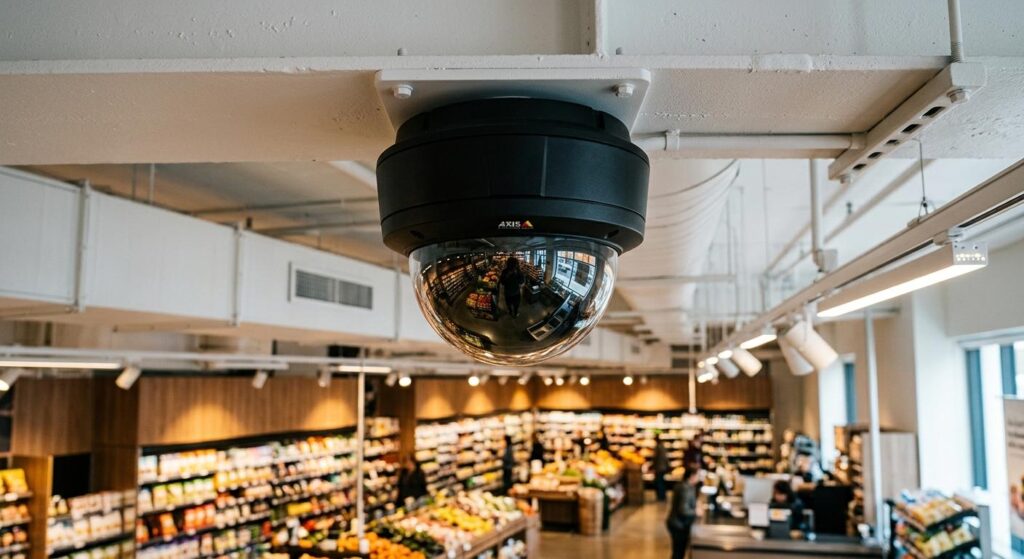
Most Knoxville grocery stores maintain camera systems covering every main aisle. Surveillance footage shows when the spill appeared and how long it sat untouched. It also reveals whether any employee walked past without cleaning it up. This is the single strongest piece of evidence for constructive notice. It directly answers the time question that courts care most about.
2. Sweep, Cleaning, and Maintenance Logs
Many chains require employees to document aisle checks every 15-30 minutes using paper or digital logs. A gap in those logs during the window before your fall is powerful proof. It shows the store failed its own inspection standards. Food City, Kroger, and Walmart Supercenters in Knoxville all maintain internal cleaning documentation of this kind.
3. Employee and Manager Incident Reports
Ask the store manager to complete an incident report before you leave. This document often contains the store’s own description of the hazard. It sometimes acknowledges the spill existed prior to your fall. Always request and keep your own copy of the report.
4. Witness Statements and Customer Complaints
Other shoppers often see the spill before your fall. They might report it to staff or watch an employee walk past it without acting. These individuals are among the most valuable witnesses in a premises liability case. Collect names and phone numbers at the scene if you are physically able to do so.
5. Time-Stamped Photographs of the Spill
Photograph the entire spill thoroughly. Include any track marks from shopping carts, footprints running through the liquid, and dried edges around the perimeter. Tennessee personal injury attorneys sometimes call these physical characteristics a “smear test.” They help establish that the spill was not fresh at the time of your fall. Together, they tell a story of how long the hazard was present.
How to Prevent a Knoxville Grocery Store From Erasing Video Evidence
Major grocery chains overwrite digital footage on a routine cycle, typically within 14 to 30 days as standard corporate policy. Some high-traffic Knoxville store locations may overwrite footage in as few as 48 to 72 hours. This makes acting quickly one of the most important steps you can take after a fall.

A spoliation of evidence letter is a formal legal notice sent to the store. It demands that all potentially relevant evidence be preserved. The letter puts the store on notice that destroying footage or records may result in court sanctions. In Tennessee courts, intentional or negligent destruction of evidence can result in an adverse inference instruction. This means the jury may be told to assume the missing footage would have supported your case.
Verbal requests to store managers carry no legal weight. Only a formal written letter from an attorney creates a documented legal obligation for the store to preserve evidence. This is why contacting a personal injury attorney quickly makes a meaningful difference. Reaching out within days rather than weeks protects your case.
A spoliation letter should include the following:
- Your name and the exact date, time, and location of the fall
- A specific demand to preserve all surveillance footage from that date
- A demand to preserve all sweep, maintenance, and inspection logs
- A demand to preserve all employee incident reports and internal communications
- A clear warning that destruction of evidence may result in legal sanctions
Timothy G. Elrod and the legal team at OEB Law handle this step immediately upon being retained.
“We send spoliation letters as soon as a client contacts us after a grocery store fall. Corporate retail chains have legal teams that know exactly what footage to preserve and what to let expire. A spoliation letter changes the equation immediately.” – Knoxville attorney Tim Elrod
Tennessee’s One-Year Deadline and Why You Cannot Wait
Tennessee has one of the shortest personal injury statutes of limitations in the country. Under T.C.A. § 28-3-104, you have exactly one year from the date of your injury to file a lawsuit. Missing that deadline almost always means losing your right to compensation entirely, regardless of how strong your evidence is.
One year sounds like plenty of time. However, the evidence in grocery store cases disappears far faster than the legal deadline. Surveillance footage may be gone in two weeks. Witness memories fade within months. Sweep logs may be purged from digital systems long before litigation begins. Most Knoxville premises liability cases are filed in Knox County Circuit Court. Early legal action gives your attorney the opportunity to conduct pre-litigation discovery. We use formal preservation demands to secure records before that evidence is lost.
Additionally, OEB Law handles personal injury cases on a contingency fee basis. You pay nothing unless we win your case. You can even use our settlement calculator to understand how courts value claims. Tim Elrod and his team are available 24/7 to review your case at no cost and no obligation.
Knoxville Grocery Store Slip and Fall
Photograph the spill, collect witness contact info, request incident report, notify an attorney
Spoliation letter sent by attorney to preserve all surveillance footage and inspection records
Seek medical treatment and document all injuries; medical records become key damages evidence
Attorney files formal discovery requests for sweep logs, maintenance records, prior incident reports
Negotiation or litigation phase in Knox County Circuit Court
Tennessee statute of limitations under T.C.A. § 28-3-104 expires exactly one year from the date of injury
Why Choose OEB Law for Your Grocery Store Slip and Fall Case
Grocery store slip-and-fall cases require fast action and deep knowledge of Tennessee premises liability law. OEB Law has represented Knox County injury victims in premises liability cases for over two decades. That experience gives our team a direct understanding of how local retailers handle claims. We know what evidence they typically try to protect. We also know how to force production of that evidence through pre-litigation demands and formal discovery. We know the Knox County Circuit Court, and we know how Tennessee juries evaluate spill-duration evidence. Our track record is backed by our 5 Star Google Reviews, showing our dedication to East Tennessee families.
When you contact OEB Law after a grocery store fall, we take immediate action. One of our first steps is sending a spoliation letter. This preserves surveillance footage and internal records before the store can legally destroy them. Time is the single most important factor in these cases. Our team is available 24/7 to start that process immediately. As top attorneys in Knoxville, we handle the legal pressure so you can focus on your recovery. Timothy G. Elrod and the OEB Law team are ready to take your call right now.
Who is OEB Law and Why Are They Good for the Community?
Led by Managing Attorney Timothy G. Elrod and Our Experienced Legal Team
Founded in 2004 in Knoxville, Tennessee, OEB Law has grown over nearly two decades to now serve clients across multiple states. Tim Elrod established the firm with a simple but powerful mission: we care and we help people. Today, our team brings over 50 years of combined experience representing clients throughout Tennessee in personal injury and criminal defense cases.
Our Legal Expertise
Our attorneys have built their reputation through:
- Successfully representing thousands of personal injury and criminal defense clients
- Developing specialized knowledge across all types of accident and injury cases
- Mastering the complexities of Tennessee’s legal system through decades of practice
Why Trust Us
At OEB Law, our reputation speaks for itself:
- Proven Results: We’ve recovered significant compensation for our clients through both settlements and courtroom verdicts
- Client Satisfaction: Our numerous 5 Star Google Reviews showcase our commitment to responsive, caring, and effective legal representation
- No Fee Unless We Win: You don’t pay attorney fees unless we successfully secure compensation in your case
- Local Knowledge: As East Tennessee natives, we understand our community and care deeply about the people we serve
- Personalized Approach: We personalize each case to meet our clients’ specific needs, ensuring you’re never just another file number
Community Commitment
Our dedication extends beyond the courtroom. We proudly support:
- Local high school football programs through Rivalry Thursday sponsorships
- The Knoxville Ice Bears and community fundraising initiatives
- Numerous youth, student, and community organizations throughout East Tennessee
“We don’t just take, we give back because the people you’re giving back to are the people who are supporting your firm.” – Tim Elrod
Have a personal injury or criminal defense case? We’re available 24/7 to help.
Get In Touch
- Call or Text: (865) 546-1111
- Visit: https://oeblawtn.com/
- Available: Standing by 24/7
Why OEB Law? Because They’re Good For The Community.
TEXT or CALL (865) 546-1111 for HELP NOW. Standing By 24/7.
Follow Us on Social Media
Stay connected with OEB Law for the latest Knoxville and East Tennessee legal insights, community updates, and important legal information. Follow us on X, YouTube, Facebook, Instagram, LinkedIn, and TikTok for exclusive content, client stories, and expert legal guidance from our team.
The strongest evidence includes store surveillance footage showing how long the spill existed before your fall, sweep and maintenance logs documenting when the area was last inspected, and time-stamped photographs showing dried edges or footprints in the liquid. Witness statements from other shoppers who saw or reported the spill are also highly valuable. Together, this evidence helps establish constructive notice under Tennessee premises liability law.
Constructive notice means the hazard existed long enough that a reasonably careful store inspection would have discovered and corrected it. Tennessee courts look at physical clues like dirty or dried edges around the spill, shopping cart track marks running through the liquid, and gaps in the store’s sweep log documentation to determine whether sufficient time had passed. You do not need to prove an employee actually saw the spill, only that they should have found it through routine inspection.
Most major grocery chains, including Kroger, Food City, and Walmart Supercenters in the Knoxville area, overwrite digital security footage within 14 to 30 days as standard policy. Some high-traffic store locations may delete footage even sooner. The fastest way to legally require the store to preserve footage is for an attorney to send a formal spoliation letter within days of the fall, putting the store on notice that destroying evidence may result in court sanctions.
Can I Sue a Grocery Store if the Spill Was Small?
The size of the spill is generally less important than how long it existed and whether the store knew or should have known about it. Tennessee premises liability law does not require a large or dramatic hazard to establish negligence. However, under Tennessee’s modified comparative fault rule, a jury will assess whether your own actions contributed to the fall. If your share of fault is 50% or more under T.C.A. § 29-11-103, you cannot recover compensation. This is why building strong evidence about the store’s notice is so important from the very beginning.

