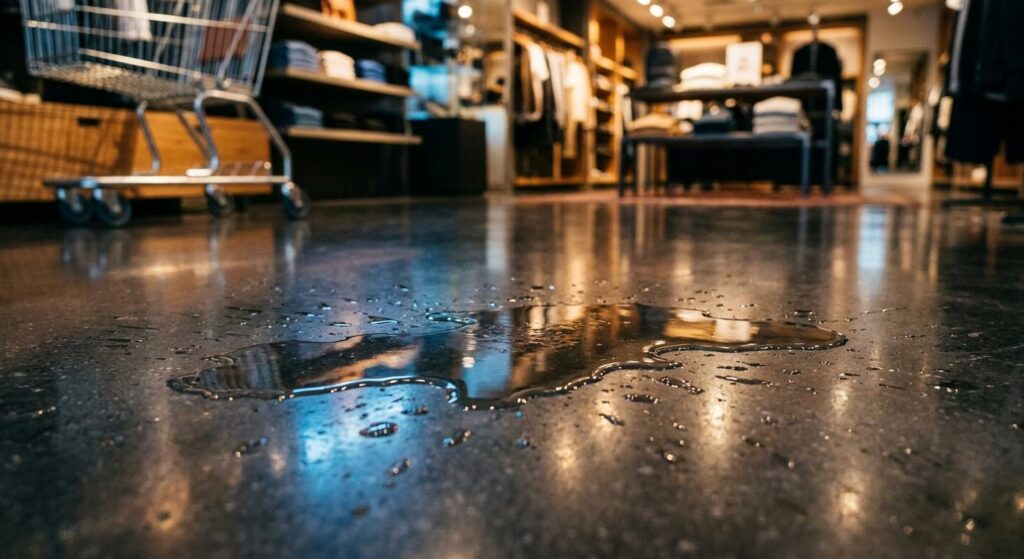
When a shopper is injured at a Knoxville retail store, the immediate questions are often about medical bills and missed work, but Tennessee law allows for much broader recovery. Premises liability cases in Knoxville can involve both economic damages like hospital costs and lost wages and non-economic damages like pain and suffering and emotional distress. However, Tennessee law places specific statutory limits on certain types of recovery, and how fault is assigned between the shopper and the store can significantly affect the final payout. Understanding these rules before speaking with a claims adjuster gives injured shoppers a critical advantage. OEB Law has represented Knoxville injury victims for over two decades and knows how retail corporations and their insurance administrators approach these claims. In this blog post, Knoxville attorney Tim Elrod discusses what damages an injured shopper can recover in a Knoxville premises liability case.
Key Takeaways
- Economic damages have no statutory cap, meaning medical bills, lost wages, and future care costs are fully recoverable under Tennessee law
- Non-economic damages are capped at $750,000 under T.C.A. § 29-39-102 for most injuries, rising to $1,000,000 for catastrophic harm
- Tennessee’s 50% modified comparative fault rule dictates you can still recover damages even if you were partly at fault, as long as your share of fault stays below 50%
- Acting quickly matters because Tennessee’s one-year statute of limitations and store surveillance footage retention windows create urgent deadlines for injured shoppers
In a Knoxville premises liability case, an injured shopper can recover economic damages covering medical expenses, lost wages, and future care costs, as well as non-economic damages for pain and suffering, emotional distress, and loss of enjoyment of life. Tennessee law caps non-economic damages at $750,000 under T.C.A. § 29-39-102, rising to $1,000,000 for catastrophic injuries. Recovery may be reduced if the shopper is found partially at fault, but compensation remains available as long as the shopper’s fault is less than 50%.
To Discuss Your Case, Call or Text Our Team Standing By 24/7: (865) 546-1111
About OEB Law, Your Knoxville Legal Team

This guide is provided by the experienced attorneys at OEB Law, led by Managing Attorney Timothy G. Elrod. Founded in Knoxville in 2004, our firm has over 50 years of combined experience navigating East Tennessee’s legal system.
We have successfully represented thousands of personal injury clients, developing deep expertise in Tennessee’s complex wrongful death and accident laws. As East Tennessee natives, we have a direct understanding of the local court systems, law enforcement agencies, and community needs. Our commitment is to provide trusted, authoritative information to our neighbors in Knoxville and the surrounding Tennessee communities. However, this information does not constitute legal advice. If you or a loved one has been injured in an accident or needs legal help, call us today for a free, no obligation, initial consultation.
Types of Damages Available to Injured Shoppers in Knoxville
When a shopper is hurt at a Knoxville retail location, Tennessee law provides two distinct categories of compensation: economic damages and non-economic damages. Understanding each category helps you know what to document, what to demand, and what to expect when negotiating with a store’s insurance carrier.
Economic Damages: Your Measurable Financial Losses
Economic damages represent the concrete, dollar-figure losses tied directly to your injury. These include emergency room visits at UT Medical Center or Fort Sanders Regional Medical Center, orthopedic surgery, physical therapy, prescription medications, and any future medical care your doctors project you will need. Additionally, economic damages cover lost wages for any time you missed from work and reduced earning capacity if your injury permanently limits your ability to work. Unlike some states, Tennessee places no statutory cap on economic damages. This means injured shoppers can pursue the full value of every documented financial loss.
Property damage is also recoverable as an economic item. For example, if your phone, glasses, or other personal belongings were destroyed in the fall, those replacement costs belong in your claim. Keeping every receipt, medical bill, and wage statement from day one builds the foundation of your economic damages case.
Non-Economic Damages: Pain, Suffering, and Tennessee’s $750,000 Cap
Non-economic damages cover the human cost of your injury, including the physical pain, emotional distress, loss of enjoyment of daily activities, and disfigurement that money cannot perfectly replace. Tennessee law, however, does place a cap on these damages under T.C.A. § 29-39-102. For most slip and fall claims and retail premises liability cases, the standard cap is $750,000. For catastrophic injuries, such as spinal cord damage, amputation, severe burns, or traumatic brain injury, the cap rises to $1,000,000.
Loss of consortium is a related non-economic category that many shoppers overlook. If your injury has harmed your relationship with your spouse, your spouse may have a separate claim for loss of companionship and support. A skilled Knoxville personal injury attorney will identify all available categories before any settlement offer is accepted.
Knoxville Premises Liability Damages:
Economic vs. Non-Economic Comparison
| Economic Damages (No Statutory Cap) |
Non-Economic Damages (Capped at $750K) |
|---|---|
|
Medical bills & ER costs
|
Pain and suffering
|
|
Future rehabilitation
|
Emotional distress
|
|
Lost wages
|
Loss of enjoyment of life
|
|
Reduced earning capacity
|
Disfigurement
|
|
Property damage
|
Loss of consortium
|
How Tennessee’s 50% Comparative Fault Rule Affects Your Recovery
Tennessee follows a modified comparative fault system. This means that an injured shopper can still recover damages even if they were partially responsible for the accident, as long as their share of fault does not reach 50% or more. If a jury assigns you any fault below that threshold, your total recovery is simply reduced by your percentage of responsibility.
Here is a concrete example. Suppose a jury determines your total damages equal $150,000. The jury also finds you were 25% at fault for not paying attention to a clearly marked wet floor cone. In that scenario, your recovery would be reduced by $37,500, leaving you with $112,500. However, if the jury found you 50% or more at fault, you would walk away with nothing under Tennessee’s modified comparative fault rule.
What Is the “Distracted Shopper” Defense and How Do Stores Use It?
Retail insurance carriers, including third-party claims administrators like Sedgwick and Gallagher Bassett, routinely use specific defenses to reduce the payout they owe to injured shoppers. The most common is the “distracted shopper” argument: the store argues you were looking at your phone, studying merchandise, or otherwise not watching where you were walking. Even a finding of 20% fault on your part reduces your recovery by 20%.

A related defense is the “open and obvious” hazard doctrine. When a store argues the hazard was plainly visible and any reasonable person would have avoided it, they are attempting to shift all or most of the fault to you. Tennessee courts do allow this defense, but its success depends heavily on the specific facts, such as how visible the hazard actually was, what lighting conditions existed, and whether the store had proper warning signs in place.
“Retail insurance adjusters are trained to find any reason to reduce what they pay out. The moment a store’s claims administrator gets involved, their job is to look for ways to put fault on the shopper, whether it is claiming you were distracted, that the hazard was obvious, or that you were not wearing appropriate footwear. Knowing how this process works before you speak with them is one of the most important advantages an injured shopper can have.” – Knoxville attorney Tim Elrod
$40,000 reduction
Common Retail Hazards and What You Need to Prove to Hold a Knoxville Store Liable
To succeed in a Knoxville premises liability claim, an injured shopper must establish three core elements. First, the store owed a duty of care. Under Tennessee law, shoppers are classified as “invitees,” which means the store owes them the highest duty of care. This creates an active obligation to inspect for, correct, and warn about dangerous conditions. Second, the store breached that duty by allowing a hazardous condition to exist. Third, that condition directly caused the shopper’s injury and resulting damages.

What Must an Injured Shopper Prove in a Knoxville Premises Liability Claim?
A key concept in any premises liability case is “notice.” Either the store had actual notice, meaning employees knew the hazard existed, or constructive notice, meaning the hazard was present long enough that the store should have discovered and corrected it. For example, if a grocery spill sat on the floor for 45 minutes without being cleaned, constructive notice is likely present even if no employee personally saw the mess.
Connecting with a personal injury attorney early in the process allows your legal team to investigate both types of notice before evidence disappears.
Retail Hazards That Frequently Cause Shopper Injuries in Knoxville
Knoxville’s retail corridors, including Turkey Creek, Kingston Pike, and the West Town Mall area, generate a steady volume of premises liability claims each year. Common hazards include:
- Wet floors near store entrances or refrigerated aisles, especially without adequate warning signs
- Falling merchandise from improperly stacked high shelves in big-box stores
- Defective or unstable shopping carts that collapse or tip unexpectedly
- Parking lot hazards such as potholes, unmarked curbs, and inadequate lighting in the lot
- Inadequate security at retail locations that fail to protect shoppers from foreseeable criminal acts
One factor that distinguishes retail cases from other premises liability claims is the urgency around evidence. Many national retail chains use security systems that automatically overwrite footage within 24 to 72 hours. Knox County Circuit Court handles premises liability claims exceeding $25,000, and the evidentiary record you preserve in the days immediately following your injury can determine whether your case succeeds or settles fairly.
“One of the most overlooked parts of a retail injury claim is the evidence window. Many Knoxville stores, including national chains at Turkey Creek and West Town Mall, use security systems that automatically overwrite footage within a day or two. By the time a shopper decides to consult an attorney a week later, that footage is often gone. Sending a preservation letter within hours of the injury is something our team does immediately, and it changes the outcome of these cases.” – Knoxville attorney Tim Elrod

Tennessee’s Statute of Limitations: How Long Do You Have to File a Knoxville Premises Liability Claim?
Tennessee’s one-year statute of limitations for personal injury claims is among the shortest in the nation. Under T.C.A. § 28-3-104, injured shoppers have exactly one year from the date of injury to file a premises liability lawsuit. Missing this deadline generally means losing the right to pursue compensation entirely.
A few exceptions apply. Property damage claims carry a three-year limitation. Minors may have the deadline tolled until they reach age 18. Additionally, the “discovery rule” may apply in limited circumstances where the injured party could not have reasonably discovered the injury immediately. However, these exceptions are narrow, and relying on them without legal guidance is risky.
Practical urgency goes beyond the legal deadline. Waiting weeks or months to consult an attorney allows surveillance footage to be overwritten, witness memories to fade, and store incident reports to be buried. Acting within days of a retail injury is almost always the difference between a strong claim and a compromised one.
Why Choose OEB Law for Your Knoxville Premises Liability Case
When a major national retailer’s insurance carrier receives a premises liability claim, they immediately assign an experienced claims adjuster whose job is to minimize what they pay. The top attorneys in Knoxville at OEB Law understand exactly how Sedgwick, Gallagher Bassett, and other retail insurance administrators operate in Knox County. Our experienced attorneys have been countering their tactics for over 20 years. We know their playbook, and we respond to it immediately on your behalf.
Tim Elrod and the OEB Law team act fast on evidence preservation, sending formal preservation demands to retail chains within hours of being contacted. As East Tennessee natives, our attorneys are familiar with Knox County Circuit Court procedures, local jury expectations, and the specific retail corridors where these accidents happen. Whether your injury occurred near West Town Mall, along the Turkey Creek corridor, or anywhere on Kingston Pike, we know that terrain. You don’t pay anything unless we win your case, which means you can fight back against a well-funded insurance company without financial risk.
Who is OEB Law and Why Are They Good for the Community?
Led by Managing Attorney Timothy G. Elrod and Our Experienced Legal Team
Founded in 2004 in Knoxville, Tennessee, OEB Law has grown over nearly two decades to now serve clients across multiple states. Tim Elrod established the firm with a simple but powerful mission: we care and we help people. Today, our team brings over 50 years of combined experience representing clients throughout Tennessee in personal injury and criminal defense cases.
Our Legal Expertise
Our attorneys have built their reputation through:
- Successfully representing thousands of personal injury and criminal defense clients
- Developing specialized knowledge across all types of accident and injury cases
- Mastering the complexities of Tennessee’s legal system through decades of practice
Why Trust Us
At OEB Law, our reputation speaks for itself:
- Proven Results: We’ve recovered significant compensation for our clients through both settlements and courtroom verdicts
- Client Satisfaction: Our numerous 5 Star Google Reviews showcase our commitment to responsive, caring, and effective legal representation
- No Fee Unless We Win: You don’t pay attorney fees unless we successfully secure compensation in your case
- Local Knowledge: As East Tennessee natives, we understand our community and care deeply about the people we serve
- Personalized Approach: We personalize each case to meet our clients’ specific needs, ensuring you’re never just another file number
Community Commitment
Our dedication extends beyond the courtroom. We proudly support:
- Local high school football programs through Rivalry Thursday sponsorships
- The Knoxville Ice Bears and community fundraising initiatives
- Numerous youth, student, and community organizations throughout East Tennessee
“We don’t just take—we give back because the people you’re giving back to are the people who are supporting your firm.” – Tim Elrod
Have a personal injury or criminal defense case? We’re available 24/7 to help.
Get In Touch
- Call or Text: (865) 546-1111
- Visit: https://oeblawtn.com/
- Available: Standing by 24/7
Why OEB Law? Because They’re Good For The Community.
TEXT or CALL (865) 546-1111 for HELP NOW. Standing By 24/7.
Follow Us on Social Media
Stay connected with OEB Law for the latest Knoxville and East Tennessee legal insights, community updates, and important legal information. Follow us on X, YouTube, Facebook, Instagram, LinkedIn, and TikTok for exclusive content, client stories, and expert legal guidance from our team.
An injured shopper in Tennessee can recover economic damages, including medical expenses, lost wages, future care costs, and property damage, with no statutory cap. They can also recover non-economic damages such as pain and suffering, emotional distress, and loss of enjoyment of life. These non-economic damages are capped at $750,000 under T.C.A. § 29-39-102 for most injuries and $1,000,000 for catastrophic harm. The final recovery amount may be reduced if the shopper is found partially at fault.
Tennessee’s statute of limitations for personal injury claims is one year from the date of injury under T.C.A. § 28-3-104. This is one of the shortest deadlines in the country. Missing this deadline typically means losing the right to any compensation, regardless of how strong the case may be. Beyond the legal deadline, acting quickly also preserves critical evidence like store surveillance footage, which many Knoxville retailers overwrite within 24 to 72 hours.
Yes. Tennessee’s modified comparative fault rule allows recovery as long as your percentage of fault is below 50%. For example, if a jury finds you were 30% at fault on a $100,000 claim, you would recover $70,000. However, retail insurance carriers routinely use defenses like the “distracted shopper” argument to inflate your fault percentage, making it important to document the hazard thoroughly and consult with a Knoxville attorney before speaking with any insurance adjuster.

