If you’ve been pulled over for suspected DUI in Tennessee, one of the most critical decisions you’ll face is whether to submit to chemical testing. The confusion starts immediately because officers typically request multiple types of tests, and understanding which ones are voluntary versus mandatory can mean the difference between keeping your license or losing it for a year. In this blog post, Knoxville attorney Timothy G. Elrod discusses whether refusing a chemical test at the scene is a good idea or if you should comply in Tennessee.
Refusing a chemical test after a lawful DUI arrest in Tennessee triggers an automatic license revocation under the state’s Implied Consent Law—one year for a first refusal, two years for a second refusal within ten years. However, field sobriety tests conducted before arrest are voluntary and can be politely declined without penalty.
Key Takeaways
- Field sobriety tests are voluntary—you can politely refuse roadside tests like the walk-and-turn or eye test without triggering automatic penalties
- Chemical tests after arrest are mandatory under Tennessee’s Implied Consent Law—refusal results in immediate license suspension separate from any DUI conviction
- The first refusal costs you one year of driving privileges with extremely limited options for a hardship license, even if you’re never convicted of DUI
- Compliance doesn’t guarantee conviction—an attorney can challenge test procedures, calibration, and the legality of the stop itself
To Discuss Your Case, Call or Text Our Team Standing By 24/7: (865) 546-1111
The Critical Distinction: Voluntary Field Tests vs. Mandatory Chemical Tests
The confusion at a DUI stop stems from one fundamental misunderstanding: not all tests are created equal under Tennessee law. Officers typically request two entirely different categories of tests, and your rights regarding each are dramatically different.
Field Sobriety Tests (FSTs) are voluntary. These are the physical roadside tests conducted before arrest, including the walk-and-turn test, one-leg stand, and the horizontal gaze nystagmus (HGN) eye test. In Tennessee, you have the absolute right to politely decline these tests. Refusing field sobriety tests does not trigger any automatic penalties, though officers may note your refusal in their report and it may contribute to their probable cause determination for arrest.
Chemical tests are mandatory after a lawful arrest. Once an officer arrests you for DUI and transports you to the station or a medical facility, Tennessee’s Implied Consent Law requires you to submit to breath, blood, or urine testing. At this point, refusal is no longer consequence-free—it triggers an immediate administrative license suspension that is completely separate from your criminal DUI case.
“The most common mistake I see at DUI stops is drivers thinking they’re refusing one type of test when they’re actually refusing another. Before your arrest, you have rights. After arrest, Tennessee’s Implied Consent Law changes everything. Understanding this distinction in the moment can protect both your license and your legal options.” — Knoxville attorney Timothy G. Elrod
Tennessee’s Implied Consent Law: What You Agreed to By Driving
Under Tennessee Code Annotated § 55-10-406, every person who operates a motor vehicle on Tennessee’s public roads has given implied consent to chemical testing if lawfully arrested for DUI. This isn’t something you sign or acknowledge when getting your license—it’s automatic simply by choosing to drive in Tennessee.
What this means in practice: If a law enforcement officer has probable cause to arrest you for driving under the influence, you have already legally consented to submit to a breath, blood, or urine test to determine your blood alcohol content (BAC) or the presence of drugs. The officer will read you an “Implied Consent Advisory” explaining that refusal will result in license revocation. At that point, you typically have only minutes to decide.
The law applies statewide, meaning whether you’re stopped in Nashville, Memphis, Knoxville, Chattanooga, or any other Tennessee city, the same Implied Consent requirements govern your case.
Refuse vs. Comply: Understanding the Consequences
Refuse vs. Comply: Tennessee DUI Chemical Test Comparison
| Factor | Refuse the Test | Comply and Fail the Test |
|---|---|---|
| Immediate License Loss | Automatic 1-year revocation (first refusal), 2 years (second refusal within 10 years) | Same initial 1-year suspension |
| Hardship License Eligibility | Generally prohibited; must petition court for ignition interlock (rarely granted) | Immediately eligible for restricted license with ignition interlock device and SR-22 insurance |
| Criminal Penalty for Refusal | Not a separate crime, but prosecutors can argue refusal shows “consciousness of guilt” to jury | No additional criminal penalty for taking the test |
| Use as Evidence at Trial | Refusal can be presented as evidence; police may obtain warrant for mandatory blood draw anyway | Test results become direct evidence, but attorney can challenge administration, calibration, and chain of custody |
| Points on Driving Record | License revocation recorded; impacts CDL holders with 1-year minimum disqualification | DUI conviction adds points; specific points depend on final disposition of criminal case |
| Insurance Impact | Substantial rate increases; requires SR-22 high-risk insurance for license reinstatement | Substantial rate increases; requires SR-22 high-risk insurance for restricted license and reinstatement |
When you refuse a chemical test in Tennessee:
- Your license is automatically suspended for one year (first refusal), two years (second refusal within ten years), or up to five years if the incident involved a fatality
- The refusal itself is not a separate crime, but prosecutors can argue your refusal demonstrates “consciousness of guilt” to the jury
- You cannot obtain a restricted hardship license for the first refusal unless you petition the court to allow an ignition interlock device, which is rarely granted
- Police may still obtain a warrant for a mandatory blood draw, particularly in cases involving accidents or injuries
When you comply and fail the test:
- You face the same initial one-year license suspension, but you become immediately eligible for a restricted license with an ignition interlock device, SR-22 insurance, and court approval
- The test result becomes direct evidence in your criminal case, but your attorney can challenge the test’s administration, calibration, and chain of custody
- You maintain more legal options for both the criminal case and the administrative license hearing
The Exact Penalties for Chemical Test Refusal
Tennessee imposes escalating penalties for chemical test refusal based on your history:
First-Time Refusal (No Prior DUI or Refusal): One-year license revocation. You are generally prohibited from obtaining any type of restricted or hardship license during this period, though you may petition the court for permission to install an ignition interlock device, which judges rarely grant.
Second Refusal Within Ten Years (or Prior DUI Conviction): Two-year license revocation with similar restrictions on obtaining driving privileges.
Refusal Following Accident with Serious Injury: Two-year license revocation with enhanced scrutiny from both prosecutors and administrative hearing officers.
Refusal Following Fatal Accident: Five-year license revocation, and prosecutors will view your refusal as particularly damaging evidence of guilt.
Commercial Driver’s License (CDL) Holders: Minimum one-year disqualification from operating commercial vehicles, even if you were driving your personal vehicle at the time of the arrest.
These administrative penalties take effect regardless of whether you’re ultimately convicted of DUI in criminal court. Even if you’re acquitted of all criminal charges, you will still serve the refusal suspension unless you successfully challenge the administrative action.
Common Myths About Refusing Chemical Tests
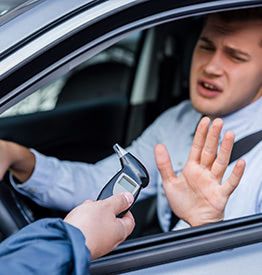
Myth: If I refuse the test, police have no evidence to convict me of DUI.
Reality: Prosecutors routinely secure DUI convictions without chemical test results. They can present dashboard camera or body camera footage showing your behavior, the officer’s observations of slurred speech and unsteady gait, your performance on field sobriety tests (if you took them), your own statements at the scene, and the fact of your refusal itself as evidence of consciousness of guilt. Questioning police conduct and challenging procedural errors remain critical defense strategies regardless of whether you took a chemical test.
Myth: If I refuse the breathalyzer, they can’t force me to give blood.
Reality: Police officers can and frequently do obtain warrants for mandatory blood draws in Tennessee, particularly in cases involving accidents, injuries, suspected drug impairment, or when a driver has prior DUI convictions. Modern technology allows officers to obtain telephonic warrants from judges within minutes. Once they have a warrant, refusal is no longer an option—you will be compelled to provide a blood sample.
Myth: I have the right to call my attorney before deciding whether to take the test.
Reality: Tennessee law does not grant you the right to consult with an attorney before making the implied consent decision. Officers will give you the Implied Consent Advisory and require an immediate answer. This is why contacting a DUI attorney immediately after arrest is critical—they can file for the administrative hearing and begin building your defense, but they cannot advise you at the moment of testing.
Can You Get a Hardship License After Refusing in Tennessee?
For most drivers facing a first-time refusal, the answer is effectively no—at least not immediately. Tennessee law specifically prohibits issuing a restricted license during the revocation period for an Implied Consent violation unless you meet narrow exceptions.
The limited exception: You may petition your local General Sessions Court for permission to install an ignition interlock device, which would then allow you to obtain a restricted license for work, school, or medical purposes. However, judges rarely grant these petitions for refusal cases, viewing them as distinct from DUI convictions where restricted licenses are more readily available.
What you need for the petition:
- Filing fees (varies by county)
- Proof of SR-22 high-risk insurance
- Documentation from a Tennessee-approved ignition interlock device vendor
- A compelling reason why you need driving privileges (employment, medical care, etc.)
- Legal representation to present your case effectively
In Knox County, Shelby County, Davidson County, and throughout East Tennessee, judges evaluate these petitions on a case-by-case basis. Success rates are significantly lower for refusal cases compared to standard DUI convictions.
“I tell clients that refusing the test trades the criminal case evidence for a guaranteed license suspension with almost no relief options. That one-year period without driving privileges—no way to get to work, take kids to school, or handle emergencies—is often more devastating than the potential criminal penalties. It’s a calculated risk that rarely works in the driver’s favor.” — Knoxville attorney Timothy G. Elrod
What Should You Actually Do at a DUI Stop?
Your Rights at a Tennessee DUI Stop
-
Ask If You’re Under ArrestPolitely ask the officer, “Am I under arrest?” This clarifies your legal status and determines which rights apply. Before arrest, you have more options to decline voluntary tests.
-
Decline Voluntary Field Sobriety Tests PolitelyField sobriety tests (walk-and-turn, one-leg stand, eye tests) and roadside preliminary breath tests are voluntary in Tennessee. You may politely decline these tests without triggering automatic penalties. Simply state, “I prefer not to take field sobriety tests.”
-
Remain Silent and Provide Required DocumentsProvide your license, registration, and proof of insurance as required. Do not answer questions about where you’ve been, whether you’ve been drinking, or how much you consumed. State: “I prefer not to answer questions without my attorney present.”
-
Comply With Chemical Tests After ArrestIf arrested and read the Implied Consent Advisory, seriously consider complying with chemical testing. Refusal triggers automatic license revocation with limited hardship license options. If offered a choice, request a blood test rather than breath—it creates more defense opportunities.
-
Request the Administrative Hearing Within 10 DaysYou have only 10 business days from arrest to request an administrative hearing with the Tennessee Department of Safety to challenge your license suspension. This hearing is separate from your criminal case and missing this deadline makes the suspension final.
-
Contact an Attorney ImmediatelyCall a DUI defense attorney as soon as possible after your arrest—ideally within hours. An attorney can file for the administrative hearing, begin gathering evidence, challenge the legality of the stop, and protect your rights throughout both the administrative and criminal proceedings.
Before arrest: Politely decline field sobriety tests and roadside preliminary breath tests. These are voluntary and rarely help your case. Provide your license, registration, and proof of insurance as required. Do not answer questions about where you’ve been, whether you’ve been drinking, or how much you’ve had. Simply state, “I prefer not to answer questions without my attorney present.”
After arrest: If the officer arrests you and reads the Implied Consent Advisory, seriously consider complying with the chemical test. Challenging the legality of the traffic stop and the test procedures provides strong defense options, but you preserve those options whether you take the chemical test or refuse it. Refusal simply adds an additional guaranteed penalty.
Choose blood over breath when possible: If given the choice between a breath test and a blood test, request blood. Blood draws at medical facilities create more opportunities for your attorney to challenge chain of custody, storage procedures, and lab protocols.
Why Choose OEB Law for Your Tennessee DUI Defense
When you’re facing DUI charges or an Implied Consent violation in Tennessee, the decisions you make in the hours and days following your arrest will shape the outcome of your case. The top attorneys in Knoxville at OEB Law bring decades of combined criminal defense experience to protect your rights and fight for the best possible outcome.
Who is OEB Law and Why Are They Good for the Community?
Led by Managing Attorney Timothy G. Elrod and Our Experienced Legal Team

Founded in 2004 in Knoxville, Tennessee, OEB Law has grown over nearly two decades to now serve clients across multiple states. Tim Elrod established the firm with a simple but powerful mission: we care and we help people. Today, together with attorneys Michael Bernard, Billy Sivyer, Gena Lewis, and Logan Wade, our team brings over 50 years of combined experience representing clients throughout Tennessee and Kentucky in personal injury and criminal defense cases.
Our Legal Expertise
Our attorneys have built their reputation through:
- Successfully representing thousands of personal injury and criminal defense clients
- Developing specialized knowledge across all types of DUI defense and criminal cases
- Mastering the complexities of Tennessee’s legal system through decades of practice
Why Trust Us
At OEB Law, our reputation speaks for itself:
- Proven Results: We’ve successfully defended clients at administrative license hearings and in criminal court, challenging illegal stops, improper test administration, and procedural violations
- Client Satisfaction: Our numerous 5-Star Google Reviews showcase our commitment to responsive, caring, and effective legal representation
- 24/7 Availability: DUI arrests happen at all hours—we’re standing by around the clock to begin protecting your rights immediately
- Local Knowledge: As East Tennessee natives, we understand our community and have established relationships with local courts, prosecutors, and law enforcement
- Personalized Approach: We personalize each case to meet our clients’ specific needs, ensuring you’re never just another file number
Understanding how much Knoxville lawyers charge for DUI defense helps you make informed decisions about your representation, and we’re transparent about our fee structure from day one.
Community Commitment
Our dedication extends beyond the courtroom. We proudly support:
- Boys & Girls Clubs of Tennessee Valley programs and toy drives
- Local high school football programs through Rivalry Thursday sponsorships
- The Knoxville Ice Bears and community fundraising initiatives
- Numerous youth, student, and community organizations throughout East Tennessee
As Tim Elrod says, “We don’t just take—we give back because the people you’re giving back to are the people who are supporting your firm.“
Have a DUI case? We’re available 24/7 to help.
Get In Touch
- Call or Text: (865) 546-1111
- Visit: https://oeblawtn.com/
- Available: Standing by 24/7
Why OEB Law? Because They’re Good For The Community.
TEXT or CALL (865) 546-1111 for HELP NOW. Standing By 24/7.
Follow Us on Social Media
Stay connected with OEB Law for legal updates, community involvement, and helpful information:
FAQ:
You have only 10 business days from the date of your arrest to request an administrative hearing with the Tennessee Department of Safety and Homeland Security to challenge your license suspension. Missing this deadline means your license suspension becomes final with no opportunity to contest it. This hearing is completely separate from your criminal DUI case and provides an opportunity to challenge whether the officer had probable cause for the arrest, whether the Implied Consent Advisory was properly given, and whether other procedural requirements were met. Even if you ultimately accept a plea deal in criminal court, winning the administrative hearing can save your license. This is why immediate contact with a DUI attorney is critical—waiting even a few days can eliminate this important protection.

