Police officers must follow strict procedural guidelines during DUI investigations to ensure that evidence collected is admissible in court. When officers make mistakes or violate established protocols, it can result in critical evidence being suppressed, significantly weakening the prosecution’s case. Understanding these procedural requirements and common errors can be crucial to mounting an effective defense against DUI charges. In this blog post, Knoxville attorney Tim Elrod discusses what procedural errors by police could lead to evidence suppression in a DUI case.
Procedural errors by police that can lead to evidence suppression in DUI cases include lack of reasonable suspicion for the traffic stop, improper administration of field sobriety tests, errors in chemical testing procedures, failure to follow proper arrest protocols, and violations of constitutional rights. These mistakes can result in key evidence being excluded from trial.
Key Takeaways
- Police must have reasonable suspicion to initiate a traffic stop and probable cause to make an arrest
- Field sobriety and chemical tests must be administered according to strict standardized protocols
- Constitutional violations during any phase of the investigation can lead to evidence suppression
- Even minor procedural errors can sometimes result in critical evidence being excluded from trial
Lack of Reasonable Suspicion for the Initial Stop
One of the most fundamental requirements for any DUI investigation is that police must have reasonable suspicion to initiate the traffic stop. This means officers must observe specific, articulable facts that suggest a traffic violation or criminal activity is occurring. If they cannot justify the stop with concrete observations, any evidence gathered as a result may be suppressed under the exclusionary rule.
Common scenarios where reasonable suspicion may be lacking include stops based solely on anonymous tips without corroboration, stops motivated by racial profiling or bias, or stops where the officer’s observations don’t actually constitute traffic violations. For example, if an officer stops someone for “weaving” but cannot describe specific instances of lane deviation, the stop may be challenged.
The reasonable suspicion standard protects citizens from arbitrary police stops and ensures that law enforcement actions are based on observable facts rather than hunches or discriminatory practices.
“The foundation of every DUI case is the initial traffic stop. If that foundation is flawed because the officer lacked reasonable suspicion, everything that follows becomes vulnerable to challenge. We carefully examine every detail of why our clients were stopped in the first place.” – Tim Elrod
Police Procedural Errors in DUI Cases
Common violations that can lead to evidence suppression and case dismissal
| Major Procedural Errors and Their Impact | |||
|---|---|---|---|
| Error Type | Specific Violations | Evidence at Risk | Case Impact |
CONSTITUTIONAL Lack of Reasonable Suspicion |
• No valid reason for traffic stop • Stop based on hunch or bias • Insufficient articulable facts |
All Stop Evidence Field Sobriety Tests Chemical Tests |
Complete case dismissal likely |
PROCEDURAL Field Sobriety Test Errors |
• Wrong surface conditions • Improper instructions given • Officer lacks certification • Failed to account for disabilities |
FST Results Officer Observations Video Evidence |
Test results suppressed, weakened case |
TECHNICAL Chemical Testing Violations |
• Uncalibrated equipment • Improper observation period • Chain of custody errors • Unqualified operator |
BAC Results Blood Tests Breath Tests |
Critical scientific evidence excluded |
CONSTITUTIONAL Miranda Violations |
• Rights not read before interrogation • Continued questioning after invocation • Improper custodial interrogation |
Statements Admissions Confessions |
Self-incriminating statements suppressed |
PROCEDURAL Inadequate Probable Cause |
• Arrest without sufficient evidence • Reliance on invalid test results • Misinterpretation of behavior |
Post-Arrest Evidence Search Results Additional Tests |
All evidence after arrest suppressed |
PROCEDURAL Documentation Errors |
• Inaccurate police reports • Missing key information • Inconsistent officer accounts • Timeline discrepancies |
Officer Testimony Report Evidence Timeline Evidence |
Credibility undermined, reasonable doubt |
| Chemical Testing Specific Errors | ||
|---|---|---|
| Testing Phase | Common Errors | Legal Consequences |
| Pre-Test Procedures | • Inadequate observation period (15+ minutes) • Failure to check for mouth alcohol • Improper instrument warm-up |
Test results inadmissible |
| Equipment Maintenance | • Missed calibration schedules • Defective equipment used • Improper maintenance records |
All test results invalid |
| Operator Qualifications | • Expired certifications • Inadequate training • Lack of required refresher courses |
Test validity challenged |
| Blood Test Chain of Custody | • Improper sample collection • Storage temperature violations • Missing documentation links |
Sample results excluded |
| Defense Strategies for Procedural Errors | ||
|---|---|---|
| Defense Action | Target Evidence | Success Rate Impact |
| Motion to Suppress Evidence | Illegally obtained evidence from constitutional violations | High success when violations are clear |
| Challenge Officer Qualifications | Field sobriety and chemical test results | Moderate success, undermines credibility |
| Equipment Challenge | Breathalyzer and blood test results | Success depends on maintenance records |
| Credibility Attack | Officer testimony and report accuracy | Creates reasonable doubt |
| Discovery Motions | Training records, equipment logs, video evidence | Uncovers additional procedural errors |
| Potential Case Outcomes | |
|---|---|
| Outcome | When It Occurs |
| Complete Dismissal | Major constitutional violations, no admissible evidence remaining |
| Reduced Charges | Some evidence suppressed, prosecution case weakened significantly |
| Favorable Plea Deal | Procedural errors create leverage for defense negotiations |
| Trial Advantage | Errors create reasonable doubt, improve chances of acquittal |
Improper Administration of Field Sobriety Tests
Standardized field sobriety tests must be conducted according to strict protocols established by the National Highway Traffic Safety Administration (NHTSA). When officers deviate from these standardized procedures, the reliability and admissibility of the test results can be challenged.
Common errors in field sobriety test administration include failing to provide proper instructions, conducting tests on uneven or unsafe surfaces, not accounting for weather conditions like rain or wind, failing to consider the suspect’s age, weight, or physical limitations, and not allowing adequate time for the suspect to understand and perform the tests.
Officers must also be properly trained and certified to administer these tests. If an officer lacks proper certification or training, or if they haven’t completed required refresher courses, their ability to conduct valid field sobriety tests may be questioned.
Errors in Chemical Testing Procedures
Breathalyzer and blood tests are critical pieces of evidence in DUI cases, but they must be administered, calibrated, and maintained according to strict protocols. Procedural errors in chemical testing can lead to suppression of what would otherwise be the most damaging evidence against a defendant.
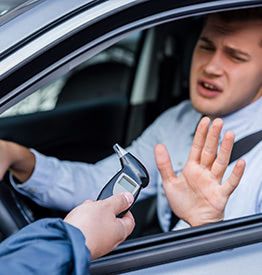
Common chemical testing errors include using uncalibrated or improperly maintained equipment, failing to observe the suspect for the required observation period before testing, improper collection, storage, or chain of custody of blood samples, and testing conducted by unqualified or uncertified personnel.
Additionally, breathalyzer machines must be regularly calibrated and maintained according to manufacturer specifications and state regulations. Records of maintenance and calibration must be properly documented and available for review by the defense.
“Chemical test results may seem like ironclad evidence, but these tests are only as reliable as the procedures used to administer them. When we find procedural violations in testing protocols, we can often get these results excluded from evidence entirely.” – Tim Elrod
Failure to Follow Proper Arrest Procedures
Law enforcement officers must adhere to established protocols during the arrest process, including properly advising suspects of their Miranda rights before custodial interrogation. Failure to follow these procedures can result in the suppression of incriminating statements and other evidence.
Miranda violations occur when officers fail to inform suspects of their right to remain silent and their right to an attorney before conducting custodial interrogation. Even if the suspect makes incriminating statements, these statements may be suppressed if proper Miranda warnings weren’t given.
Other arrest procedure violations can include using excessive force during the arrest, failing to properly secure the scene, or conducting searches without proper legal justification. Each of these errors can provide grounds for challenging the admissibility of evidence.
Inaccurate or Incomplete Police Reports

Police reports serve as the official record of what occurred during a DUI investigation, and inaccuracies or omissions can seriously undermine the prosecution’s case. When reports contain factual errors, inconsistencies, or missing information, they can be used to challenge the credibility of the officer’s testimony and the reliability of the evidence.
Common problems with police reports include inconsistent descriptions of the suspect’s behavior or appearance, failure to document important details about the traffic stop or arrest, inaccurate recording of test results or procedures, and conflicting accounts when multiple officers are involved.
Defense attorneys carefully review police reports for these types of errors and inconsistencies, which can be used to create reasonable doubt about the accuracy and reliability of the officer’s observations and conclusions.
Lack of Probable Cause for Arrest
Even after a lawful traffic stop, officers must develop probable cause before they can arrest someone for DUI. Probable cause requires more than reasonable suspicion and must be based on facts that would lead a reasonable person to believe the suspect was driving under the influence.
If officers make an arrest without sufficient probable cause, any evidence gathered after the arrest may be suppressed. This includes blood test results, statements made after arrest, and evidence discovered during searches incident to arrest.
Factors that contribute to probable cause typically include failed field sobriety tests, strong odor of alcohol, bloodshot or watery eyes, slurred speech, and admissions of drinking. However, these factors must be properly documented and sufficient to support the arrest decision.
Constitutional Rights Violations
Any violation of constitutional rights during the DUI investigation process can be grounds for evidence suppression. The Fourth Amendment protects against unreasonable searches and seizures, while the Fifth Amendment protects against self-incrimination.
Common constitutional violations in DUI cases include conducting searches without proper justification or consent, extending the duration of a traffic stop beyond what’s reasonable, forcing suspects to perform tests against their will, and interrogating suspects in custody without proper Miranda warnings.
Courts take constitutional violations seriously, and even minor violations can sometimes result in the exclusion of significant evidence. This is because the exclusionary rule is designed to deter police misconduct and protect citizens’ constitutional rights.
The Impact of Procedural Errors on Your Case
When procedural errors are successfully identified and challenged, they can have dramatic effects on the outcome of your DUI case. Suppressed evidence often forces prosecutors to dismiss charges entirely or agree to significantly reduced penalties through plea negotiations.
Even when some evidence remains admissible, procedural errors can create reasonable doubt in the minds of jurors about the reliability and legitimacy of the police investigation. This can be particularly effective when combined with other defense strategies.
The key is having an experienced attorney who knows how to identify these procedural violations and effectively challenge them in court. Many procedural errors are not immediately obvious and require careful analysis of police reports, training records, equipment maintenance logs, and witness testimony.
Why Choose OEB Law for DUI Defense in Tennessee
When facing DUI charges in Tennessee, you need top attorneys in Knoxville who understand how to identify and challenge police procedural errors. At OEB Law, our experienced attorneys have successfully defended countless clients by uncovering procedural violations and getting critical evidence suppressed. We know exactly what to look for when reviewing police procedures and how to effectively challenge violations in court.
Our team understands that DUI cases in Knoxville and throughout East Tennessee often involve complex procedural issues that require careful analysis and aggressive representation. We leave no stone unturned in examining every aspect of your case for potential procedural errors.
Who is OEB Law and Why Are They Good for the Community?
Led by Managing Attorney Timothy G. Elrod and Our Experienced Legal Team

Founded in 2004 in Knoxville, Tennessee, OEB Law has grown over nearly two decades to now serve clients across multiple states. Tim Elrod established the firm with a simple but powerful mission: we care and we help people. Today, together with attorneys Michael Bernard, Billy Sivyer, Gena Lewis, and Logan Wade, our team brings over 50 years of combined experience representing clients throughout Tennessee and Kentucky in personal injury and criminal defense cases.
Our Legal Expertise
Our attorneys have built their reputation through:
- Successfully representing thousands of personal injury and criminal defense clients
- Developing specialized knowledge across all types of accident and injury cases
- Mastering the complexities of Tennessee’s legal system through decades of practice
Why Trust Us
At OEB Law, our reputation speaks for itself:
- Proven Results: We’ve recovered significant compensation for our clients through both settlements and courtroom verdicts
- Client Satisfaction: Our numerous 5-Star Google Reviews showcase our commitment to responsive, caring, and effective legal representation
- No Fee Unless We Win: You don’t pay attorney fees unless we successfully secure compensation in your case
- Local Knowledge: As East Tennessee natives, we understand our community and care deeply about the people we serve
- Personalized Approach: We personalize each case to meet our clients’ specific needs, ensuring you’re never just another file number
Community Commitment

Our dedication extends beyond the courtroom. We proudly support:
- Boys & Girls Clubs of Tennessee Valley programs and toy drives
- Local high school football programs through Rivalry Thursday sponsorships
- The Knoxville Ice Bears and community fundraising initiatives
- Numerous youth, student, and community organizations throughout East Tennessee
As Tim Elrod says, “We don’t just take—we give back because the people you’re giving back to are the people who are supporting your firm.“
Have a personal injury or criminal defense case? We’re available 24/7 to help.
Get In Touch
- Call or Text: (865) 546-1111
- Visit: https://oeblawtn.com/
- Available: Standing by 24/7
Why OEB Law? Because They’re Good For The Community.
TEXT or CALL (865) 546-1111 for HELP NOW. Standing By 24/7.
FAQ
Yes, procedural errors by police can potentially lead to dismissal of DUI charges, especially when the errors result in suppression of critical evidence. If key evidence like breathalyzer results, field sobriety tests, or officer observations are excluded due to procedural violations, prosecutors may be unable to prove their case beyond a reasonable doubt. Even when dismissal isn’t possible, procedural errors often lead to reduced charges or favorable plea agreements. The Knoxville DUI defense team at OEB Law has successfully gotten charges dismissed or reduced by identifying and challenging these procedural violations.

