
Knoxville’s urban greenways, including the popular Neyland Greenway, Third Creek Greenway, and Knox-Blount Connector, attract thousands of cyclists, joggers, and pedestrians every year. When accidents happen on these shared-use paths, the legal rules governing liability differ significantly from standard car accident claims. OEB Law has represented injured East Tennesseans for over 20 years, and greenway accidents present unique challenges that many riders simply do not anticipate. Unlike road collisions, greenway crashes may involve municipal liability, homeowner’s insurance, and trail-specific negligence standards that have nothing to do with auto insurance. In this blog post, Knoxville attorney Tim Elrod discusses how cycling accident liability on Knoxville’s urban greenways differs from car accidents.
Key Takeaways
- Greenway accidents rarely involve auto insurance, as liability often depends on homeowner’s or renter’s insurance, or municipal claims against the City of Knoxville or Knox County.
- The Tennessee Governmental Tort Liability Act (GTLA) may allow you to sue the city or county for trail maintenance failures, but strict deadlines apply.
- On Knoxville greenways, cyclists are generally required to yield to pedestrians, and violating an applicable statute or ordinance may support a negligence per se argument in a personal injury claim.
- Tennessee follows a modified comparative fault rule under which a plaintiff may recover only if they are less than 50% at fault; if they are 50% or more at fault, recovery is barred.
To Discuss Your Case, Call or Text Our Team Standing By 24/7: (865) 546-1111
About OEB Law, Your Knoxville Legal Team

This guide is provided by the experienced attorneys at OEB Law, led by Managing Attorney Timothy G. Elrod. Founded in Knoxville in 2004, our firm has over 50 years of combined experience navigating East Tennessee’s legal system.
We have successfully represented thousands of personal injury clients, developing deep expertise in Tennessee’s complex wrongful death and accident laws. As East Tennessee natives, we have a direct understanding of the local court systems, law enforcement agencies, and community needs. Our commitment is to provide trusted, authoritative information to our neighbors in Knoxville and the surrounding Tennessee communities. However, this information does not constitute legal advice. If you or a loved one has been injured in an accident or needs legal help, call us today for a free, no obligation, initial consultation.
How Greenway Bicycle Accidents Differ From Car Accidents
On public roads, Tennessee traffic law generally treats bicycles as vehicles for purposes of the rules of the road under Tennessee’s bicycle statutes. That means the same rules of the road apply to cyclists riding on Kingston Pike or Chapman Highway as they do to any motor vehicle. On Knoxville’s greenways, that framework changes entirely. Local trail rules may govern behavior on shared-use paths, but Tennessee law can still apply depending on the circumstances of the accident.
This distinction matters enormously when an accident occurs. In a road collision, auto liability insurance is the primary mechanism for compensation. In a greenway crash with no motor vehicle involved, the responsible party may be another cyclist, a pedestrian, a property owner adjacent to the trail, or even the City of Knoxville itself. Understanding this difference before filing any claim can protect you from major legal missteps.
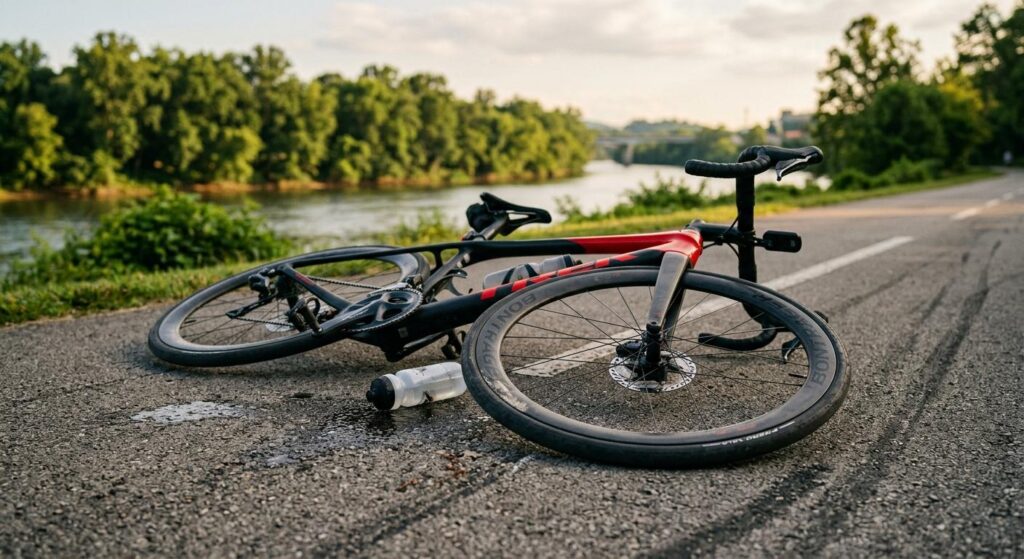
For those involved in car accident claims involving a bicycle, the transition between these two frameworks often happens at greenway-road crossings. You can also learn more about how bicycle accidents in bike lanes affect liability, which shares some features with greenway accidents but carries its own distinct rules.
What Happens at a Greenway-Road Crossing?
When a vehicle strikes a cyclist at a greenway-road intersection, auto insurance rules immediately resume. This is especially relevant at high-traffic crossings like Neyland Drive, Middlebrook Pike along the Third Creek Greenway, and Alcoa Highway along the Knox-Blount Connector. Tennessee generally requires uninsured motorist coverage to be included in motor vehicle liability policies unless the insured rejects it in writing, and underinsured motorist coverage may also be available depending on the policy. Therefore, if the driver who hit you lacks adequate insurance, your own UM/UIM policy may still provide compensation.
“Most cyclists assume that any accident automatically involves auto insurance, but on a greenway, if no motor vehicle is involved, you may be filing a claim against the City of Knoxville or relying on your own homeowner’s policy. That distinction changes everything about how we build your case.” – Knoxville attorney Tim Elrod
Knoxville Greenway Rules, Right-of-Way, and Negligence
Knoxville’s municipal trail codes establish clear right-of-way rules on shared-use greenways. Under applicable Knoxville greenway rules, cyclists are generally required to yield to pedestrians. They must also comply with any applicable audible-warning requirements before passing pedestrians on the trail. Speed limits on greenway segments may vary, so riders should check posted signs and applicable local trail rules before assuming a specific limit. Violating these rules may lead to liability exposure in a personal injury claim. In some cases, a violation of an applicable statute or ordinance may support a negligence per se argument, but fault still depends on the facts and the law that applies to the accident.
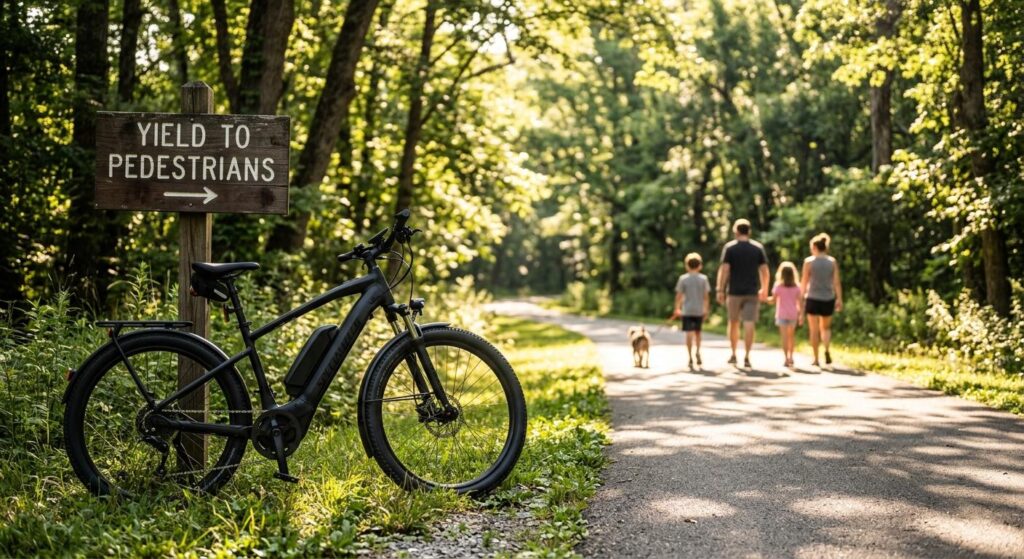
This matters most in cyclist-pedestrian collisions, a scenario that competing law firms almost never address. The Neyland Greenway sees especially high pedestrian-cyclist conflict near Volunteer Landing and during University of Tennessee game-day events. Meanwhile, segments of the Will Skelton Greenway pass through unincorporated Knox County areas, where jurisdiction may shift between city and county, a detail that directly affects which entity’s immunity provisions apply to your claim.
What If a Cyclist Injures a Pedestrian?
In a typical cyclist-versus-pedestrian greenway collision, auto insurance does not apply, and the claim may instead involve homeowner’s or renter’s liability coverage. The primary financial resource in this scenario is the cyclist’s homeowner’s or renter’s insurance personal liability coverage. If the cyclist violated an applicable trail speed limit or failed to comply with a passing rule, those violations may strengthen the pedestrian’s negligence claim.
Tennessee’s modified comparative fault rule, established in McIntyre v. Balentine, allows recovery only if the injured party is less than 50% at fault. Consequently, establishing the other party’s percentage of fault is critical in every greenway accident claim. This rule applies whether you are the cyclist, the pedestrian, or an e-bike rider.
Knoxville Greenway Right-of-Way Rules: Who Must Yield?
| Scenario | Who Has Right-of-Way | Legal Consequence of Violation |
|---|---|---|
| Cyclist approaching pedestrian | Pedestrian |
Negligence per se for failure to yield
|
| Cyclist passing pedestrian without signal | Pedestrian |
Negligence for failure to give audible warning
|
| E-bike (Class 2/3) exceeding 15 mph | Pedestrian |
Enhanced negligence exposure + possible vehicle reclassification
|
| Car striking cyclist at road crossing | Cyclist |
Auto insurance rules apply; TDOT/City maintenance liability possible
|
Can You Sue the City of Knoxville for a Greenway Injury?
This is the question that competitors and national AI platforms almost never address, and it may be the most important one for injured Knoxville cyclists. The Tennessee Governmental Tort Liability Act (GTLA), T.C.A. § 29-20-101, governs injury claims against government entities like the City of Knoxville and Knox County. Government bodies generally enjoy immunity from lawsuits, but the GTLA carves out specific exceptions.
One relevant GTLA exception concerns dangerous or defective conditions involving public property. If you were injured because of a cracked path surface, exposed tree roots, a broken bridge decking section on the Neyland Greenway, or an unmarked drainage hazard, the city or county may bear responsibility if the GTLA’s notice and immunity requirements are satisfied. However, GTLA liability generally depends on the applicable notice and defect provisions, including whether the government entity had actual or constructive notice of the dangerous condition. This is commonly referred to as a notice requirement.
How Is Knox County vs. City of Knoxville Jurisdiction Determined?
Greenway segments within Knoxville city limits may fall under City of Knoxville maintenance responsibility, but the responsible entity can vary depending on the specific segment and ownership records. Segments that pass through unincorporated areas may fall under Knox County’s jurisdiction instead, depending on the location and ownership of the trail segment. This distinction determines which entity you must file against and which maintenance records are relevant to your claim.
Two additional GTLA details demand immediate attention. First, liability caps apply: $300,000 per person and $700,000 per occurrence under T.C.A. § 29-20-403. Second, the statute of limitations for GTLA claims is 12 months, which is the same one-year period that generally applies to personal injury claims under Tennessee law. For this reason, a Knoxville personal injury attorney should review your greenway injury claim as quickly as possible after the accident occurs.
E-Bikes on Knoxville Greenways: What Riders Need to Know
E-bikes have become increasingly common on Knoxville’s trail system, and Tennessee law has started to address their classification. Tennessee law recognizes three e-bike classes: Class 1 (pedal-assist only, maximum 20 mph), Class 2 (throttle-assisted, maximum 20 mph), and Class 3 (pedal-assist, maximum 28 mph). City of Knoxville greenway policy may permit some e-bike classes and restrict others on certain trail segments, so riders should check the current trail rules before riding.
The legal exposure difference between classes is significant. A Class 3 e-bike traveling above a posted shared-use path speed limit is not simply ‘going a little fast.’ Courts and insurance adjusters may view that rider as creating increased negligence exposure, depending on the facts and the applicable trail rules. Additionally, most standard auto insurance policies do not cover e-bike accidents on non-motorized trails. Riders should carefully review their homeowner’s or renter’s insurance for personal liability coverage before taking a Class 2 or Class 3 e-bike onto the greenway.
“E-bikes are showing up on Knoxville greenways in much larger numbers, and the law has not fully caught up with the technology. If you are riding a Class 3 e-bike at its top speed on a shared-use path, you are creating legal exposure that goes well beyond a standard bicycle accident, and most riders have no idea.” – Knoxville attorney Tim Elrod
| E-Bike Class | Max Speed | Greenway Permitted? | Liability Exposure |
|---|---|---|---|
| Class 1 (pedal-assist) | 20 mph | Generally Yes | Standard cyclist negligence standard |
| Class 2 (throttle) | 20 mph | Restricted on some segments | Elevated if operating in restricted zone |
| Class 3 (pedal-assist) | 28 mph | Restricted/Prohibited on many | Significantly elevated; possible vehicle reclassification |
| Standard Bicycle (Human-powered) | Human-powered | Yes | Standard cyclist negligence standard |
Why Choose OEB Law for Knoxville Greenway Cycling Accidents
When evaluating a settlement offer or liability in a greenway accident, having experienced legal representation can make a significant difference. The top attorneys in Knoxville at OEB Law understand the unique challenges cyclists face in Tennessee. Greenway accident cases require an attorney who understands both sides of the liability puzzle. When a motor vehicle is involved, OEB Law applies decades of experience handling road-based personal injury claims under Tennessee’s comparative fault framework. When no vehicle is involved, the firm’s knowledge of Knoxville’s specific trail system becomes the decisive advantage.
OEB Law understands how to obtain Knoxville Parks and Recreation maintenance records, establish prior notice under the GTLA, and navigate the 12-month deadline that applies to municipal injury claims. Timothy G. Elrod has been recognized by legal directories and, together with our experienced legal team, has represented many injured East Tennesseans in personal injury matters. Numerous 5 Star Google Reviews reflect the firm’s commitment to injured cyclists and their families across Knox County. You don’t pay unless we win, meaning there is no financial risk to pursue your greenway injury claim.
Who is OEB Law and Why Are They Good for the Community?
Led by Managing Attorney Timothy G. Elrod and Our Experienced Legal Team
Founded in 2004 in Knoxville, Tennessee, OEB Law has grown over nearly two decades to serve clients across East Tennessee. Tim Elrod established the firm with a simple but powerful mission: we care and we help people. Today, our team brings over 50 years of combined experience representing clients throughout Tennessee in personal injury and criminal defense cases.
Our Legal Expertise
Our attorneys have built their reputation through:
- Successfully representing thousands of personal injury and criminal defense clients
- Developing specialized knowledge across all types of accident and injury cases
- Mastering the complexities of Tennessee’s legal system through decades of practice
Why Trust Us
At OEB Law, our reputation speaks for itself:
- Proven Results: We’ve recovered significant compensation for our clients through both settlements and courtroom verdicts
- Client Satisfaction: Our numerous 5 Star Google Reviews showcase our commitment to responsive, caring, and effective legal representation
- No Fee Unless We Win: You don’t pay attorney fees unless we successfully secure compensation in your case
- Local Knowledge: As East Tennessee natives, we understand our community and care deeply about the people we serve
- Personalized Approach: We personalize each case to meet our clients’ specific needs, ensuring you’re never just another file number
Community Commitment
Our dedication extends beyond the courtroom. We proudly support:
- Local high school football programs through Rivalry Thursday sponsorships
- The Knoxville Ice Bears and community fundraising initiatives
- Numerous youth, student, and community organizations throughout East Tennessee
“We don’t just take—we give back because the people you’re giving back to are the people who are supporting your firm.” – Tim Elrod
Have a personal injury or criminal defense case? We’re available 24/7 to help.
Get In Touch
- Call or Text: (865) 546-1111
- Visit: https://oeblawtn.com/
- Available: Standing by 24/7
Why OEB Law? Because They’re Good For The Community.
TEXT or CALL (865) 546-1111 for HELP NOW. Standing By 24/7.
Follow Us on Social Media
Stay connected with OEB Law for the latest Knoxville and East Tennessee legal insights, community updates, and important legal information. Follow us on X, YouTube, Facebook, Instagram, LinkedIn, and TikTok for exclusive content, client stories, and expert legal guidance from our team.
Liability in a Knoxville greenway accident depends on the circumstances. If a motor vehicle is involved at a road crossing, the at-fault driver’s auto insurance typically applies. If no vehicle is involved, liability may fall on another cyclist, a pedestrian, or the City of Knoxville or Knox County if poor trail maintenance caused the injury.
Yes, in many cases homeowner’s or renter’s insurance personal liability coverage applies when a cyclist injures a pedestrian or another person on a greenway trail where no motor vehicle is involved. Riders should review their policy limits carefully, since this coverage is often the only financial resource available in a non-vehicle greenway collision. An attorney can help identify all applicable coverage sources after an accident.
For standard personal injury claims in Tennessee, the statute of limitations is one year under T.C.A. § 28-3-104. However, if your claim involves the City of Knoxville or Knox County under the Tennessee Governmental Tort Liability Act, the same 12-month deadline applies but with additional procedural requirements, including demonstrating that the government entity had prior notice of the hazardous condition. Acting quickly after any greenway injury is essential to preserving your right to compensation.
Can You Sue the City of Knoxville for a Greenway Accident?
You may have a viable claim against the City of Knoxville under the Tennessee Governmental Tort Liability Act (GTLA), T.C.A. § 29-20-101, if the city had actual or constructive notice about a dangerous condition on the trail and failed to repair it. However, GTLA claims carry a 12-month statute of limitations, and you must satisfy notice requirements, so acting quickly is essential. An experienced Knoxville personal injury attorney can help you obtain maintenance records, establish prior notice, and navigate the GTLA’s procedural requirements before your deadline expires.

