
Interstate 75 through Knox County is a major traffic corridor where commercial trucks, commuters, and out-of-state drivers travel at high speed. When crashes happen at complex merge zones like the I-275 split near downtown Knoxville or in heavy truck traffic areas, dash cam footage can be highly valuable evidence in a personal injury claim. OEB Law has represented Knoxville accident victims for over 20 years. Our attorneys know that this footage must be preserved immediately before camera systems automatically overwrite it. Without quick action, critical video evidence can be overwritten or lost within a short time after a crash, depending on the camera system and retention policy. In this blog post, Knoxville attorney Tim Elrod discusses how dash cam footage from I-75 accidents is used by Knoxville attorneys.
Key Takeaways
- Dash cam footage is admissible in Tennessee civil courts when properly authenticated under Tennessee Rule of Evidence 901.
- TDOT SmartWay camera footage may have a short retention window, so Knoxville attorneys should request it as soon as possible after a crash before it is overwritten.
- Tennessee’s modified comparative fault rule means dash cam evidence that shifts fault can affect whether a plaintiff can recover and can also change settlement value.
- A spoliation letter puts trucking companies on notice to preserve their onboard dashcam and ELD data after an I-75 commercial vehicle wreck.
To Discuss Your Case, Call or Text Our Team Standing By 24/7: (865) 546-1111
About OEB Law, Your Knoxville Legal Team

This guide is provided by the experienced attorneys at OEB Law, led by Managing Attorney Timothy G. Elrod. Founded in Knoxville in 2004, our firm has over 50 years of combined experience navigating East Tennessee’s legal system.
We have successfully represented thousands of personal injury clients, developing deep expertise in Tennessee’s complex wrongful death and accident laws. As East Tennessee natives, we have a direct understanding of the local court systems, law enforcement agencies, and community needs. Our commitment is to provide trusted, authoritative information to our neighbors in Knoxville and the surrounding Tennessee communities. However, this information does not constitute legal advice. If you or a loved one has been injured in an accident or needs legal help, call us today for a free, no obligation, initial consultation.
Dash Cam Evidence Preservation Timeline
After an I-75 Knoxville AccidentAre Dashcams Legal in Tennessee?
Before dashcam footage can help a claim, it must clear one basic hurdle. The camera itself must have been legally mounted. Under T.C.A. § 55-8-199, Tennessee law prohibits windshield-mounted items that materially obstruct the driver’s view of the road. A properly positioned dashcam, such as one placed in a lower corner of the windshield or behind the rearview mirror, is generally less likely to violate Tennessee’s windshield-obstruction rule, and its footage may be used as evidence if it is properly authenticated.
Tennessee generally allows one-party-consent audio recording in many circumstances, but any crash-scene recording must still comply with applicable state and federal law. This can be valuable when the other driver makes admissions about speed, distraction, or fault immediately after the collision.
Proper versus improper dashcam placement includes:
- Mounted low on windshield or behind the rearview mirror (acceptable)
- Mounted high on the center windshield blocking sightlines (potentially problematic)
- Suction cup mount on side window (generally acceptable)
- Large screen unit obstructing driver field of view (violation risk)
What Happens If the Camera Was Mounted Improperly?
Defense attorneys sometimes argue that an improperly mounted dashcam means the driver was negligent. They may even attempt to exclude the footage entirely. A Knoxville personal injury attorney can counter this by photographing the mount position and conducting a vehicle inspection. They will work to demonstrate that the placement met legal standards. Even if mounting is challenged, courts often weigh the evidentiary value of the footage against the mount dispute separately.
How Knoxville Attorneys Use Dashcam Footage After an I-75 Accident
I-75 through Knoxville presents several uniquely dangerous zones that generate disputed accident claims. The I-275/I-40/I-75 downtown merge is a complex traffic area where fault is often contested in collision cases. The commercial truck corridors in Campbell County see frequent rear-end and lane-change collisions. Exit 108 near Merchants Road creates commercial vehicle staging conflicts that lead to sideswipe crashes. In each of these locations, dashcam footage provides an objective record that eliminates guesswork about what happened.
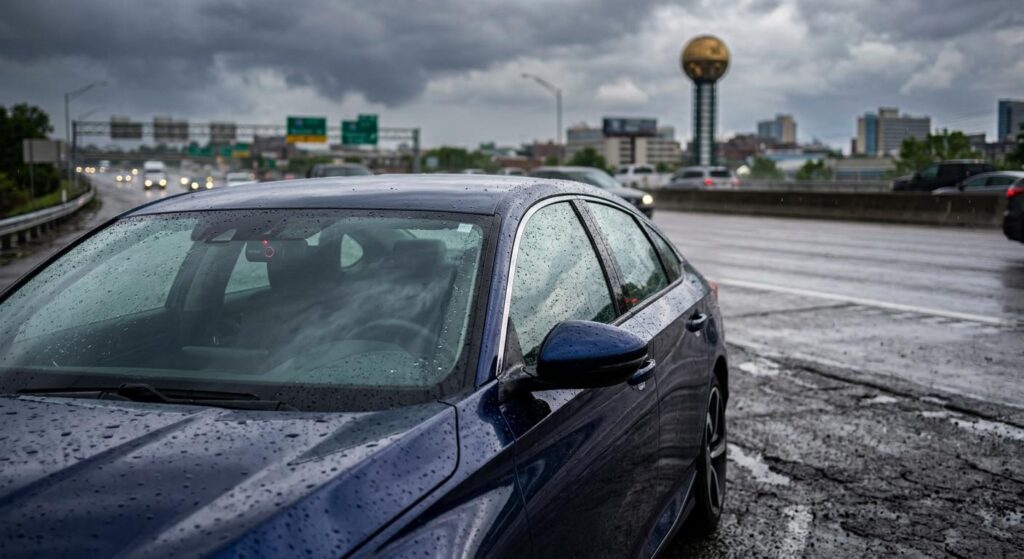
Knoxville attorneys use that footage to document lane compliance, vehicle speed, signal status, driver behavior, and road conditions. This evidence is especially powerful in establishing fault. Under Tenn. Code Ann. § 29-11-103, a plaintiff may recover only if the plaintiff’s fault is not equal to or greater than the fault of the defendant or defendants. Even shifting a minor portion of fault back to the other driver can increase what a client recovers from a settlement or verdict.
“On I-75, especially near the downtown merge where I-275 splits off, we see a lot of disputes about who changed lanes first. Dash cam footage removes the guesswork and gives us an objective record of exactly what happened.” – Knoxville attorney Tim Elrod
Dashcam footage specifically documents:
- Vehicle speed at the moment of impact
- Lane position and any lane changes made before the crash
- Turn signal activation or failure to signal
- Following distance and braking behavior
- Weather and road surface conditions
- Traffic signal status at intersections
Our car accident attorneys review this footage frame by frame. We often coordinate with accident reconstruction experts to build a timeline that supports the client’s account of events.
Securing Evidence: TDOT Cameras and Trucking Records
TDOT SmartWay Cameras
TDOT operates a live SmartWay traffic camera network with coverage points along I-75 through Knox County. These cameras are separate from police dashcam footage and must be requested independently. Attorneys file requests under the Tennessee Public Records Act, T.C.A. § 10-7-503, and agencies must respond within the time required by the Act. The critical issue is timing: TDOT SmartWay footage may be retained for only a short period, so attorneys should request it immediately before it is overwritten. Requests directed to TDOT District 5, which covers the Knoxville region, should go out within days of the crash rather than weeks.
What Is a Spoliation Letter and Why Does Timing Matter?
A spoliation letter is a formal legal demand sent soon after an accident that puts a company on notice to preserve all relevant evidence. For I-75 truck accident cases, this means demanding that the carrier preserve onboard dashcam footage, ELD data, driver logs, and ECM records. Under FMCSA regulations in 49 C.F.R. part 395, commercial carriers must retain certain ELD-related records and supporting documents for a limited period.
However, without a spoliation letter, companies may claim data was lost in a routine overwrite cycle. The letter helps establish a preservation obligation and may support court sanctions if the carrier destroys evidence after receiving it.
“When I get a call about an I-75 truck wreck, one of the first things we do is send a spoliation letter to the carrier. Trucking companies have multiple camera angles, including forward-facing and driver-facing systems. That evidence doesn’t preserve itself.” – Knoxville attorney Tim Elrod
Which Law Enforcement Agencies Have Jurisdiction on I-75?
Knowing which agency to contact for dashcam footage matters because each has different request procedures and retention policies:
- Tennessee Highway Patrol (THP): Primary jurisdiction on the interstate; contact THP District 8 for Knox County crash footage.
- Knox County Sheriff’s Office: Knox County Sheriff’s Office may respond to certain incidents in unincorporated parts of Knox County, depending on the location and the responding agency.
- Knoxville Police Department: Covers segments where I-75 passes through city limits.
Your attorney must identify which agency responded to the crash and submit the correct records request to the correct agency before the retention window closes.
Tennessee Dash Cam Evidence
What Knoxville attorneys verify before utilizing crash footage in court
Does Dash Cam Footage Hold Up in Tennessee Courts?
For dashcam footage to be admitted in a Tennessee civil case, it must be authenticated. Tennessee Rule of Evidence 901 requires that the party offering the footage provide evidence sufficient to support a finding that the video is what the proponent claims it is. In practical terms, this means establishing that the footage was recorded by the dashcam in question, has not been altered, and aligns with other known facts like the crash time and location.
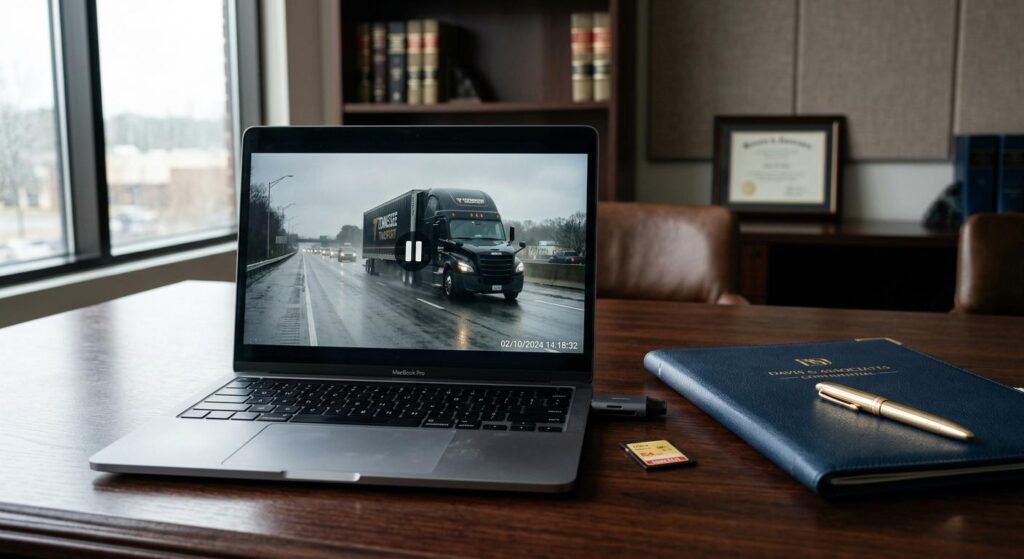
Chain of custody matters significantly here. The footage must be preserved without modification from the moment of capture to the moment it is presented in court. Modern dashcam files contain metadata including timestamps, GPS coordinates, and file integrity data that support this authentication. An attorney who understands how to extract and present this metadata strengthens the evidentiary foundation considerably.
Courts may also consider Tennessee Rule of Evidence 403, which allows a judge to exclude evidence when its probative value is substantially outweighed by the danger of unfair prejudice. This is rare in standard accident claims but can arise when footage is particularly graphic. Additionally, under Tenn. R. Civ. P. 26.02, dashcam footage in a party’s possession may be discoverable during litigation if it is relevant and within the scope of discovery. This cuts both ways. If your footage shows any potential comparative fault on your part, the opposing party can request it. Understanding how your settlement value might be affected by footage content is another reason to consult an attorney before sharing video with any insurer.
Why Choose OEB Law for Your I-75 Accident Dash Cam Evidence Case
OEB Law is well positioned to handle I-75 accident cases involving dashcam evidence because the firm has been serving Knoxville clients since 2004. The experienced attorneys at OEB Law understand the specific dynamics of the Knox County corridor. We know the Campbell County truck zones and the downtown Knoxville merge areas where fault disputes most commonly arise. When a client calls after an I-75 crash, the firm acts immediately to send spoliation letters to commercial carriers and submit TDOT records requests before footage windows close.
Timothy G. Elrod is supported by client reviews and has practiced for many years serving East Tennessee clients. The firm consistently earns 5 Star Google Reviews for our dedication to injury victims. As a Knoxville personal injury attorney with deep local roots, he understands which agencies to contact and how to present dashcam evidence effectively. You don’t pay unless OEB Law wins your case.
Who is OEB Law and Why Are They Good for the Community?
Led by Managing Attorney Timothy G. Elrod and Our Experienced Legal Team
Founded in 2004 in Knoxville, Tennessee, OEB Law has grown over nearly two decades to now serve clients across multiple states. Tim Elrod established the firm with a simple but powerful mission: we care and we help people. Today, our team brings over 50 years of combined experience representing clients throughout Tennessee in personal injury and criminal defense cases.
Our Legal Expertise
Our attorneys have built their reputation through:
- Successfully representing thousands of personal injury and criminal defense clients
- Developing specialized knowledge across all types of accident and injury cases
- Mastering the complexities of Tennessee’s legal system through decades of practice
Why Trust Us
At OEB Law, our reputation speaks for itself:
- Proven Results: We’ve recovered significant compensation for our clients through both settlements and courtroom verdicts
- Client Satisfaction: Our numerous 5 Star Google Reviews showcase our commitment to responsive, caring, and effective legal representation
- No Fee Unless We Win: You don’t pay attorney fees unless we successfully secure compensation in your case
- Local Knowledge: As East Tennessee natives, we understand our community and care deeply about the people we serve
- Personalized Approach: We personalize each case to meet our clients’ specific needs, ensuring you’re never just another file number
Community Commitment
Our dedication extends beyond the courtroom. We proudly support:
- Local high school football programs through Rivalry Thursday sponsorships
- The Knoxville Ice Bears and community fundraising initiatives
- Numerous youth, student, and community organizations throughout East Tennessee
“We don’t just take—we give back because the people you’re giving back to are the people who are supporting your firm.” – Tim Elrod
Have a personal injury or criminal defense case? We’re available 24/7 to help.
Get In Touch
- Call or Text: (865) 546-1111
- Visit: https://oeblawtn.com/
- Available: Standing by 24/7
Why OEB Law? Because They’re Good For The Community.
TEXT or CALL (865) 546-1111 for HELP NOW. Standing By 24/7.
Follow Us on Social Media
Stay connected with OEB Law for the latest Knoxville and East Tennessee legal insights, community updates, and important legal information. Follow us on X, YouTube, Facebook, Instagram, LinkedIn, and TikTok for exclusive content, client stories, and expert legal guidance from our team.
Attorneys can subpoena dashcam footage from the other driver through the discovery process in civil litigation under Tennessee Civil Rules of Procedure Rule 26.02. They can also send preservation demands to commercial trucking companies immediately after a crash, requiring retention of onboard camera systems, ELD data, and driver logs. Acting quickly is essential because most dashcam systems overwrite footage automatically within days or weeks.
A spoliation letter is a formal legal demand that requires a company to preserve all relevant evidence, including dashcam footage, ELD data, driver logs, and black box records. It should be sent within 24 to 48 hours of an I-75 truck accident, before routine data overwrite cycles can destroy the evidence. If a trucking company destroys evidence after receiving a spoliation letter, Tennessee courts can issue sanctions or apply an adverse inference instruction against the company at trial.
Yes, TDOT SmartWay traffic camera footage can be requested through a Tennessee Public Records Act request under T.C.A. § 10-7-503 and used as evidence in a civil personal injury case. The footage must be requested quickly because TDOT typically retains camera recordings for 30 days or less before they are overwritten. A Knoxville attorney familiar with TDOT’s District 5 procedures can submit the request and preserve this evidence before the retention window closes.
Does Dash Cam Footage Guarantee a Better Settlement in Tennessee?
Dash cam footage is powerful evidence, but it is one part of a complete claim strategy rather than an automatic guarantee of a larger settlement. Under Tennessee’s modified comparative fault rule, a plaintiff must be less than 50% at fault to recover any damages. The value of your footage depends heavily on what it shows, how it was preserved, and how effectively the top attorneys in Knoxville present it. When footage clearly establishes the other driver’s fault and has been properly authenticated, it significantly strengthens negotiating leverage with insurance companies and eliminates disputed liability arguments.

