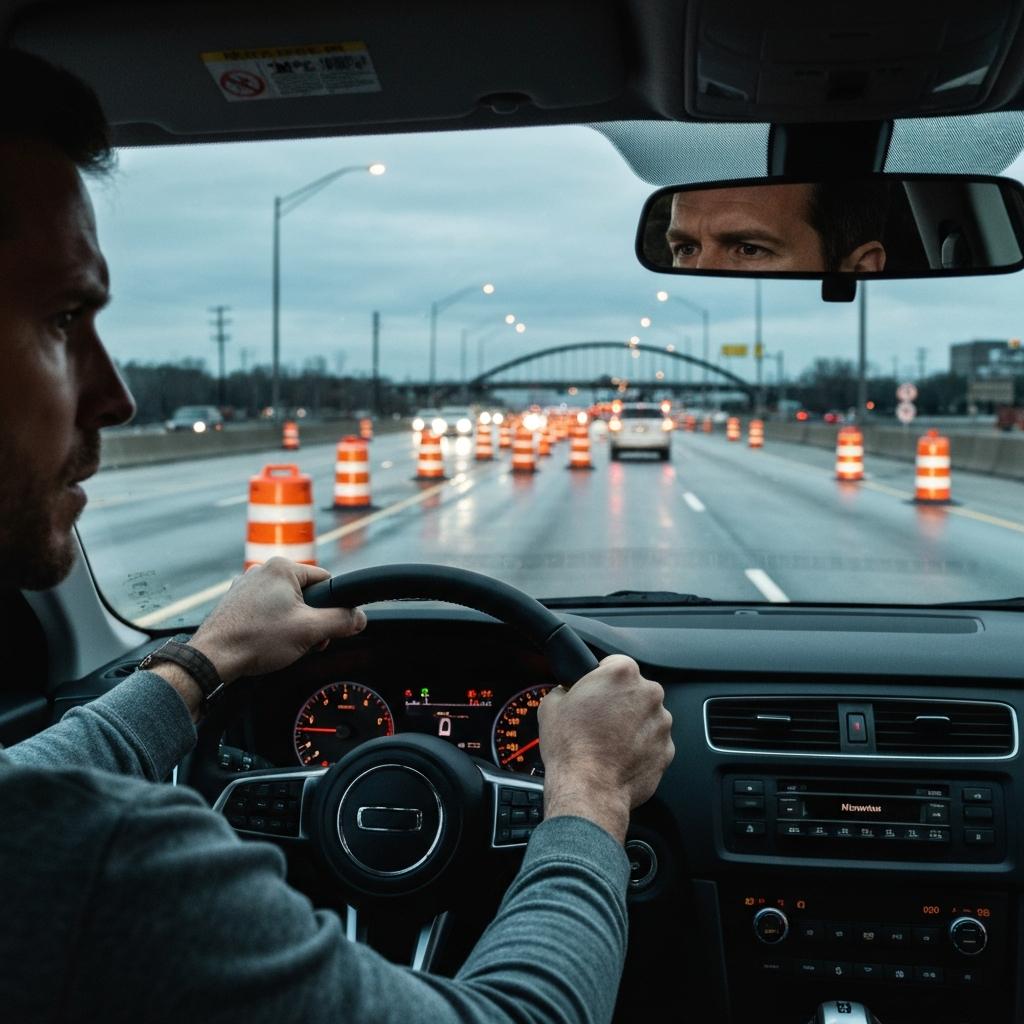
Knoxville drivers are facing one of the most active construction seasons in recent memory, with major work zones reshaping travel patterns across I-75, I-275, Sevier Avenue, and Chapman Highway throughout 2026. These projects bring real safety risks and serious legal consequences for drivers who are unprepared. At OEB Law, we have seen firsthand how work zone crashes can result in complex injury claims involving multiple liable parties, enhanced fines, and tight legal deadlines. Understanding what is happening on Knoxville roads is not just a matter of convenience; it can protect your safety, wallet, and legal rights. In this blog post, Knoxville attorney Tim Elrod discusses what Knoxville drivers need to know about navigating 2026 work zones, lane shifts, and detours safely and legally.
Key Takeaways
- Tennessee work zone traffic violations under T.C.A. § 55-8-136 can result in enhanced fines, meaning a standard traffic ticket can cost significantly more inside an active construction zone.
- Major 2026 Knoxville corridors including I-75 at Emory Road, I-275, Sevier Avenue, and Chapman Highway all have active or imminent construction affecting daily traffic flow.
- If you are injured in a work zone crash, Tennessee’s modified comparative fault rule under T.C.A. § 29-11-103 and any applicable Governmental Tort Liability Act notice requirements can affect your legal options and the deadlines that apply to your claim.
- TDOT SmartWay and the City of Knoxville provide real-time road closure data that every commuter should check before traveling through affected corridors.
Knoxville drivers in 2026 should expect significant lane shifts, temporary detours, and nighttime closures across major corridors including I-75, I-40, I-275, and South Knoxville’s Sevier Avenue and Chapman Highway projects. Tennessee law allows for enhanced fines for traffic violations inside active work zones, and drivers who cause accidents in these areas face heightened legal exposure. Checking TDOT SmartWay and the City of Knoxville’s closure portal before commuting is the fastest way to avoid unexpected delays and dangerous merges.
To Discuss Your Case, Call or Text Our Team Standing By 24/7: (865) 546-1111
About OEB Law, Your Knoxville Legal Team

This guide is provided by the experienced attorneys at OEB Law, led by Managing Attorney Timothy G. Elrod. Founded in Knoxville in 2004, our firm has over 50 years of combined experience navigating East Tennessee’s legal system.
We have successfully represented thousands of personal injury clients, developing deep expertise in Tennessee’s complex wrongful death and accident laws. As East Tennessee natives, we have a direct understanding of the local court systems, law enforcement agencies, and community needs. Our commitment is to provide trusted, authoritative information to our neighbors in Knoxville and the surrounding Tennessee communities. However, this information does not constitute legal advice. If you or a loved one has been injured in an accident or needs legal help, call us today for a free, no obligation, initial consultation.
Active 2026 Construction Corridors Every Knoxville Driver Should Know
Knoxville’s road network is undergoing a significant transformation. Several major corridors are simultaneously under construction, and understanding what to expect on each one helps drivers plan safer routes and avoid dangerous surprises.
I-75 at Emory Road: Knoxville’s New Diverging Diamond Interchange
The most disorienting project for North Knox County drivers is the new Diverging Diamond Interchange (DDI) at the I-75 and Emory Road interchange. A DDI temporarily shifts traffic to the opposite side of the road near the interchange ramps, which allows smoother left-turn movements onto the highway without traditional signal phases. This design is unfamiliar to most Tennessee drivers. Drivers approaching this interchange for the first time often brake unexpectedly or merge incorrectly, creating elevated crash risk. This project is expected to continue through 2028, so learning the DDI pattern early is essential.
I-275 Resurfacing and Downtown Knoxville Impacts
The I-275 corridor serving downtown Knoxville is undergoing resurfacing work with nighttime operations typically running from 7 p.m. to 6 a.m., Sunday through Thursday. On-ramp and off-ramp configurations may shift temporarily during active work phases. Downtown commuters and visitors heading to Market Square or the Knoxville Convention Center area should check real-time closures before traveling. TDOT SmartWay at smartway.tn.gov provides updated information for all state-managed routes in this corridor.
South Knoxville: Sevier Avenue and Chapman Highway Projects
South Knoxville is managing two overlapping projects that affect the Sevier Avenue streetscape and the Chapman Highway corridor. The Chapman Highway reconstruction is a $22.25 million project with an expected completion timeline extending through 2030. This means long-term lane shifts, phased detours, and changed intersection configurations will affect South Knoxville drivers for several years. The City of Knoxville Public Works portal covers city-permitted closures that complement TDOT’s state highway data.
Here is a quick reference for the active corridors affecting Knoxville drivers right now:
- I-75 / Emory Road – Diverging Diamond Interchange construction through 2028, North Knox County merge pattern changes
- I-275 Downtown – Resurfacing with nighttime closures, on-ramp and off-ramp shifts affecting downtown access
- Sevier Avenue – Streetscape and utility work with detours routing traffic to Chapman Highway
- Chapman Highway – $22.25M reconstruction project through 2030, ongoing lane shifts and intersection changes
- Knox TPO network – The Knox Transportation Planning Organization coordinates regional project timing; their site is a useful planning resource for longer-range travel decisions
2026 Knoxville Active Construction Corridors: At-a-Glance Guide
| Corridor | Project Type | Expected Duration | Work Hours | Primary Impact |
|---|---|---|---|---|
| I-75 / Emory Road | Diverging Diamond Interchange (DDI) | Through 2028 | Ongoing | North Knox County merge pattern changes |
| I-275 Downtown | Resurfacing | 2026 | Nighttime (7pm-6am) | Downtown Knoxville on-ramp/off-ramp shifts |
| Sevier Avenue | Streetscape / Utility | 2026 | Varies | South Knoxville detours to Chapman Highway |
| Chapman Highway | Major reconstruction ($22.25M) | Through 2030 | Daytime and nighttime phases | South Knoxville long-term lane shifts |
Tennessee Work Zone Laws That Apply Right Now
Knowing where construction is happening is only half the equation. Tennessee law imposes specific obligations and penalties inside active work zones that every Knoxville driver needs to understand.
Enhanced Fines in Tennessee Work Zones
Under T.C.A. § 55-8-136, certain traffic violations committed in active work zones are subject to enhanced fines, which can be significantly higher than ordinary penalties. A violation that might cost a driver $50 under normal conditions can cost much more when workers or equipment are present. Beyond the financial hit, a work zone traffic violation can affect how fault is allocated if that same driver is involved in a crash.
Tennessee’s Move Over Law and Work Zone Equipment
Under T.C.A. § 55-8-132, drivers must move over or slow down when approaching certain stationary vehicles and work-zone equipment, including authorized emergency vehicles and other covered roadside or construction vehicles. Failure to comply is a traffic offense that can carry its own penalties under Tennessee law, depending on the circumstances and the subsection involved.
“A work zone violation does more than generate a fine — it can become a fault admission if an accident follows. Knoxville drivers who are speeding through a construction zone and then get into a crash face a much harder legal road than those who were following posted rules. The ticket alone can shape how insurance companies and courts assign blame.” – Knoxville attorney Tim Elrod
Key behaviors that are specifically penalized inside Tennessee work zones include:
- Speeding beyond posted reduced speed limits, even when workers are not visibly present
- Following other vehicles too closely in narrowed lane configurations
- Using a handheld device while driving through a flagged work area
- Failing to merge early when lane closure signs are posted
- Failing to yield or move over for TDOT equipment under the Move Over Law
Essential Safety Tips for Driving Through Knoxville Work Zones
Work zone crashes injure and kill both drivers and road workers every year. Recent TDOT data indicates that work zone crashes remain a recurring safety concern across East Tennessee. Following a few specific safety practices dramatically reduces that risk for Knoxville commuters.
How to Adjust Your Speed and Following Distance
Reduce your speed well before you reach a reduced speed zone sign, not at the sign itself. Work zone lane widths are often narrower than standard lanes, leaving less room for error if the vehicle ahead stops suddenly. Increase your following distance to at least four seconds in any active construction corridor. This is especially important in the I-75 DDI zone where unfamiliar traffic patterns cause unexpected braking. If you are approaching a Knoxville car accident scene inside a work zone, slow down immediately regardless of posted speeds.
What to Watch for in Lane Shift and Detour Zones
Lane shift zones use plastic channelizing drums and painted pavement markings that may be difficult to read at night or in rain. Watch for temporary pavement markings that override permanent painted lines; temporary markings typically appear in orange. On Chapman Highway, phased construction means the active lane configuration may change from week to week. Check TDOT SmartWay before traveling through unfamiliar construction corridors so you are not encountering lane changes for the first time at highway speeds.
Additional safety practices for Knoxville work zones include:
- Check TDOT SmartWay (smartway.tn.gov) before peak commute hours for real-time closure updates
- Avoid distracted driving entirely inside work zones; enhanced fines apply and reaction time drops significantly in compressed lane widths
- Watch for flaggers at Sevier Avenue and Chapman Highway city-permitted zones; flagger instructions override traffic signals and signs
- Use your headlights during daytime construction operations; many Knoxville work zones involve dust, equipment exhaust, and reduced visibility conditions
- Plan alternate routes through South Knoxville before starting your trip, not while driving through an active work zone
What to Do If You Are in a Work Zone Crash in Knoxville
Work zone crashes in Knoxville are legally different from standard two-car collisions. Multiple parties may share liability, and government entity involvement creates procedural requirements that do not apply to ordinary personal injury claims.
Immediate Steps After a Work Zone Collision
Call 911 immediately and stay at the scene. Document everything with your phone before vehicles are moved: photograph signage placement, lane markings, skid marks, vehicle positions, and any construction equipment in the area. Note whether workers were present and whether required advance warning signs were posted at the proper distances from the work zone entrance. Gather contact information from witnesses, including any on-site flag workers or contractors who were present. Seek medical evaluation even if you feel uninjured, as symptoms from whiplash, internal injury, and soft tissue damage often appear hours or days after impact.
Do not give a recorded statement to any insurance adjuster before speaking with an attorney. What you say in those initial conversations can significantly affect your ability to recover compensation later.
Who May Be Liable: TDOT, City Contractors, and Private Parties
Liability in a Knoxville work zone crash can fall on several different parties depending on which entity controlled the site. TDOT manages state highway projects like I-75 and I-275. The City of Knoxville’s Public Works department oversees city-permitted projects like Sevier Avenue. Private contractors managing specific work phases may carry independent liability for signage failures or unsafe lane configurations.
If a government entity is involved, the Tennessee Governmental Tort Liability Act may apply, including the notice requirements found in T.C.A. § 29-20-201. The GTLA imposes notice requirements and other procedural rules for claims against governmental entities, and those requirements can be shorter and more complex than the deadline for ordinary personal injury claims.
Tennessee’s modified comparative fault rule under T.C.A. § 29-11-103 also applies, and a plaintiff who is 50% or more at fault cannot recover damages. However, inadequate signage or negligent work-zone setup may shift fault to a government entity or contractor, and that analysis often requires experience with TDOT procedures and Knox County court practice.
Tennessee’s one-year statute of limitations under T.C.A. § 28-3-104 applies to personal injury claims, and claims involving governmental entities may also require separate notice within a shorter or concurrent timeframe. Contact a Knoxville personal injury attorney at OEB Law’s personal injury practice as soon as possible to protect your rights.
“The most common mistake injured drivers make is assuming the insurance company will handle everything fairly. In a work zone crash where TDOT or a city contractor may be involved, the rules are entirely different. Getting legal advice early is the only way to make sure you don’t miss a deadline that could shut down your entire claim.” – Knoxville attorney Tim Elrod
The experienced legal team at OEB Law—including Timothy G. Elrod—understands both TDOT project structures and Knox County court procedures, which is exactly what work zone injury claims require.
What to Do After a Knoxville Work Zone Crash
Step-by-Step Checklist
Call 911 & Secure the Scene
Call 911 immediately and secure the scene to ensure everyone’s safety and get official help on the way.
Document Everything
Photograph signage, lane markings, skid marks, vehicle positions, and construction equipment before anything is moved.
Note Work Zone Conditions
Make a note of whether workers were present and if required warning signs were posted correctly in advance of the work area.
Gather Witness Information
Collect contact information from any witnesses and get the names of on-site contractors or flag workers.
Seek Medical Evaluation
Get a medical evaluation even if you feel uninjured. Symptoms from crash injuries can appear hours or even days later.
Avoid Recorded Statements
Do not give recorded statements to any insurance adjusters without first speaking with your own legal counsel.
Contact a Local Attorney
Contact a Knoxville personal injury attorney to identify which entity (TDOT, City of Knoxville, or a private contractor) may be liable.
Understand Government Claim Deadlines
Be aware that claims against government entities require specific written notice within strict deadlines under Tennessee law.
Why Choose OEB Law for Work Zone Accident Cases in Knoxville
Work zone crashes are among the most legally complex personal injury cases in East Tennessee. They often involve government entities with different liability rules than standard car accident claims, multiple contractors with overlapping responsibilities, and procedural notice requirements that most injured drivers have never encountered. OEB Law has represented Knoxville drivers injured in many types of East Tennessee road conditions for more than 20 years. That experience with TDOT project structures, Knox County court systems, and the Tennessee Governmental Tort Liability Act means clients receive counsel who understands the specific legal terrain of construction zone claims, not just general personal injury law.
The firm’s 5 Star Google Reviews reflect a track record of responsive, results-focused representation. And because OEB Law operates on a contingency fee basis, you pay nothing unless the firm wins your case. If you or someone you know has been injured in a Knoxville work zone crash, do not wait. Deadlines in these cases can arrive faster than most people expect.
Who is OEB Law and Why Are They Good for the Community?
Led by Managing Attorney Timothy G. Elrod and Our Experienced Legal Team
Founded in 2004 in Knoxville, Tennessee, OEB Law has grown over nearly two decades to serve clients throughout Knoxville and East Tennessee. Tim Elrod established the firm with a simple but powerful mission: we care and we help people. Today, our team brings over 50 years of combined experience representing clients throughout Tennessee in personal injury and criminal defense cases.
Our Legal Expertise
Our attorneys have built their reputation through:
- Successfully representing thousands of personal injury and criminal defense clients
- Developing specialized knowledge across all types of accident and injury cases
- Mastering the complexities of Tennessee’s legal system through decades of practice
Why Trust Us
At OEB Law, our reputation speaks for itself:
- Proven Results: We’ve recovered significant compensation for our clients through both settlements and courtroom verdicts
- Client Satisfaction: Our numerous 5 Star Google Reviews showcase our commitment to responsive, caring, and effective legal representation
- No Fee Unless We Win: You don’t pay attorney fees unless we successfully secure compensation in your case
- Local Knowledge: As East Tennessee natives, we understand our community and care deeply about the people we serve
- Personalized Approach: We personalize each case to meet our clients’ specific needs, ensuring you’re never just another file number
Community Commitment
Our dedication extends beyond the courtroom. We proudly support:
- Local high school football programs through Rivalry Thursday sponsorships
- The Knoxville Ice Bears and community fundraising initiatives
- Numerous youth, student, and community organizations throughout East Tennessee
“We don’t just take—we give back because the people you’re giving back to are the people who are supporting your firm.” – Tim Elrod
Have a personal injury or criminal defense case? We’re available 24/7 to help.
Get In Touch
- Call or Text: (865) 546-1111
- Visit: https://oeblawtn.com/
- Available: Standing by 24/7
Why OEB Law? Because They’re Good For The Community.
TEXT or CALL (865) 546-1111 for HELP NOW. Standing By 24/7.
Follow Us on Social Media
Stay connected with OEB Law for the latest Knoxville and East Tennessee legal insights, community updates, and important legal information. Follow us on X, YouTube, Facebook, Instagram, LinkedIn, and TikTok for exclusive content, client stories, and expert legal guidance from our team.
Frequently Asked Questions
A Diverging Diamond Interchange (DDI) temporarily shifts traffic to the opposite side of the road near a highway interchange, allowing smoother left-turn movements without traditional signal phases. The I-75 and Emory Road DDI is Knoxville’s first of this design, and drivers unfamiliar with the crossing traffic pattern often brake unexpectedly or merge incorrectly. Slowing down early and following posted signage carefully is essential when approaching this interchange, which is expected to remain under construction through 2028.
Certain traffic violations committed in Tennessee work zones can carry enhanced fines. Under T.C.A. § 55-8-136, certain traffic offenses committed in active Tennessee work zones are subject to enhanced fines. Beyond the financial penalty, a work zone traffic violation can be relevant evidence in how fault is assigned if a crash occurs, because it may support an argument that a driver was operating negligently.
Tennessee’s general personal injury statute of limitations under T.C.A. § 28-3-104 gives injured parties one year from the date of injury to file a claim. However, if a government entity such as TDOT or the City of Knoxville is involved, the Tennessee Governmental Tort Liability Act may impose additional written notice requirements with deadlines that can differ from the ordinary one-year personal injury filing period. Missing a required notice deadline or filing deadline can bar recovery, which is why contacting a Knoxville personal injury attorney promptly after a work zone crash is critical.

