When a car accident occurs, determining who was at fault often becomes a complex process involving multiple sources of evidence. Among these sources, eyewitness testimony stands out as particularly valuable because it provides independent, real-time accounts of what happened from people who observed the accident unfold. Understanding the role that eyewitnesses play in fault determination can help you appreciate their importance and know how to handle witness interactions after an accident. In this blog post, Knoxville attorney Timothy G. Elrod discusses what role eyewitnesses play in determining car accident fault and how their testimony can impact your case.
Eyewitnesses play a crucial role in determining car accident fault by providing independent, real-time accounts of what happened that can corroborate or challenge the stories of involved drivers. Their testimony helps fill in gaps, clarify conflicting versions of events, and provide objective details about driver behavior, traffic conditions, and the sequence of events leading to the accident.
Key Takeaways
- Eyewitness testimony provides independent verification of accident circumstances and driver behavior
- Credible witnesses can significantly strengthen your case when their accounts support your version of events
- Insurance companies and courts value unbiased witness statements, especially when drivers’ stories conflict
- The quality and reliability of witness testimony varies, making corroboration with other evidence important
The Independent Perspective of Eyewitnesses
Eyewitnesses provide a unique and valuable perspective in car accident investigations because they offer independent observations free from the personal interests that might influence the accounts of drivers involved in the crash. Unlike the parties directly involved in the accident, witnesses typically have no financial stake in the outcome and no reason to misrepresent what they observed. This independence makes their testimony particularly credible to insurance adjusters, attorneys, and courts.
The real-time nature of eyewitness observations is another crucial advantage. Witnesses see events as they unfold, capturing details about driver behavior, vehicle movements, and environmental conditions at the exact moment of the accident. They can observe factors that may not be apparent from physical evidence alone, such as whether a driver was distracted, appeared to be speeding, or failed to signal before changing lanes.
Eyewitnesses can also provide context that helps explain how an accident occurred. For example, a witness might observe that one driver was tailgating for several miles before the collision, or that a driver ran a red light that had been red for several seconds. These behavioral observations can be crucial in establishing patterns of negligent driving that led to the accident.
The positioning of witnesses can also provide different vantage points that offer comprehensive coverage of the accident scene. A witness viewing the accident from the side may see details about impact angles and vehicle movements that differ from what a witness positioned behind the vehicles might observe. Multiple witnesses can provide a complete picture of what happened from various perspectives.
“Eyewitness testimony can be the difference between a successful case and an unsuccessful one. When drivers have conflicting stories about what happened, a credible, unbiased witness who clearly saw the accident can provide the clarity needed to establish fault. That’s why we always work diligently to identify and interview witnesses as soon as possible after an accident occurs.” – Knoxville personal injury attorney Timothy G. Elrod
| Factor | Increases Reliability | Decreases Reliability | Overall Impact |
|---|---|---|---|
| Witness Position | Close proximity, clear unobstructed view, multiple angles | Far distance, obstructed view, limited sight lines | High |
| Attention Level | Actively watching traffic, focused on roadway | Distracted, on phone, engaged in conversation | High |
| Environmental Conditions | Good lighting, clear weather, good visibility | Poor lighting, rain/snow, fog, glare | Medium |
| Time to Observe | Extended observation period, saw events unfold | Split-second observation, only saw impact | Medium |
| Emotional State | Calm, composed, clear thinking | Shocked, traumatized, highly emotional | Medium |
| Statement Timing | Immediate statement at scene | Statement given days or weeks later | Medium |
| Bias/Interest | No relationship to parties, neutral observer | Knows involved parties, personal interest in outcome | High |
| Consistency | Account matches physical evidence, consistent details | Contradicts evidence, changing story over time | Critical |
What Information Eyewitnesses Can Provide
Eyewitnesses can provide crucial information about various aspects of an accident that may not be captured in police reports or evident from physical damage alone. They can describe the behavior of each driver in the moments leading up to the collision, including whether drivers appeared to be speeding, following too closely, or driving erratically. Witnesses can also observe whether drivers were using mobile phones, appeared distracted, or seemed impaired by alcohol or drugs.
Traffic signal and sign compliance is another area where eyewitness testimony proves invaluable. Witnesses can testify about the status of traffic lights at the time of the accident, whether drivers came to complete stops at stop signs, and whether drivers yielded the right-of-way as required. This information can be particularly important in intersection accidents where the signal timing or right-of-way violations are central to fault determination.
Witnesses can describe the sequence of events leading to the collision, including the direction each vehicle was traveling, any lane changes or turns made, and the approximate speeds of the vehicles involved. They may also observe environmental factors such as weather conditions, road surface conditions, or visibility issues that contributed to the accident but might not be apparent from the physical evidence alone.
The immediate aftermath of the accident can also provide important information. Witnesses may observe the demeanor and statements of drivers immediately after the collision, including any admissions of fault or expressions of regret. They might also see attempts to move vehicles or alter the accident scene before police arrive, which could be relevant to understanding what actually happened.
How Insurance Companies and Courts Evaluate Witness Testimony
Insurance companies place significant weight on eyewitness testimony when investigating claims, particularly when the accounts of involved drivers conflict with each other. Claims adjusters understand that witnesses provide independent perspectives that can help clarify disputed facts about how an accident occurred. However, insurance companies also evaluate the credibility and reliability of witnesses before accepting their testimony as fact.
The credibility assessment process considers several factors, including the witness’s vantage point and ability to clearly observe the accident. A witness who was close to the accident with an unobstructed view will generally be considered more reliable than someone who was far away or had a limited view of what happened. Insurance adjusters also consider whether the witness had sufficient time to observe the events and whether they were paying attention at the time of the accident.
The consistency of witness statements is another important factor. Insurance companies look for witnesses whose accounts align with physical evidence and are internally consistent. Witnesses who provide detailed, specific information that matches the accident scene and vehicle damage patterns are generally viewed as more credible than those whose accounts are vague or inconsistent with other evidence.
Courts apply similar standards when evaluating eyewitness testimony, but they also consider additional factors such as the witness’s ability to perceive and remember events accurately. Judges and juries evaluate whether witnesses had any relationship to the parties involved that might bias their testimony, and they consider whether the witness’s account is supported by other evidence in the case.
The Limitations and Challenges of Eyewitness Testimony
While eyewitness testimony can be incredibly valuable, it also has limitations that must be considered when evaluating its reliability. Human perception and memory are not perfect, and witnesses may misinterpret what they see or remember events differently than they actually occurred. Stress, shock, and the sudden nature of accidents can all affect a witness’s ability to accurately perceive and later recall what happened.

The positioning and attention of witnesses can also affect the accuracy of their testimony. A witness who was engaged in conversation, listening to music, or focused on something else may not have been paying full attention to the roadway when the accident occurred. Similarly, witnesses who only saw part of the accident sequence may draw incorrect conclusions about what happened based on incomplete information.
Environmental factors can also impact witness reliability. Poor lighting, weather conditions, or obstructions may prevent witnesses from clearly seeing important details. Witnesses may also have preconceived notions about what happened based on the aftermath they observe, rather than what they actually saw during the accident itself.
The passage of time can also affect witness reliability. Memories can fade or become distorted over time, and witnesses may unconsciously incorporate information they learned after the accident into their recollection of what they originally observed. This is why it’s crucial to obtain witness statements as soon as possible after an accident occurs.
“While eyewitness testimony is incredibly valuable, we always work to corroborate witness accounts with other evidence. Witnesses are human, and human perception and memory aren’t perfect. The strongest cases combine credible witness testimony with physical evidence, expert analysis, and other documentation to build a complete and accurate picture of what happened.” – Timothy G. Elrod
Locating and Preserving Witness Testimony
Identifying and locating witnesses quickly after an accident is crucial because people may leave the scene before police arrive, and their contact information may be lost forever. If you’re able to do so safely after an accident, try to identify anyone who may have witnessed what happened and obtain their contact information, including names, phone numbers, and addresses. Even passengers in vehicles that weren’t involved in the accident may have observed important details.
Many witnesses are willing to provide statements when approached respectfully and when they understand that their testimony could help ensure that accident victims receive fair treatment. However, some witnesses may be reluctant to get involved, particularly if they’re concerned about having to testify in court or take time away from work to provide statements. Experienced attorneys know how to approach witnesses professionally and explain the importance of their testimony.
Technology can also help identify potential witnesses who might not be obvious at the accident scene. Surveillance cameras from nearby businesses, traffic cameras, or dashboard cameras from other vehicles might have captured the accident or the events leading up to it. These technological witnesses can provide objective evidence that supplements human eyewitness testimony.
Working with attorneys experienced in investigating slip and fall cases and other personal injury claims can ensure that witness identification and preservation happens properly. Legal professionals have the resources and experience to locate witnesses, conduct proper interviews, and preserve testimony in a way that will be most helpful for your case.
When Witness Testimony Contradicts Other Evidence
Sometimes eyewitness testimony conflicts with other evidence in a case, such as police reports, physical evidence, or the accounts of involved drivers. When this happens, investigators must carefully evaluate all available evidence to determine which sources are most reliable and accurate. Contradictory evidence doesn’t necessarily invalidate witness testimony, but it does require more thorough investigation to understand why discrepancies exist.
Physical evidence and witness testimony should generally support each other in a well-investigated case. When they don’t, it may indicate that the witness misunderstood what they observed, that the physical evidence is being misinterpreted, or that additional investigation is needed to understand the complete picture. Expert accident reconstruction analysis can sometimes help resolve conflicts between different types of evidence.
Multiple witnesses may also provide conflicting accounts of the same accident, particularly if they observed the event from different vantage points or focused on different aspects of what happened. In these situations, investigators look for common elements among the various accounts and try to understand why differences exist. Sometimes these differences can be explained by the witnesses’ different perspectives or the sequence in which they observed events.
The resolution of conflicting evidence often requires experienced legal analysis and investigation. Attorneys who understand how different types of evidence work together can help determine which sources are most reliable and how conflicts can be resolved in ways that support their clients’ cases in Knoxville and throughout Tennessee.
The Strategic Importance of Witness Testimony in Legal Proceedings
In legal proceedings, witness testimony can provide the human element that helps juries understand not just what happened, but how and why it happened. While police reports and expert testimony provide professional analysis, eyewitness testimony offers a relatable perspective that juries can easily understand and connect with. This human element can be particularly important in cases where technical evidence might be complex or difficult for laypeople to interpret.
The timing of witness testimony can also be strategically important. Witnesses who provide immediate statements at the accident scene may have fresher, more accurate memories than those who are interviewed days or weeks later. However, witnesses who have time to process what they observed may also be able to provide more detailed and thoughtful accounts of what happened.
The credibility of witnesses can significantly impact the outcome of legal proceedings. Witnesses who appear honest, have good recall, and provide consistent accounts are more likely to be believed by juries than those who seem uncertain, contradictory, or potentially biased. Experienced attorneys know how to prepare witnesses to testify effectively while ensuring that their testimony remains truthful and accurate.
The strategic use of witness testimony also involves understanding when not to use certain witnesses. If a potential witness has credibility issues, provides testimony that could be harmful to the case, or might be effectively challenged by opposing counsel, it may be better to rely on other forms of evidence in East Tennessee courts.
Why Choose OEB Law for Your Witness-Related Car Accident Case
When eyewitness testimony is crucial to your car accident case, having experienced legal representation can make the difference between preserving valuable testimony and losing it forever. The top attorneys in Knoxville at OEB Law understand how to quickly identify potential witnesses, conduct thorough interviews, and preserve testimony in ways that will be most helpful for your case. Our team knows how to corroborate witness accounts with other evidence and present testimony effectively to insurance companies and courts.
Who is OEB Law and Why Are They Good for the Community?
Led by Managing Attorney Timothy G. Elrod and Our Experienced Legal Team
Founded in 2004 in Knoxville, Tennessee, OEB Law has grown over nearly two decades to now serve clients across multiple states. Tim Elrod established the firm with a simple but powerful mission: we care and we help people. Today, together with attorneys Michael Bernard, Billy Sivyer, Gena Lewis, and Logan Wade, our team brings over 50 years of combined experience representing clients throughout Tennessee, Kentucky, the Carolinas, and Georgia in personal injury and criminal defense cases.
Our Legal Expertise
Our attorneys have built their reputation through:
- Successfully representing thousands of personal injury and criminal defense clients
- Developing specialized knowledge across all types of accident and injury cases
- Mastering the complexities of Tennessee’s legal system through decades of practice
Why Trust Us
At OEB Law, our reputation speaks for itself:
- Proven Results: We’ve recovered significant compensation for our clients through both settlements and courtroom verdicts
- Client Satisfaction: Our numerous 5-Star Google Reviews showcase our commitment to responsive, caring, and effective legal representation
- No Fee Unless We Win: You don’t pay attorney fees unless we successfully secure compensation in your case
- Local Knowledge: As East Tennessee natives, we understand our community and care deeply about the people we serve
- Personalized Approach: We personalize each case to meet our clients’ specific needs, ensuring you’re never just another file number
Community Commitment
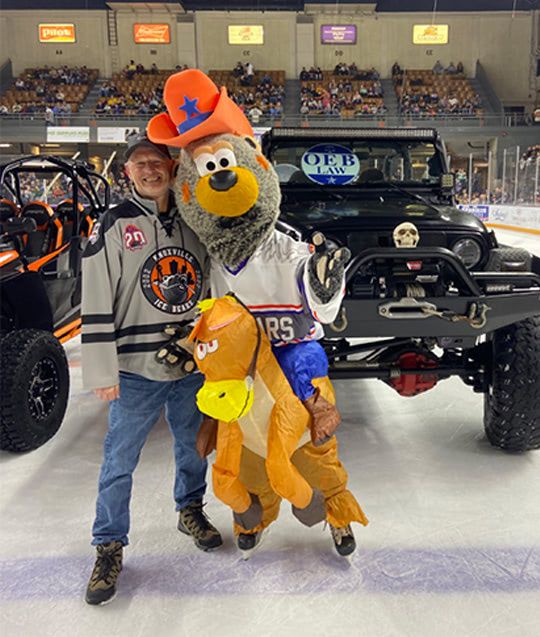
Our dedication extends beyond the courtroom. We proudly support:
- Boys & Girls Clubs of Tennessee Valley programs and toy drives
- Local high school football programs through Rivalry Thursday sponsorships
- The Knoxville Ice Bears and community fundraising initiatives
- Numerous youth, student, and community organizations throughout East Tennessee
As Tim Elrod says, “We don’t just take—we give back because the people you’re giving back to are the people who are supporting your firm.“
Have a personal injury or criminal defense case? We’re available 24/7 to help.
Get In Touch
- Call or Text: (865) 546-1111
- Visit: https://oeblawtn.com/
- Available: Standing by 24/7
Why OEB Law? Because They’re Good For The Community.
TEXT or CALL (865) 546-1111 for HELP NOW. Standing By 24/7.
FAQ
If a witness changes their story after initially providing a statement, it’s important to understand why the change occurred and document both versions of their account. Sometimes witnesses remember additional details over time, while other times they may be influenced by outside factors or pressure. An experienced Knoxville attorney Tim Elrod can help investigate why the witness’s account changed, determine which version is more reliable, and decide how this affects your case. Early witness statements are often considered more reliable since they’re closer in time to the actual event.

