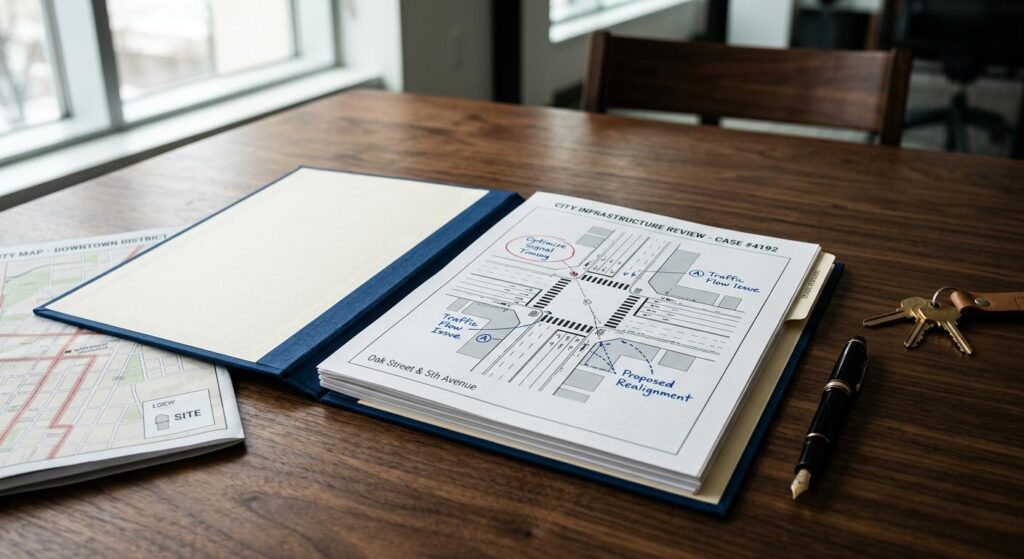
Knoxville pedestrians face real dangers every day. Local data shows exactly where those dangers concentrate. Cumberland Avenue has the highest pedestrian and bicyclist crash rate per mile of any corridor in the Knoxville region. This finding comes directly from City of Knoxville Vision Zero data. North Broadway has recorded multiple fatal pedestrian incidents in a single reporting year. This makes it one of East Tennessee’s most deadly corridors for people on foot. Injury victims at these locations often seek legal help. They quickly discover that the intersection itself can be just as responsible as the driver. Factors like poor design, bad lighting, and faulty signal timing all play a role. OEB Law helps Knoxville pedestrians understand those rights and fight for the compensation they deserve. In this blog post, Knoxville attorney Tim Elrod discusses what three intersections in Knoxville see the most pedestrian accident claims.
Key Takeaways
- Cumberland Avenue near the UT Knoxville campus has the highest pedestrian and bicyclist crash rate per mile of any corridor in the Knoxville region.
- North Broadway is Knoxville’s most deadly pedestrian corridor, with multiple fatal pedestrian incidents recorded in recent data.
- Kingston Pike near Gallaher View Road combines high vehicle speeds with limited pedestrian infrastructure to create significant injury risk.
- Tennessee’s pedestrian right-of-way law (T.C.A. § 55-8-134) establishes driver liability when pedestrians are crossing legally, and that matters directly to your claim.
The three Knoxville intersections and corridors that see the highest concentration of pedestrian accident claims are Cumberland Avenue near UT Knoxville, the North Broadway corridor near Grainger Avenue, and Kingston Pike near Gallaher View Road. These locations consistently appear in City of Knoxville Vision Zero data, KPD crash reports, and KnoxTPO regional pedestrian safety analyses. If you were injured at any of these locations, Tennessee law may entitle you to compensation for medical bills, lost wages, and pain and suffering.
To Discuss Your Case, Call or Text Our Team Standing By 24/7: (865) 546-1111
About OEB Law, Your Knoxville Legal Team

This guide is provided by the experienced attorneys at OEB Law, led by Managing Attorney Timothy G. Elrod. Founded in Knoxville in 2004, our firm has over 50 years of combined experience navigating East Tennessee’s legal system.
We have successfully represented thousands of personal injury clients, developing deep expertise in Tennessee’s complex wrongful death and accident laws. As East Tennessee natives, we have a direct understanding of the local court systems, law enforcement agencies, and community needs. Our commitment is to provide trusted, authoritative information to our neighbors in Knoxville and the surrounding Tennessee communities. However, this information does not constitute legal advice. If you or a loved one has been injured in an accident or needs legal help, call us today for a free, no obligation, initial consultation.
Knoxville’s Three Most Dangerous Pedestrian Intersections Compared
| Intersection | Corridor Type | Pedestrian Risk Factors | Data Source | Why It Generates Claims |
|---|---|---|---|---|
| Cumberland Ave(near 17th/19th St) | Urban university corridor | High foot traffic, event crowds, alcohol-adjacent venues, limited signal timing | knoxvilletn.gov Vision Zero | Driver failure to yield to crossing students; distracted driving |
| North Broadway(near Grainger Ave) | Urban arterial transit corridor | Fast multi-lane road, inadequate crosswalk lighting, bus stops near travel lanes | KPD / KnoxTPO data | Speed + limited pedestrian refuge = severe injury claims |
| Kingston Pike(near Gallaher View Rd) | Suburban commercial arterial | High-speed right-turn slip lanes, retail pedestrian traffic, wide road crossings | KnoxTPO regional data | Intersection geometry creates driver negligence at slip lanes |
The Three Knoxville Intersections with the Highest Pedestrian Risks and Claims
Most online discussions about dangerous Knoxville intersections rely on raw vehicle collision data. However, a pedestrian accident claim is a different legal matter entirely. It specifically involves driver negligence, crosswalk design, signal timing, and Tennessee’s right-of-way law. Insurance claim data is private by nature. Despite this privacy, crash location data from KPD, KnoxTPO, and the City of Knoxville’s Vision Zero program clearly identifies where pedestrian injuries concentrate. Three corridors stand out consistently across all of these data sources.
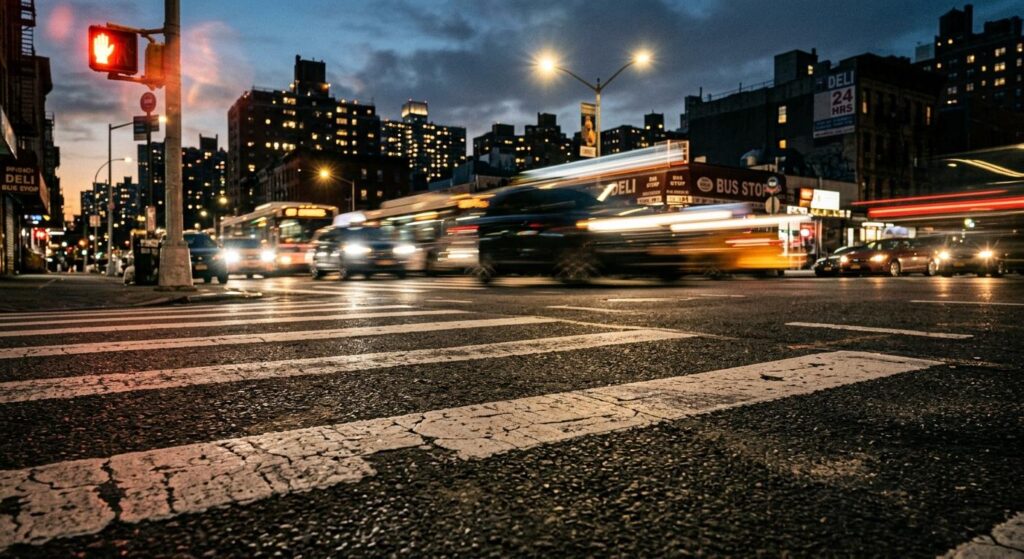
1. Cumberland Avenue: Knoxville’s Highest Pedestrian Crash Corridor
Cumberland Avenue has the highest crashes involving pedestrians and bicyclists per mile of any corridor in the Knoxville region. The reason is straightforward. This corridor runs directly through the University of Tennessee campus. It generates enormous foot traffic from tens of thousands of students, staff, and fans on game days. High-risk cross-streets include Cumberland at 17th Street and Cumberland at 19th Street. At these locations, foot traffic from campus housing and entertainment venues intersects with fast-moving vehicle lanes.
The legal framing matters here. When a driver fails to yield to a pedestrian crossing legally at Cumberland and 17th, T.C.A. § 55-8-134 establishes the legal basis for a pedestrian injury claim. Distracted driving near bar-proximity crossings and late-night pedestrian volume further amplify the risk on this corridor.
“Cumberland Avenue is one of the most challenging pedestrian environments in Knoxville because the traffic volume and the foot traffic from the UT campus are both incredibly high. When a driver fails to yield to someone crossing legally, Tennessee law is very clear about who bears responsibility, and that clarity is what drives successful claims for our clients.” – Knoxville attorney Tim Elrod
2. North Broadway: Knoxville’s Deadliest Pedestrian Corridor
North Broadway has recorded multiple pedestrian fatalities in recent reports, making it the most deadly corridor for people on foot in Knoxville. The intersection near Grainger Avenue has received specific attention from local investigative reporting. KnoxTPO regional data has also documented this corridor’s persistent danger.
The reasons for this danger are structural. North Broadway is a wide, multi-lane arterial road where vehicles travel at high speeds. Bus stops are positioned near active travel lanes. This design forces transit riders to cross in locations with inadequate lighting and insufficient pedestrian refuge. This combination of speed, inadequate infrastructure, and a bus-dependent pedestrian population generates serious injury claims. Tragically, many of these claims involve catastrophic or fatal outcomes.
3. Kingston Pike Near Gallaher View Road: Speed vs. Pedestrian Safety
Kingston Pike near Gallaher View Road presents a different but equally dangerous set of conditions. This suburban commercial corridor moves vehicles quickly while also generating significant retail pedestrian activity. The presence of right-turn slip lanes is a documented liability factor at this location. Slip lanes allow drivers to turn without stopping. Consequently, this reduces their attention to crosswalk pedestrians and creates a foreseeable point of driver negligence.
When intersection design foreseeably endangers pedestrians and a driver fails to exercise caution, Tennessee law supports a negligence claim against that driver. KnoxTPO regional data supports this corridor’s elevated pedestrian risk. Furthermore, the slip-lane geometry issue is increasingly recognized in pedestrian safety literature as a significant factor in injury claims.
Tennessee Law and Pedestrian Accident Claims: What You Need to Know
A crash report documents what happened at the scene. A pedestrian accident claim is what happens next. These are very different things legally. Understanding Tennessee’s framework helps injured pedestrians know exactly what their rights are before they speak with an insurance adjuster.
Tennessee’s pedestrian right-of-way law is found at T.C.A. § 55-8-134. It requires drivers to yield to pedestrians in both marked and unmarked crosswalks. When a driver violates this law and causes injury, that violation becomes central evidence in a pedestrian injury claim.
Tennessee also applies a modified comparative fault rule under T.C.A. § 29-11-103. Under this framework, an injured pedestrian can recover compensation as long as they are found less than 50% at fault for the accident. At complex intersections like Kingston Pike’s slip-lane approach, fault allocation can be heavily contested. Having a Knoxville attorney analyze the specific conditions at the intersection matters significantly for how fault is assigned.
The statute of limitations is one of the most important legal deadlines to understand. Under T.C.A. § 28-3-104, injured pedestrians have one year from the date of the accident to file a personal injury claim in Tennessee. This deadline is among the shortest in the nation. Waiting too long eliminates your right to recover, regardless of how strong your case might be.
For more background on how fault is assigned, review OEB Law’s detailed guide on right-of-way in pedestrian-vehicle accidents in Tennessee.
Common legal factors that establish driver liability at Knoxville intersections include:
- Failure to yield at a marked or unmarked crosswalk
- Distracted driving documented in the police report
- Speeding through a pedestrian or school zone
- Inadequate response to pedestrian traffic signals
- Right-turn-on-red without checking for pedestrians in the crosswalk
Knoxville’s Vision Zero Program and These High-Risk Intersections
Vision Zero is a City of Knoxville initiative managed through the Transportation Engineering Division. Its goal is to eliminate traffic fatalities and serious injuries on Knoxville roads. The Knoxville Regional Transportation Planning Organization (KnoxTPO) compiles the regional pedestrian crash data that feeds into Vision Zero planning. Cumberland Avenue appears in Vision Zero crash density mapping as a documented pedestrian hotspot, which is why it leads this list.
Recent KnoxTPO data shows that Knoxville recorded 29 traffic deaths in a recent reporting year. While this represents a drop from prior years, pedestrian fatalities on corridors like North Broadway continued to account for a meaningful share of that total. The city’s commitment to addressing these corridors is documented through federal grant applications. Knoxville recently received an $8 million Safe Streets and Roads for All federal grant focused on East Knoxville intersections.
That grant matters legally beyond those specific corridors. When a municipality officially acknowledges through a federal grant application that specific intersections are dangerous, that documentation can become relevant evidence. For example, under the Tennessee Governmental Tort Liability Act (T.C.A. § 29-20-2001), notice of a dangerous condition is a critical component in municipal liability arguments.
“When the City of Knoxville applies for an $8 million federal grant specifically to fix a dangerous intersection, that is an official acknowledgment that the road was dangerous before the grant was awarded. That kind of documented prior knowledge can be very significant when we are building a municipal liability argument for an injured pedestrian.” – Knoxville attorney Tim Elrod
For additional local context, OEB Law’s resource on Knoxville hit-and-run accident statistics provides further data on pedestrian vulnerability across Knox County.
What Should You Do If You Were Injured at One of These Knoxville Intersections?
If you were hit by a vehicle at Cumberland Avenue, North Broadway, or Kingston Pike, the steps you take in the hours and days after the accident directly affect the strength of your claim. Call 911, seek medical care immediately, and photograph the intersection before leaving the scene if you are physically able. Surveillance footage from city cameras and nearby businesses is typically overwritten within 30 to 72 hours. Preserving that evidence quickly is absolutely critical.
Tennessee’s one-year statute of limitations under T.C.A. § 28-3-104 creates real urgency. Do not give recorded statements to insurance adjusters before speaking with an attorney. Insurance companies often use early recorded statements to minimize claim value. Additionally, pedestrian accident claims at high-risk intersections frequently involve contested fault arguments that require legal analysis before you respond.
OEB Law’s personal injury attorneys offer free initial consultations for pedestrian accident victims across Knoxville and Knox County. You do not pay unless we win your case.
Why Choose OEB Law for Your Pedestrian Accident Claim
Pedestrian accident claims involve a unique intersection of road design liability, Tennessee right-of-way law, and complex insurance negotiations. This process requires a Knoxville attorney with direct experience navigating Knox County courts. OEB Law has represented pedestrian injury victims throughout East Tennessee. Our firm understands how Knoxville’s specific intersection geometry affects driver fault and claim value. The top attorneys in Knoxville at OEB Law know how to preserve critical evidence, challenge insurance low-ball offers, and build the case that wins fair compensation for injured pedestrians. Timothy G. Elrod has been recognized by Super Lawyers for his work representing injury victims across East Tennessee. Tim Elrod and the OEB Law team bring over 50 years of combined experience to every pedestrian injury case they accept.
Who is OEB Law and Why Are They Good for the Community?
Led by Managing Attorney Timothy G. Elrod and Our Experienced Legal Team
Founded in 2004 in Knoxville, Tennessee, OEB Law has grown over nearly two decades to now serve clients across multiple states. Tim Elrod established the firm with a simple but powerful mission: we care and we help people. Today, our team brings over 50 years of combined experience representing clients throughout Tennessee in personal injury and criminal defense cases.
Our Legal Expertise
Our attorneys have built their reputation through:
- Successfully representing thousands of personal injury and criminal defense clients
- Developing specialized knowledge across all types of accident and injury cases
- Mastering the complexities of Tennessee’s legal system through decades of practice
Why Trust Us
At OEB Law, our reputation speaks for itself:
- Proven Results: We’ve recovered significant compensation for our clients through both settlements and courtroom verdicts
- Client Satisfaction: Our numerous 5 Star Google Reviews showcase our commitment to responsive, caring, and effective legal representation
- No Fee Unless We Win: You don’t pay attorney fees unless we successfully secure compensation in your case
- Local Knowledge: As East Tennessee natives, we understand our community and care deeply about the people we serve
- Personalized Approach: We personalize each case to meet our clients’ specific needs, ensuring you’re never just another file number
Community Commitment
Our dedication extends beyond the courtroom. We proudly support:
- Local high school football programs through Rivalry Thursday sponsorships
- The Knoxville Ice Bears and community fundraising initiatives
- Numerous youth, student, and community organizations throughout East Tennessee
“We don’t just take—we give back because the people you’re giving back to are the people who are supporting your firm.” – Tim Elrod
Have a personal injury or criminal defense case? We’re available 24/7 to help.
Get In Touch
- Call or Text: (865) 546-1111
- Visit: https://oeblawtn.com/
- Available: Standing by 24/7
Why OEB Law? Because They’re Good For The Community.
TEXT or CALL (865) 546-1111 for HELP NOW. Standing By 24/7.
Follow Us on Social Media
Stay connected with OEB Law for the latest Knoxville and East Tennessee legal insights, community updates, and important legal information. Follow us on X, YouTube, Facebook, Instagram, LinkedIn, and TikTok for exclusive content, client stories, and expert legal guidance from our team.
What Should I Know About Pedestrian Accident Claims at Knoxville Intersections?
Your location relative to the crosswalk affects how fault is allocated under Tennessee’s modified comparative fault rule. However, it does not automatically eliminate your right to recover compensation. Under T.C.A. § 55-8-134, drivers must yield to pedestrians in both marked and unmarked crosswalks. Even if you were crossing outside a designated crosswalk, a Knoxville personal injury attorney can analyze the intersection’s design, lighting conditions, and signal timing to determine whether driver negligence still contributed to your injuries. Tennessee law bars recovery only if you are found more than 50% at fault, so speaking with OEB Law at (865) 546-1111 can help you understand exactly where your case stands.
The three Knoxville corridors that consistently generate the highest concentration of pedestrian accident claims are Cumberland Avenue near UT Knoxville, North Broadway near Grainger Avenue, and Kingston Pike near Gallaher View Road. City of Knoxville Vision Zero data identifies Cumberland Avenue as the highest pedestrian and bicyclist crash rate corridor per mile in the region. North Broadway has recorded multiple pedestrian fatalities in recent data, making it the deadliest corridor for people on foot in the city.
Tennessee’s statute of limitations for personal injury claims is one year from the date of the accident under T.C.A. § 28-3-104. This is among the shortest filing deadlines in the nation, meaning injured pedestrians must act quickly or lose the right to recover compensation entirely. If a government entity like the City of Knoxville may share liability for a dangerous intersection condition, additional notice requirements under the Tennessee Governmental Tort Liability Act apply.
Under T.C.A. § 55-8-134, Tennessee drivers are required to yield to pedestrians in marked and unmarked crosswalks, and a driver who fails to do so and causes injury can be held liable for the pedestrian’s damages. In some cases, the city or municipality may also share liability if the intersection had a documented dangerous condition, such as missing crosswalk markings, poor lighting, or design defects like right-turn slip lanes. Tennessee’s modified comparative fault rule allows a pedestrian to recover as long as they are found less than 50% at fault for the accident.

