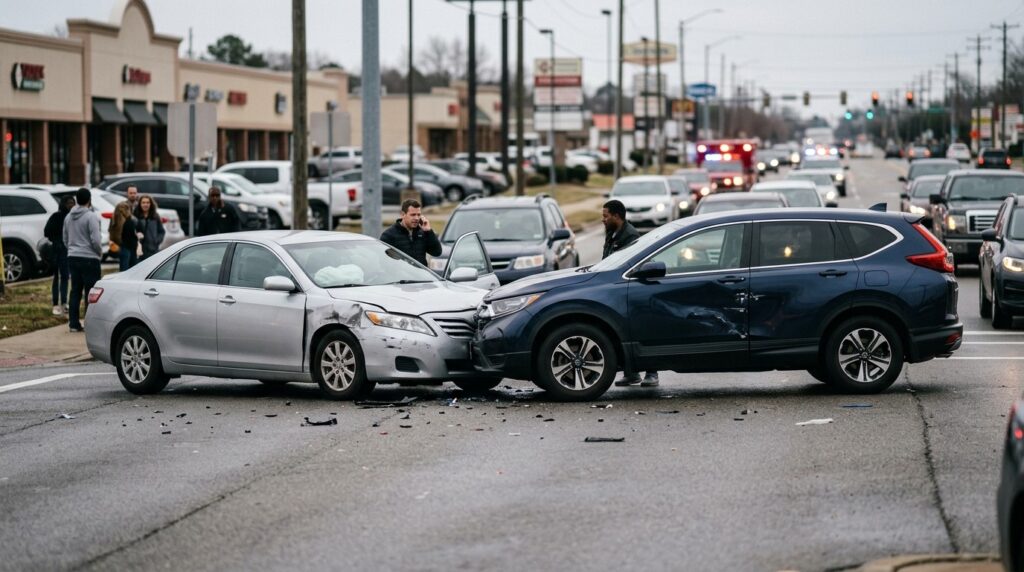
A car accident on Kingston Pike can turn a quick shopping trip or evening commute into a fight for your health and your finances in a matter of seconds. This 20-mile arterial, State Route 1 and US-70/US-11, is West Knoxville’s primary commercial spine, running from near Alcoa Highway and Cumberland Avenue west through Bearden, West Hills, Cedar Bluff, and Farragut out to Dixie Lee Junction at the Knox and Loudon county line. It carries more than 30,000 vehicles a day along its busiest stretches, packs dozens of retail driveways into every mile, and runs parallel to the merged I-40/I-75 freeway, so any interstate backup floods it with detour traffic. Our own database of Tennessee crash records shows nearly 9,000 reported wrecks along the corridor since 2015, the highest volume of any road we track in Knox County. If you or someone you love was hurt here, you need clear answers about the road, the evidence, and the local courts. At OEB Law, our Knoxville-based team helps injured people every day, and we know this corridor. In this blog post, Knoxville attorney Tim Elrod discusses what to do after a car accident on Kingston Pike (SR-1) in West Knoxville and Farragut.
Key Takeaways
- Kingston Pike is the highest-volume crash corridor in West Knox County, where dense commercial curb cuts, five-lane sections without a divided median, and I-40/I-75 detour spillover produce constant traffic friction.
- Our crash-record database shows 8,924 reported wrecks, 22 people killed, and 183 seriously injured along the corridor from 2015 through 2026, with rear-end and broadside (T-bone) collisions the two most common types.
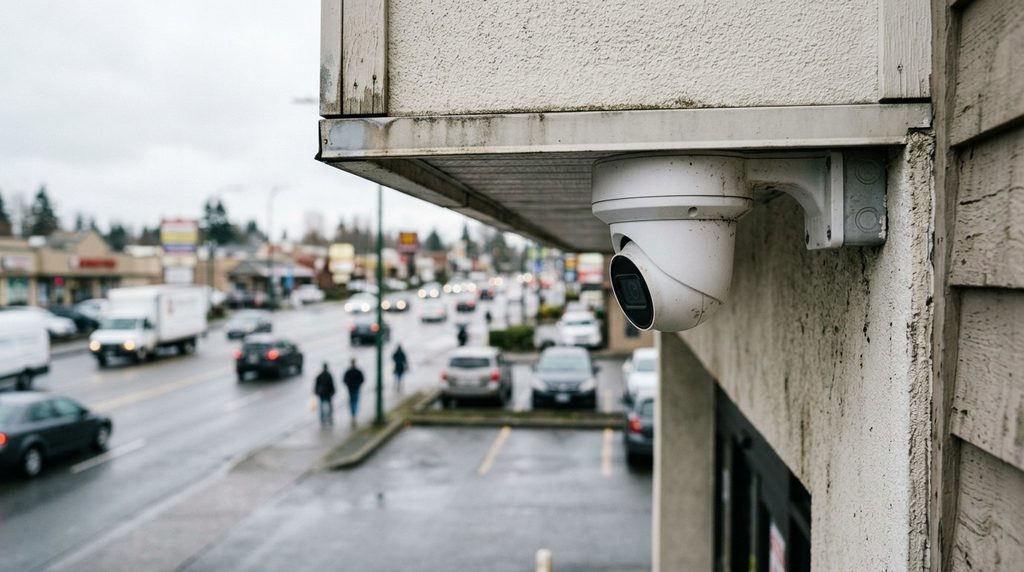
- Business security video is the key evidence on this corridor, and most retail and restaurant systems overwrite their footage within about 30 days, so it must be preserved fast.
- Tennessee gives you only one year to file a personal injury claim, one of the shortest deadlines in the country.
- A crash near Dixie Lee Junction can land in either Knox or Loudon County court, so the exact location matters for where your claim is filed.
To Discuss Your Case, Call or Text Our Team Standing By 24/7: (865) 546-1111
About OEB Law, Your Knoxville Legal Team

This guide is provided by the experienced attorneys at OEB Law, led by Managing Attorney Timothy G. Elrod. Founded in Knoxville in 2004, our firm has over 50 years of combined experience navigating East Tennessee’s legal system.
We have successfully represented thousands of personal injury clients, developing deep expertise in Tennessee’s complex wrongful death and accident laws. As East Tennessee natives, we have a direct understanding of the local court systems, law enforcement agencies, and community needs. Our commitment is to provide trusted, authoritative information to our neighbors in Knoxville and the surrounding Tennessee communities. However, this information does not constitute legal advice. If you or a loved one has been injured in an accident or needs legal help, call us today for a free, no obligation, initial consultation.
The Kingston Pike Danger Zone: From Bearden to Dixie Lee Junction
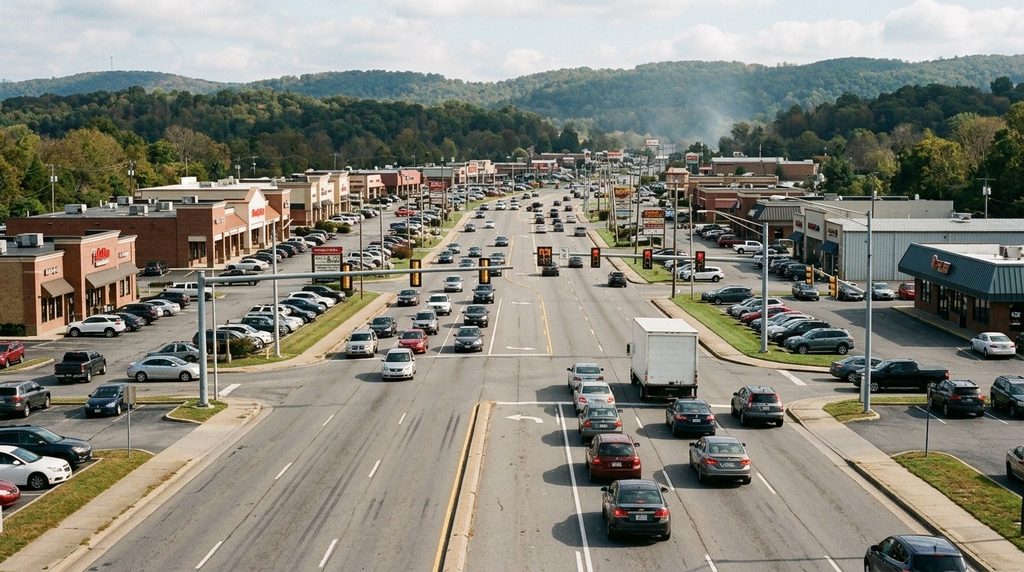
Kingston Pike is the retail and commuter backbone of West Knoxville. As State Route 1 and US-70/US-11, it links downtown Knoxville and the University area to the Town of Farragut and the Loudon County line beyond. Few roads in Knox County pack as much daily friction into 20 miles as this five-lane commercial arterial.
This corridor cuts through many of the county’s busiest neighborhoods and retail districts, including:
- Sequoyah Hills and Bearden
- West Hills and the West Town Mall area
- Cedar Bluff and Ebenezer
- Concord and Farragut
- Dixie Lee Junction at the US-70 and US-11 split
Every day, tens of thousands of drivers share this road, with more than 30,000 vehicles a day on the busiest Bearden and Cedar Bluff stretches. Local shoppers and commuters mix with commercial delivery fleets, heavy box trucks servicing strip malls, Knoxville Area Transit buses, and, whenever the neighboring interstate backs up, thousands of detouring highway drivers. Because Kingston Pike is lined with dozens of commercial curb cuts per mile and long sections have no physical median, drivers constantly slow, stop, and turn left across oncoming lanes. That is why our records show nearly 9,000 reported crashes here, more than any other road we track in the county. Recovering from a wreck on Kingston Pike takes more than general legal knowledge. It takes a real, street-level understanding of West Knox traffic patterns, business surveillance systems, and Tennessee law.
Kingston Pike (SR-1) Hazard Map
The high-volume West Knoxville retail corridor from Bearden to Dixie Lee Junction
Northshore
Morrell Rd
Bluff Rd
N Peters
Junction
Which part of Kingston Pike has the most crashes?
The Cedar Bluff Road area and the West Town Mall commercial strip see some of the highest crash volumes on the corridor. Cedar Bluff mixes interstate-speed traffic coming off the I-40/I-75 ramps with stop-and-go shoppers, while the West Town Mall stretch packs dozens of retail driveways into a short, median-free section.
How long is the Kingston Pike corridor?
It runs about 20 miles, from near Alcoa Highway and Cumberland Avenue in Knoxville, west through Bearden, West Hills, Cedar Bluff, and Farragut, to Dixie Lee Junction and the US-70/US-11 split at the Knox and Loudon county line.
Crash Hotspots Along Kingston Pike
To understand why collisions cluster along Kingston Pike, you have to look at the road itself. Each major node has its own structural quirks, and those design problems, combined with heavy retail traffic, create five distinct danger zones.
Bearden Core and South Northshore Drive
The intersection of Kingston Pike and South Northshore Drive anchors the busy Bearden retail district and carries dense commuter flow from Sequoyah Hills. Drivers turning left across multiple lanes here frequently misjudge the speed of oncoming traffic, producing severe broadside, or T-bone, collisions and left-turn angle crashes.
The West Town Mall Corridor: Morrell Road to Gallaher View
This commercial stretch has one of the highest concentrations of retail curb cuts in Knox County. Without a continuous physical median, drivers turning into and out of shopping-center driveways create unpredictable stopping points. The result is a steady pattern of mid-block left-turn broadside crashes and multi-car rear-end pileups.
The Cedar Bluff Road Interchange Zone
Cedar Bluff sits right next to the I-40/I-75 exit ramps, and that is exactly the problem. Traffic coming off the interstate at highway speed meets stop-and-go shoppers turning into retail plazas. That speed differential, combined with rapid lane changing, makes Cedar Bluff one of the highest-volume crash nodes on the entire corridor.
Ebenezer Road and North Peters Road: The Turkey Creek Gateway
As Kingston Pike moves west toward Farragut, this high-speed junction funnels heavy traffic toward the Turkey Creek shopping complex. Delivery box trucks and turning passenger vehicles frequently collide during peak evening hours, and signal overruns cause high-speed broadside crashes.
Farragut and Dixie Lee Junction
At the western end near the Loudon County line, Kingston Pike splits into US-70, heading toward Lenoir City, and US-11. Here, drivers transitioning from a 45 mph suburban arterial to open highway speeds create high-impact rear-end and crossover collision risks. Because the county line runs right through this area, a crash here can fall under either Knox or Loudon County jurisdiction.
Kingston Pike Car Accidents: By the Numbers
Reported crashes, 2015–2026 · Source: OEB Law’s database of Tennessee traffic-crash records
How crashes break down on Kingston Pike
Reported crashes by first point of impact, 2015–2026.
| Crash Type | Reported Crashes |
|---|---|
| Rear-end | 4,033 |
| Angle (T-bone) | 3,032 |
| Sideswipe, same direction | 888 |
| Head-on | 190 |
About 96% of crashes on Kingston Pike involved two or more vehicles, most often a rear-end or broadside (T-bone) collision, the signature of a dense commercial corridor where drivers constantly slow, stop, and turn. Contributing factors: 24% involved a teen driver, 2% involved a truck or bus, 2% involved alcohol, and 1% involved a motorcycle.
Even when no one is taken from the scene by ambulance, injuries such as whiplash, concussions, and soft-tissue damage often surface hours or days later once the adrenaline fades. If you were involved in a crash here, it is wise to be checked by a doctor and to speak with an attorney about your options.
Why Crashes Happen on Kingston Pike
Proving fault after a crash means finding the exact cause. On Kingston Pike, collisions usually trace back to a handful of specific problems tied to the corridor’s commercial design and traffic mix. Understanding them helps you see how a strong claim gets built.
Mid-Block Left Turns and Broadside (T-Bone) Crashes
In sections with only a shared center turn lane, drivers routinely turn left across two lanes of oncoming traffic to reach a retail driveway. When they fail to yield or misjudge an approaching vehicle’s speed, the result is a violent broadside, or T-bone, collision. Angle crashes are a huge share of the wrecks in our Kingston Pike records, second only to rear-end collisions, and they tend to cause serious injuries because the impact strikes the side of the passenger compartment.
Distracted Driving and Commuter Rear-End Crashes
Heavy retail signage, closely spaced traffic signals, and dense stop-and-go traffic make Kingston Pike a place where a moment of distraction turns dangerous. A driver checking a phone or following too closely fails to notice stopping traffic and causes a high-impact rear-end collision. Rear-end crashes are by far the most common type of wreck our records show on this corridor, and that first impact often triggers a multi-car chain reaction near a signalized plaza.
Interstate Detour Congestion
Because Kingston Pike runs parallel to the merged I-40/I-75, any crash or construction on the interstate sends thousands of vehicles detouring onto the Pike. That sudden surge overwhelms an arterial already running near capacity, producing abrupt congestion and severe rear-end pileups. Understanding how lighting and roadway conditions on Kingston Pike affect liability can be important when a nighttime crash happens in one of these surges.
Commercial Delivery Vehicle Negligence
Box trucks and delivery fleets servicing the strip malls along Kingston Pike often make wide turns or block an outer travel lane while unloading. These maneuvers create sudden, severe hazards for oncoming motorists, and when a commercial vehicle is at fault, the case often expands to include the driver’s employer and its insurer. A Knoxville personal injury attorney who knows this exact corridor can spot causes that an out-of-town firm would miss.
First Steps: Knox County Emergency and Medical Response
What you do in the first hours and days after a crash shapes both your recovery and your claim. Because arterial wrecks can cause severe injuries, a coordinated network of local responders and hospitals swings into action. Knowing how that system works helps you protect yourself.
Police and Emergency Response on Kingston Pike
When a crash happens along this corridor, calls route through local 911 dispatch, and which agency responds depends on the exact location:
- Knoxville Police Department (KPD): KPD has primary jurisdiction inside city limits, which covers Kingston Pike from the Alcoa Highway area west through Bearden and Cedar Bluff. For a serious or fatal crash, the KPD Crash Reconstruction Team responds to map skid marks, impact points, and vehicle positions.
- Knox County Sheriff’s Office (KCSO): The Sheriff’s Office covers unincorporated Knox County and the Town of Farragut, which does not operate its own police department. THP District 1 also assists on the corridor.
- Loudon County and THP: For a crash on the Loudon County side of Dixie Lee Junction, the Loudon County Sheriff’s Office or the Tennessee Highway Patrol may handle the report.
Local Trauma and Emergency Care
Crash victims need fast medical care, and emergency crews choose a hospital based on how severe the injuries are:
- Parkwest Medical Center: Located just off Cedar Bluff Road at 9352 Parkwest Boulevard, this full-service hospital is West Knoxville’s primary emergency and surgical center for crashes along the middle of the corridor.
- Tennova Healthcare, Turkey Creek Medical Center: Located at 10820 Parkside Drive in the Turkey Creek area near Farragut, this hospital provides emergency care for crashes on the western end of the Pike.
- The University of Tennessee Medical Center: Severe trauma, head injuries, and critical spinal injuries are routed to UT Medical Center at 1924 Alcoa Highway, the region’s only Level I Trauma Center.
Legal Tip: Your medical records form the backbone of your injury claim. Gaps in treatment give the insurance company room to argue that your injuries were minor or pre-existing. Steady, documented care links your injuries directly to the crash and protects your right to fair compensation.
Protecting the Evidence in a Kingston Pike Crash Claim
In a minor fender bender, a police report and some photos often tell the story. A serious crash on a busy commercial arterial is different, and Kingston Pike has one form of evidence that highway crashes usually lack: dozens of nearby businesses with security cameras pointed at the road. That footage can be the single best proof of who had the right of way, but it disappears fast.
Business Security Video and the 30-Day Window
Retail chains, car dealerships, banks, and restaurants along Kingston Pike run their own surveillance cameras, and many of them capture the road and its driveways. The problem is that most of these systems automatically overwrite their recordings on a loop, often within about 30 days. Once that footage is gone, it is gone for good. That is why an attorney must move immediately to identify which businesses had a view of the crash and send formal preservation letters before the video is erased. You can read more about how surveillance video evidence helps prove a case, especially in a hit-and-run.
The Spoliation Letter
To stop a business or a trucking company from erasing or routinely purging key records, your attorney sends a spoliation of evidence letter right away. Once a party receives this notice, Tennessee law gives them a duty to preserve the evidence. If they destroy it anyway, a court can punish them, sometimes by telling the jury to assume the lost evidence would have hurt that party’s case.
“On Kingston Pike, the case is often won or lost in the first two weeks. The store camera that saw the whole thing will tape over that video on a 30-day loop, and no one is going to save it for you. The moment we are hired, we send preservation letters to every business that could have had a view.” – Knoxville attorney Tim Elrod
Commercial Vehicle and Electronic Data
When a delivery truck or box truck is involved, the vehicle itself holds a clear record. The most valuable sources include the truck’s Engine Control Module, or black box, which captures speed and braking in the seconds before impact; the Electronic Logging Device, which shows the driver’s hours; and any onboard dashcam. Locking this data down early can decide a case.
Evidence to Lock Down After a Serious Kingston Pike Crash
On a commercial corridor, the best proof is often a nearby store’s security video, and it can be erased in about 30 days. A spoliation letter puts each holder on legal notice to preserve it.
What is a spoliation letter?
It is a formal legal notice that tells a business, driver, company, or insurer to preserve all evidence. Once served, they have a duty to keep it, and a court can penalize them if they destroy it.
How fast can Kingston Pike crash evidence disappear?
Most business security systems overwrite their video within about 30 days, and some sooner. Onboard truck data and routine company records can also be purged, so a preservation notice needs to go out within days of the crash.
Who Is Liable for a Kingston Pike Crash
In a simple car wreck, one driver is usually at fault. A crash on a busy commercial corridor can be more complex. Several parties may share the blame, and each one may carry its own insurance policy. A careful investigation looks at every link in the chain so that no responsible party escapes and no source of compensation gets left on the table.
The At-Fault Driver
The driver who caused the crash can be directly liable for choices such as an unsafe mid-block left turn, following too closely in stop-and-go traffic, distracted driving, or running a signal at a busy intersection.
The Commercial Carrier
When a delivery truck or box truck is involved, the company is often responsible for its driver under a legal rule called respondeat superior. In plain terms, an employer answers for what its employee does on the job. Beyond that, the company can be directly negligent when it hires an unsafe driver, sets delivery schedules that force drivers to rush, or runs trucks with known mechanical problems.
The Retail Property Owner
Sometimes a shopping center’s own layout contributes to a crash, through a poorly designed driveway, an obstructed sightline, or inadequate traffic control on the property. When a hazardous premises design helps cause a wreck, the property owner or manager may share liability.
Maintenance Firms and Parts Makers
If a defective tire, a failed brake, or a botched repair contributed to the crash, the repair shop or the maker of that part may be liable under Tennessee product liability law. These claims require an early inspection before the vehicle is repaired or scrapped.
A Government Entity
When a dangerous road design or a malfunctioning traffic signal helps cause a crash, a government agency may share the blame. These claims follow special rules, including shorter notice deadlines, so they demand fast action from an attorney who handles them.
Who Can Be Held Liable in a Kingston Pike Crash
A single crash on this commercial corridor can involve several responsible parties, each with its own insurance.
Can more than one party be at fault in a Kingston Pike crash?
Yes. A driver, a delivery company, a shopping center, and a repair shop can all share fault. Identifying each one matters because every party may carry a separate insurance policy that helps cover your losses.
Can a business be liable for a crash at its driveway?
Sometimes. If a shopping center’s driveway design, an obstructed sightline, or inadequate on-site traffic control helped cause the wreck, the property owner or manager may share liability alongside the at-fault driver. An investigation looks at the site layout, not just the vehicles.
Tennessee Accident Law and Local Courts
A strong claim must follow Tennessee’s rules exactly. Two of those rules can make or break your case, and both catch people off guard. A third question decides which courthouse hears your claim, and on Kingston Pike that answer can change near the county line.
Tennessee’s Strict One-Year Deadline
Under Tennessee Code Annotated section 28-3-104, you generally have just one year to file a personal injury lawsuit. This is one of the shortest windows in the nation. The clock starts on the day of the crash. If you miss it, you usually lose your right to recover anything at all, no matter how severe your injuries are. That short deadline is the single biggest reason to talk with a lawyer early.
Modified Comparative Fault and the 50% Bar
Tennessee follows a modified comparative fault rule. The state Supreme Court set this standard in the landmark case McIntyre v. Balentine. Two ideas matter most. First, the 50% bar means you can recover damages only if you are less than 50% at fault. If a jury finds you half or more to blame, you get nothing. Second, your award is reduced in proportion to your share of fault, so if you are 20% at fault, your recovery drops by 20%. This rule is exactly why defense lawyers work so hard to blame you, and clear evidence such as business camera footage is the best way to push back.
Which Court Hears Your Case
Most Kingston Pike crash claims are filed in one of two state courts, and a federal court can come into play in a trucking case:
- Knox County Circuit Court: Located at the City County Building, 400 Main Street in downtown Knoxville, this court handles most crashes along the corridor.
- Loudon County Circuit Court: A crash on the Loudon County side of Dixie Lee Junction is filed in Loudon County. Confirming the correct county is one reason to have an attorney verify the crash location early.
- U.S. District Court for the Eastern District of Tennessee: This federal court often hears cases when an out-of-state trucking company removes the claim and the damages top $75,000.
Tennessee Accident Law at a Glance
- Clock starts on the crash date
- One of the shortest in the U.S.
- Miss it and recovery is barred
- Recover only if under 50% at fault
- Award reduced by your share
- Defense tries to shift blame to you
- Cap on non-economic damages
- Rises to $1M if catastrophic
- No cap on economic damages
How long do I have to file an accident claim in Tennessee?
Generally one year from the date of the crash under T.C.A. section 28-3-104. Because this deadline is so short, it is wise to speak with an attorney soon after the wreck so evidence and filing time are not lost.
Can I still recover money if I was partly at fault?
Yes, as long as you are less than 50% at fault. Your award is reduced by your percentage of fault. If you are found half or more to blame, Tennessee law bars any recovery.
Is there a limit on accident compensation in Tennessee?
Non-economic damages such as pain and suffering are capped at $750,000, or $1,000,000 for catastrophic injuries. There is no cap on economic damages like medical bills and lost wages.
What Your Kingston Pike Accident Claim May Be Worth
Serious crashes on a busy arterial often cause life-altering harm. Tennessee law lets victims pursue two broad types of damages, and a full claim accounts for both. If you want a rough starting point, our tool to estimate your claim value can help, though only a detailed review captures the real picture.
Economic Damages
These are your measurable financial losses. They include medical costs such as ambulance transport, emergency care at Parkwest, Turkey Creek, or UT Medical Center, surgeries, and imaging. They also include future care such as physical therapy and long-term equipment, plus lost income for the time you miss and any reduced earning power if you cannot return to your old job.
Non-Economic Damages
These cover the human costs that no receipt can measure, including physical pain and suffering, emotional distress and anxiety, and loss of enjoyment of life. When a crash takes a life, families may bring a wrongful death claim for their loss and financial support. These are the hardest cases we handle, and we treat every family with the care they deserve.
Tennessee’s Cap on Non-Economic Damages
Under Tennessee Code Annotated section 29-39-102, the state caps non-economic damages at $750,000 for most cases. That cap rises to $1,000,000 when the injury is catastrophic, such as paralysis from a spinal cord injury, the loss of a limb, severe burns, or the wrongful death of a parent who leaves behind minor children. Importantly, there is no cap on economic damages, so your medical bills and lost wages are recovered in full when proven. Sorting out how these caps apply to your injuries is one more reason to have Knoxville attorneys who handle these claims regularly.
Why Choose OEB Law for Your Kingston Pike Case
When a serious crash happens on Kingston Pike, the other side’s insurance team, and in a truck case the carrier’s defense team, goes to work immediately. You should not face them alone. Our attorneys know the precise geography of the Bearden retail core, the West Town Mall curb cuts, the Cedar Bluff interstate spillover, and the Dixie Lee Junction county line. That local knowledge levels the playing field. We move fast to preserve business camera footage and any commercial vehicle data, we identify every liable party, and we fight to recover the full value of your claim while you focus on healing. You can learn more about our background from Timothy G. Elrod and our experienced attorneys. Best of all, you don’t pay unless we win, so pursuing justice carries no financial risk.
Who is OEB Law and Why Are They Good for the Community?
Led by Managing Attorney Timothy G. Elrod and Our Experienced Legal Team
Founded in 2004 in Knoxville, Tennessee, OEB Law has grown over nearly two decades to now serve clients across multiple states. Tim Elrod established the firm with a simple but powerful mission: we care and we help people. Today, our team brings over 50 years of combined experience representing clients throughout Tennessee in personal injury and criminal defense cases.
Our Legal Expertise
Our attorneys have built their reputation through:
- Successfully representing thousands of personal injury and criminal defense clients
- Developing specialized knowledge across all types of accident and injury cases
- Mastering the complexities of Tennessee’s legal system through decades of practice
Why Trust Us
At OEB Law, our reputation speaks for itself:
- Proven Results: We’ve recovered significant compensation for our clients through both settlements and courtroom verdicts
- Client Satisfaction: Our numerous 5 Star Google Reviews showcase our commitment to responsive, caring, and effective legal representation
- No Fee Unless We Win: You don’t pay attorney fees unless we successfully secure compensation in your case
- Local Knowledge: As East Tennessee natives, we understand our community and care deeply about the people we serve
- Personalized Approach: We personalize each case to meet our clients’ specific needs, ensuring you’re never just another file number
Community Commitment
Our dedication extends beyond the courtroom. We proudly support:
- Local high school football programs through Rivalry Thursday sponsorships, part of over $500,000 donated to the community across 16 years
- The Knoxville Ice Bears and community fundraising initiatives
- Numerous youth, student, and community organizations throughout East Tennessee
As Tim Elrod says, “We don’t just take, we give back because the people you’re giving back to are the people who are supporting your firm.“
Have a personal injury or criminal defense case? We’re available 24/7 to help.
Get In Touch
- Call or Text: (865) 546-1111
- Visit: https://oeblawtn.com/
- Available: Standing by 24/7
Why OEB Law? Because They’re Good For The Community.
TEXT or CALL (865) 546-1111 for HELP NOW. Standing By 24/7.
Follow Us on Social Media
Stay connected with OEB Law for the latest Knoxville and East Tennessee legal insights, community updates, and important legal information. Follow us on X, YouTube, Facebook, Instagram, LinkedIn, and TikTok for exclusive content, client stories, and expert legal guidance from our team.
Frequently Asked Questions
How do I get a copy of my crash report for an accident on Kingston Pike?
It depends on who responded. For crashes within Knoxville city limits, from the Alcoa Highway area west through Bearden and Cedar Bluff, the report is written by the Knoxville Police Department and can be requested through the KPD Records unit or the Tennessee Department of Safety and Homeland Security. For crashes in the Town of Farragut or unincorporated Knox County, the report comes from the Knox County Sheriff’s Office. Near Dixie Lee Junction, a crash on the Loudon County side may be handled by the Loudon County Sheriff’s Office or the Tennessee Highway Patrol. Your attorney can request the report for you.
Why is business security camera footage so important after a Kingston Pike crash?
Kingston Pike is lined with stores, dealerships, banks, and restaurants, and their security cameras often capture the road and its driveways, sometimes recording the exact moment of impact and showing who had the right of way. The catch is that most of these systems overwrite their footage on a roughly 30-day loop. Once it is gone, it cannot be recovered, so an attorney needs to identify which businesses had a view and send preservation letters within days of the crash.
What should I do if I was injured in a crash near Dixie Lee Junction?
The Knox and Loudon county line runs right through the Dixie Lee Junction area, and which county the crash occurred in determines where your claim is filed, Knox County Circuit Court or Loudon County Circuit Court. Seek medical attention first, then have an attorney confirm the exact location and the correct court venue so your claim is filed properly and on time.
What should I do if an insurance adjuster calls me after a Kingston Pike crash?
Do not give a recorded statement and do not sign any medical release. Adjusters are trained to ask questions designed to shift blame onto you under Tennessee’s 50% comparative fault rule. Politely decline and direct all communication to your attorney. A brief, friendly-sounding call can still be used to reduce or deny your claim.
How long does a Kingston Pike accident claim take to settle in Knox County?
A straightforward claim can resolve in a few months, but serious crashes that involve multiple parties, business video, and detailed medical proof generally take 12 to 24 months to resolve through negotiation or trial. Cases with clear liability and preserved evidence can move faster. Rushing a serious injury claim before you know the full extent of your injuries almost always costs you money.
How soon after a Kingston Pike crash should I contact a lawyer?
As soon as possible, ideally within days. Tennessee’s one-year filing deadline is only part of the reason. The nearby business camera footage that could prove your case is often overwritten within about 30 days, so an early preservation letter is critical. If you or a loved one was hurt on Kingston Pike, call or text Knoxville attorney Tim Elrod for a free, no obligation consultation. You don’t pay unless we win.

